The element is never the whole story; in BaZi, it matters what that element is doing to the rest of the system.
When the same element feels different in two charts
A Wood Rabbit can look gentle on paper and still live under strain. I’ve seen a chart where the same Wood that should have supported growth was being pressed by Metal so hard that the person felt more like a fenced sapling than a flowering branch.
That is the first thing to understand about reading a BaZi chart without flattening it into labels: the element does not arrive as a personality sticker. It arrives as part of a structure, and structure changes everything.
People want a fixed identity because fixed identity is easy. “I’m Wood, so I’m creative.” “I’m Fire, so I’m passionate.” Convenient. Also incomplete.
Take a real-feeling scene from a small study with a pale green wall, a brass desk lamp, and a stack of books leaning against the south window. The owner had been told that Wood should make her soft and artistic, yet the room felt tense, almost over-edited, because her chart showed Wood under pressure while Metal kept cutting the shape of events. The label was flattering. The mechanism was not.
The Chinese zodiac elements meaning only makes sense when you stop treating the element as destiny and start treating it as a role in motion.
Why zodiac elements are not fixed personality tags
A Wood element can mean growth, support, planning, or overextension. It can also mean strain when the chart asks it to keep pushing without enough nourishment. One symbol, several jobs.
That surprises people because they expect metaphysics to behave like a character quiz. It does not. BaZi works more like architecture: beams, load, openings, partitions, and circulation all change how a house feels.
Annual zodiac summaries feel accurate because they are broad enough to catch emotion. They are useful at that level. But they cannot override the natal structure, the same way a new coat of paint cannot change where the load-bearing wall sits.
When a yearly forecast says Water is favorable, that may be true in a general sense. Yet in a chart with excessive Water already pooling in the lower layers, more Water can turn the inner room cool, damp, and slow-moving. The problem is not “Water is bad.” The problem is too much of one condition without Fire to warm it and Earth to organize it.
That is where the Day Master becomes the real starting point. Once you know what the chart is trying to support, drain, control, or balance, the elements stop sounding like a horoscope and start behaving like a system.
What each element does in the chart
In BaZi, an element is never just an element. It can act as self, resource, output, wealth, power, or influence depending on the Day Master and the chart around it.
Wood may support a weak Fire Day Master as fuel, but the same Wood can become a burden if it is too thin to sustain the load or too thick to move cleanly. Fire may illuminate a chart like daylight in an atrium, or scorch it if the opening is too narrow and the heat has nowhere to disperse.
That is why the Chinese zodiac elements meaning shifts with context. The symbol does not change. The job does.
Picture two charts with strong Fire. In one, the Fire behaves like warm light spilling across a well-designed hall: it lifts the whole space, reveals edges, and brings movement to stagnant corners. In another, the Fire is trapped in a narrow corridor with low ceilings and poor ventilation. Same element. Very different experience.
This is also where people misread charts by confusing symbolism with function. Wood is not always “kind.” Metal is not always “cold.” Water is not always “intuitive.” Each one can nourish, pressure, clear, trap, direct, or overload.
Think in terms of circulation. One element opens a passage; another acts like a support beam; another controls spread. A chart with good circulation does not feel crowded, even when it contains strong elements. A chart with poor circulation can feel stuck with half the furniture removed.
How generating and controlling cycles change the reading
The Five Elements are not a pile of separate objects. They are a sequence of relationships.
Wood feeds Fire. Fire creates Earth. Earth bears Metal. Metal carries Water. Water nourishes Wood. At the same time, control keeps one force from swallowing the whole room: Wood parts Earth, Earth dams Water, Water quenches Fire, Fire melts Metal, Metal cuts Wood.
That is not abstract theory. It is the logic of pressure and support. It is how a chart manages movement.
If a chart has too much Water and not enough Fire or Earth, the Water does not become magically lucky because a yearly forecast says so. It becomes more likely to sit heavy, spread wide, and blur boundaries unless something organizes it. Fire brings heat and visibility. Earth creates channels, banks, and edges. Without those, the same Water that sounds auspicious on a summary page may feel like a cool room with damp corners and slow air movement.
People often ask for the “meaning” of their animal year, but the animal is only the surface layer. The deeper reading is about what the surrounding elements are doing to one another. That is why the same zodiac element can show as opportunity in one chart and friction in another.
When I read a chart, I look for where the flow starts, where it compresses, and where it leaks. That tells me more than any fixed label ever could.
Weak charts, strong charts, and the same element
A weak chart and a strong chart can contain the same element and produce opposite results. This is where many readers go wrong: they imagine strength means “more is better.” Not in BaZi.
In a weak chart, a supportive element may act like a railing on a steep staircase. It makes movement possible. In a strong chart, that same element may simply add weight to an already crowded structure. Support becomes excess. Help becomes drag.
Balanced Wood offers a good example. In proportion, it has vertical rhythm, breathable gaps, and steady growth. You can feel the space between the branches. It is alive without being tangled. Too much Wood, and the room becomes packed with foliage, light disappears, and movement slows. Too little Wood, and the structure loses upward lift.
That is why proportional thinking matters. Design people understand this instinctively: a room can be beautiful and still fail if one side is overbuilt and the other side is thin. Charts work the same way. The line between elegant and congested is often a matter of scale, not symbolism.
Here the older I Ching view helps. A moving line changes the whole reading because the system is relational, not static. BaZi behaves the same way. A single element can alter the feel of the whole chart when it changes strength, timing, or position.
So when someone says, “I’m a Water person,” I usually ask, “In what condition?” The answer matters more than the label.
Reading the chart like a room
One way to understand Chinese zodiac elements meaning is to stop reading them as abstract categories and start reading them like spatial conditions.
Light tells you visibility. Circulation tells you movement. Proportion tells you whether the structure can hold what it contains. Thresholds tell you where energy changes speed or direction.
That is why a chart with excess Water often feels like a corridor that never quite dries. The air is cool, the corners hold moisture, and movement hesitates near the edges. Fire, by contrast, can read like an open window at sunset or a glare off polished stone, depending on how concentrated it is. Wood can feel like a vertical garden with clean lines and room to breathe, or like a tangle pressed too close to the wall.
Feng shui language helps here, not because the house and the chart are identical, but because both depend on how energy moves through form. A room with good thresholds and circulation teaches the eye what a chart with good element balance feels like.
That is also where material matters. A matte surface diffuses light. A reflective one intensifies it. A narrow passage compresses movement. A wide landing allows pause. These are not decorations; they are functions. BaZi is full of the same logic.
And yes, this is the part people resist. They want a label that says who they are. The chart asks a harder question: what is each part of you doing to the rest?
Applying the meaning without turning it into luck-talk
If you want to use Chinese zodiac elements meaning well, start by asking what role the element plays, not whether it is “good.” That single shift clears up a lot of confusion.
Then check the condition of the chart. Is the element supporting, draining, controlling, or being controlled? Is it too strong, too weak, or properly sized? Does it improve circulation or block it? Those are the questions that matter.
A person reading a yearly forecast may hear that Water is lucky and immediately look for more Water symbols, more blue, more flow, more ease. But if the natal chart already has Water pooling without structure, the better move may be to add Fire for visibility and Earth for containment. The aim is not to worship one element. The aim is to keep the system working.
That is where architecture and design quietly sharpen the reading. Good structures do not win by having the most of one material. They win by having the right materials in the right proportions, with enough circulation and support to hold the whole thing together.
A Snake year reading can make this especially clear, because many people only hear “change” or “pressure” and stop there. The real question is whether the chart can move that pressure into useful form. Without a path, pressure just compresses. With a path, it becomes structure.
So the next time someone hands you a tidy zodiac element label, be polite. Then ask the harder question. What is that element doing, in this chart, at this time?
Common mistakes that distort the reading
The first mistake is treating an element like a permanent personality verdict. It is not. It is a condition in a system, and conditions can shift with balance, timing, and support.
The second mistake is reading annual summaries as if they could replace natal structure. They cannot. A yearly note may color the season, but it does not rewrite the load-bearing pattern underneath.
That is why one chart can hear “more Water” and relax, while another hears the same phrase and becomes sluggish. The chart decides the function. The forecast only points at timing.
If you want the cleaner reading, keep returning to the whole field. Element, role, strength, control, circulation. Leave the horoscope language for the surface. Work with the structure underneath.
FAQ
Does Chinese zodiac elements meaning refer to the animal sign or the five elements?
The animal is the headline, but the element logic is what gives the reading depth. In BaZi, the element can describe function, pressure, support, or output depending on the chart, so it is more than a personality tag.
Can the same element mean something different in two charts?
Absolutely. Strong Fire in one chart may illuminate everything, while strong Fire in another may overheat the system. Context changes the effect, which is why chart reading is relational rather than fixed.
Why do annual zodiac forecasts feel so accurate if they are broad?
They catch timing and mood, which people feel quickly. The catch is that broad timing cannot overrule the structure of a natal chart, so the same yearly element can help one person and strain another.
What should I look at first if I want to read my own chart better?
Start with the Day Master and the balance around it. Then ask where each element supports, controls, or blocks movement, because the real meaning appears in the relationships, not the labels.
Mei Chen
Traditionally informed guidance • Cross-referenced with classical Chinese source texts
Rooted in classical Chinese metaphysics and cross-referenced with original texts. Product recommendations are based on traditional symbolism, not guaranteed outcomes.
Practitioner-Selected Tools for This Topic
Items our team has tested and found effective for the principles discussed above. Individual results may vary.
 -29%
-29%Karma and Luck March Birthstone Crystal Tree of Life, Aquamarine Gemstone Fen...
 -29%
-29%Karma and Luck July Birthstone Crystal Tree of Life, Ruby Gemstone Feng Shui ...
 -29%
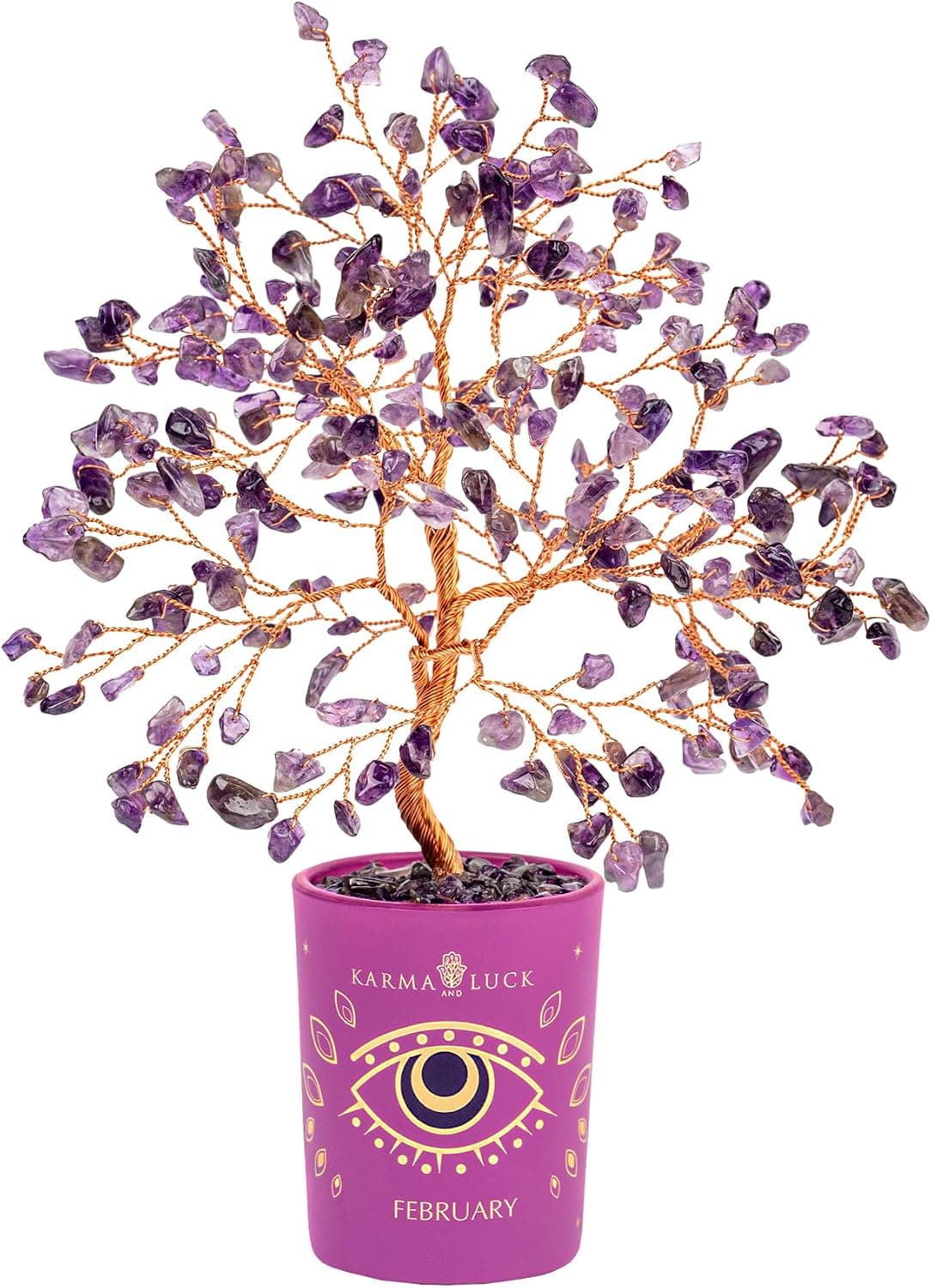
-29%Karma and Luck February Birthstone Crystal Tree of Life, Amethyst Gemstone Fe...
 -50%
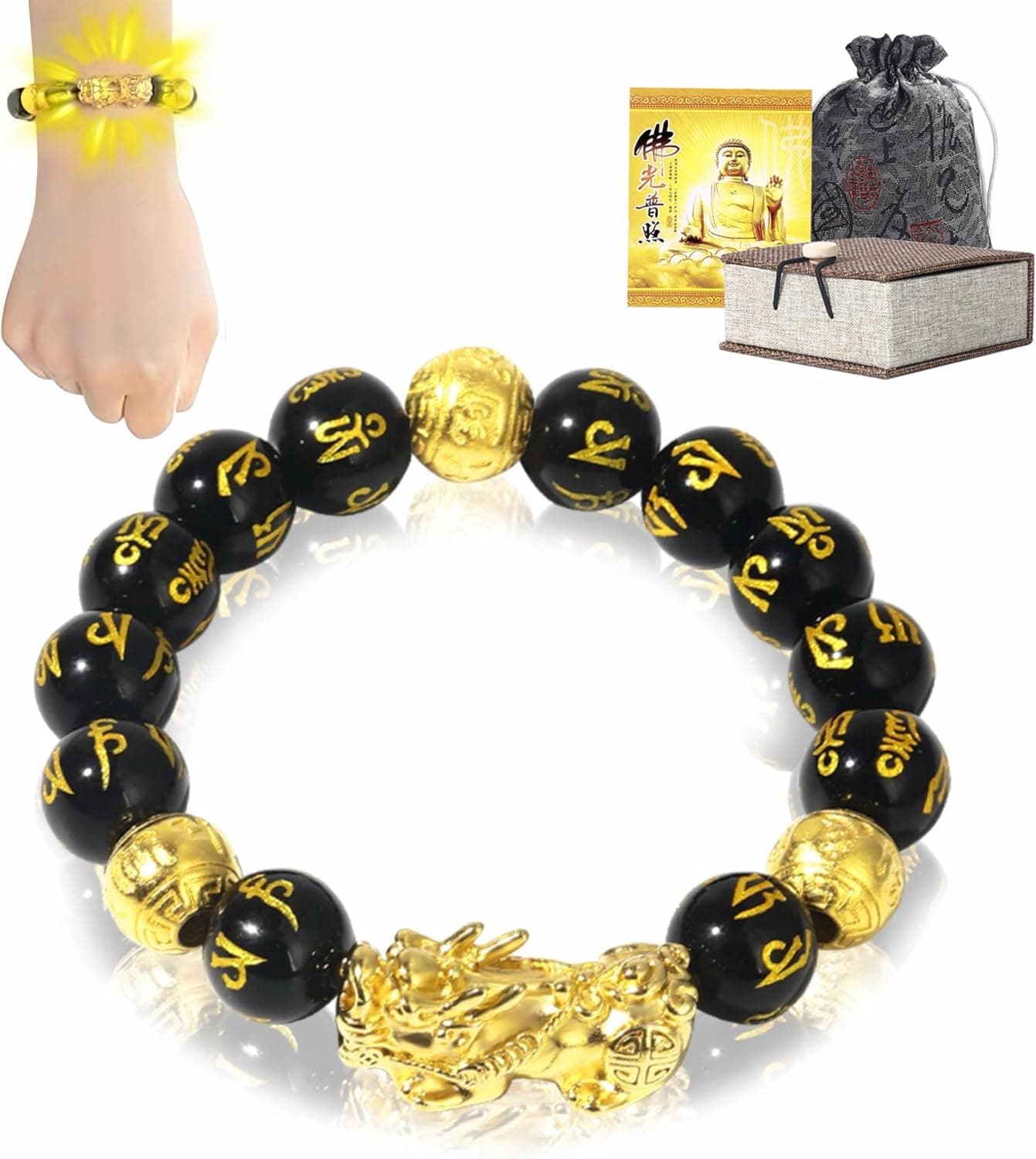
-50%biuufish Feng Shui Black Obsidian Bracelet for Men Women, 24K Gold Plated Pix...
As an Amazon Associate, we earn from qualifying purchases. We only recommend items our practitioners have personally tested.
Continue Your Journey
Explore these related guides to deepen your understanding:
Ready for Deeper Guidance?
Try our free I Ching reading for personalized wisdom, or explore our curated Feng Shui essentials.