Obsidian doesn't work on your wrist. It works within three feet of the door — and most homes keep it three rooms away.
The Three-Foot Rule
Put your heel against the base of the door you actually use and take one normal step forward. You are standing in the only part of your home where an obsidian bracelet does structural work instead of decorative work. Three feet. That is the zone.
Almost every bracelet I am asked about lives somewhere else. A nightstand in the back bedroom. A jewelry box on a bathroom shelf. A drawer in a home office, still in the pouch it arrived in. The stone is fine. The position is doing nothing.
Distance is the variable almost nobody checks.
I have watched people spend months on the right stone — the right sheen, the right bead size, the right number of beads — and never once ask where it sits relative to the entrance. That is like buying a good lock and installing it on a closet door. The object is not the problem. The address is.
What You're Actually Dealing With
Obsidian is not a crystal in the technical sense. It is volcanic glass — lava cooled so fast that no lattice had time to form. That matters for how it behaves in a room. Without a lattice, it does not amplify or organize anything. It interrupts. It absorbs. It reflects if polished, and swallows light if matte.
Compare that with quartz, which holds a stable structure and is used to reinforce and circulate. Two different jobs. If you have been treating every dark stone as interchangeable with every clear one, that is the first thing to untangle — the guide to choosing crystals by function is a better starting point than any bead-size chart.
In five-element terms, obsidian reads as water held inside metal: dark, dense, downward, deeply yin. Its classical use is at the mouth of a space, where energy arrives fast and needs to slow. Not on a wrist in a room three doors away from where anything arrives.
Here is the yin-yang framing without the mysticism. Every home needs at least one moving point — a door, a stair, a window that catches wind — and at least one settling point. Most contemporary Western apartments are almost all moving point: open plan, hard floors, cool white light, glass, gloss. What they lack is a place where energy can put itself down. A dark, matte, heavy object near the entrance is a settling point. That is a design decision as much as a metaphysical one, and it is why material, finish, and placement all have to agree with each other.
The Hidden Pattern
Trace it as a sequence.
Input: whatever the corridor, the elevator lobby, the stairwell, or the street is carrying arrives at your door. Fast, mixed, not yours.
Step one: at the threshold, speed drops. A door is a constriction, and anything moving through a constriction decelerates on the far side. Dust, noise, and momentum all settle in the same few square feet.
Step two: an object inside that three-foot zone either catches what settles or ignores it. Absorbing materials catch — dark stone, unpolished wood, wool, matte ceramic, heavy fabric. Reflective materials redirect — mirror, glass, polished metal, high-gloss lacquer. Both are legitimate. They are not interchangeable.
Step three: whatever is not caught keeps moving and lands on the first soft surface it meets, which in most homes is a sofa, a rug, or a bed. That is the mechanism behind something people notice but rarely explain: the bedroom at the back of the flat feels heavy even though nothing in the bedroom is wrong. The bedroom is not the problem. The bedroom is the floor.
Output: the entry sets the tone, and the rest of the home inherits it.
A stone the size of a thumbnail cannot absorb a hallway.
That sentence is the whole article. Obsidian has a real capacity to interrupt and settle, but capacity is finite and scale matters. The bracelet is the smallest possible version of a catching object, which means it only earns its keep where the concentration of incoming energy is highest — within arm's reach of the door. Move it three rooms away and it is a piece of jewelry with a good story. The advice you will find for a black obsidian bracelet feng shui setup stops at the wrist: which arm, how many beads, whether to cleanse it under a full moon. None of it asks where the thing sits relative to the entrance, which is the only question that changes the outcome.
The other half of the pattern is speed. Sharp, fast, angled energy — the kind that comes off a long corridor, a T-junction, or a mirror aimed at a doorway — is what classical practice calls sha chi, the fast-moving energy that cuts. Obsidian does not destroy it. It slows it. Slowing is the whole trick, and you can only slow something where it is still moving.
When It Goes Wrong
I have seen this play out in a west-facing rental with a door that opened into a fourteen-foot corridor, three feet wide, tiled in glazed cream ceramic. A round mirror hung on the wall directly opposite the entrance, so anyone stepping in saw themselves arrive. The obsidian bracelet — good weight, matte finish, exactly the right stone — sat in a bathroom cabinet two rooms away, in its pouch.
The tenant's complaint was not about the bracelet. It was that the flat never felt like it had a front. Things arrived and left without a pause: shoes in the walkway, mail on the floor, an argument at the door roughly once a week, sleep that would not settle until well past midnight.
What changed was small. The bracelet moved to a hook within reach of the handle. The mirror came off the facing wall and went to the side, where it stopped doubling the doorway. A matte black dish replaced a glossy tray on the shoe cabinet. The entry bulb went from cool white to warm. I cannot prove the bracelet did anything at all. I can tell you the entry stopped being a place where things passed through without registering, and that the rest of the flat got quieter in the specific way rooms get quieter when someone finally decides where things go.
A smaller version of the same failure shows up in studios with no foyer. The three-foot zone lands on the arm of a sofa or the end of a kitchen counter, and the bracelet ends up wherever there was room. In that case you define the zone rather than find it — a rug edge, a narrow console, a single shelf — and the stone sits on the boundary, not in the middle of the living space.
Two mistakes recur often enough to name. The first is wearing obsidian around the clock, including to sleep, on the theory that more exposure is better. It is a deeply yin material, and plenty of people report feeling flat and heavy after a few weeks of it against the skin overnight; the meaning of a feng shui bracelet is closer to a tool you pick up than a permanent fixture. The second is pairing it on the same wrist with citrine or rose quartz, which do the opposite job. Do not put a sponge next to a lamp and expect either one to work.
The Real Fix
Start with the door you actually use. Not the ceremonial front door, not the one the building directory lists — the one your keys go into. In a house with an internal garage entry, that is the door to treat, and the principles that govern the main entrance apply to it just the same.
Then measure. Three feet from the swing of that door, in every direction, is your working zone. Everything inside it is doing a job. Everything outside it is furniture.
Inside the zone, choose matte over glossy, dark over bright, heavy over light. Not because dark is more spiritual, but because a matte black surface absorbs light and gives the eye a place to rest, while a polished one throws light back and adds another thing to track. If your entry already has a mirror, a glass table, and gloss tile, adding a polished obsidian bracelet is pouring more of the same into a space that needed the opposite.
Give the bracelet a fixed home within the zone: a hook, a dish, a nail. Wear it when you leave. Put it back when you come in. That is not ceremony for its own sake — it is how you make a small object do threshold work twice a day instead of sitting in a drawer being symbolic. If what you want is something on your body through the whole day, that is a different tool with a different job, and you should pick it for that job.
Where the entry treatment sits relative to the rest of the floor plan matters too. The bagua map places the entrance sector in relation to the whole home, and a stone at the door reads differently depending on which sector that door occupies. Ten minutes with the map is worth more than another purchase.
Care is unglamorous. Obsidian is glass. Do not soak it in salt water, do not leave it on a sunny sill for days, and do not scrub it. A dry cloth and a few minutes of morning light are enough. If it chips at the edge of a bead, retire it — fractured volcanic glass is a sharp object, and sharp objects near a threshold are the one thing classical practice is unambiguous about.
And if the trouble is in the bedroom rather than the entry, the bracelet is not your tool. That is a separate set of rules, covered in the guide to crystals for the bedroom.
The three-foot rule is really a question about attention. What sits nearest your door is what your home meets first. Most people answer that question with a shoe rack and a pile of post. A dark, matte, heavy object placed deliberately in that zone will not change your life. It will change what the first three feet of your home is for — and that turns out to be most of the work.
Questions I Get Asked
Left wrist or right? Wrist side matters far less than people hope. The tradition has reasons for both — receiving on the left, releasing on the right — but if the bracelet spends its nights in a bathroom cabinet, the wrist you chose is not the variable in play. Get the entry right first, then worry about sides.
Can it live in the bedroom instead? Not while the entry is unmanaged. A bedroom placement addresses a different problem, and obsidian's yin weight is a poor match for a room whose job is restoration. If you want a stone near the bed, choose one that supports rest rather than one that absorbs.
Does it have to be genuine obsidian? Here is the part the product listings skip: obsidian is not a mineral with a chemical formula, it is glass, which means "genuine" is a lower bar than sellers imply. What actually matters is finish and weight. A matte, dense, heavy black bead does the work; a lightweight glossy bead painted black does not.
How often should I cleanse it? Less often than the internet suggests, and more simply. Wipe it when it looks dull. Give it a few minutes of sunlight. The cleansing industry exists because it sells things; the practice itself is closer to housekeeping.
Mei Chen
Traditionally informed guidance • Cross-referenced with classical Chinese source texts
Content draws from both Compass (Luopan) and Form (Xingshi) school traditions. Illustrative examples are composites based on consultation experiences.
Practitioner-Selected Tools for This Topic
Items our team has tested and found effective for the principles discussed above. Individual results may vary.
 -19%
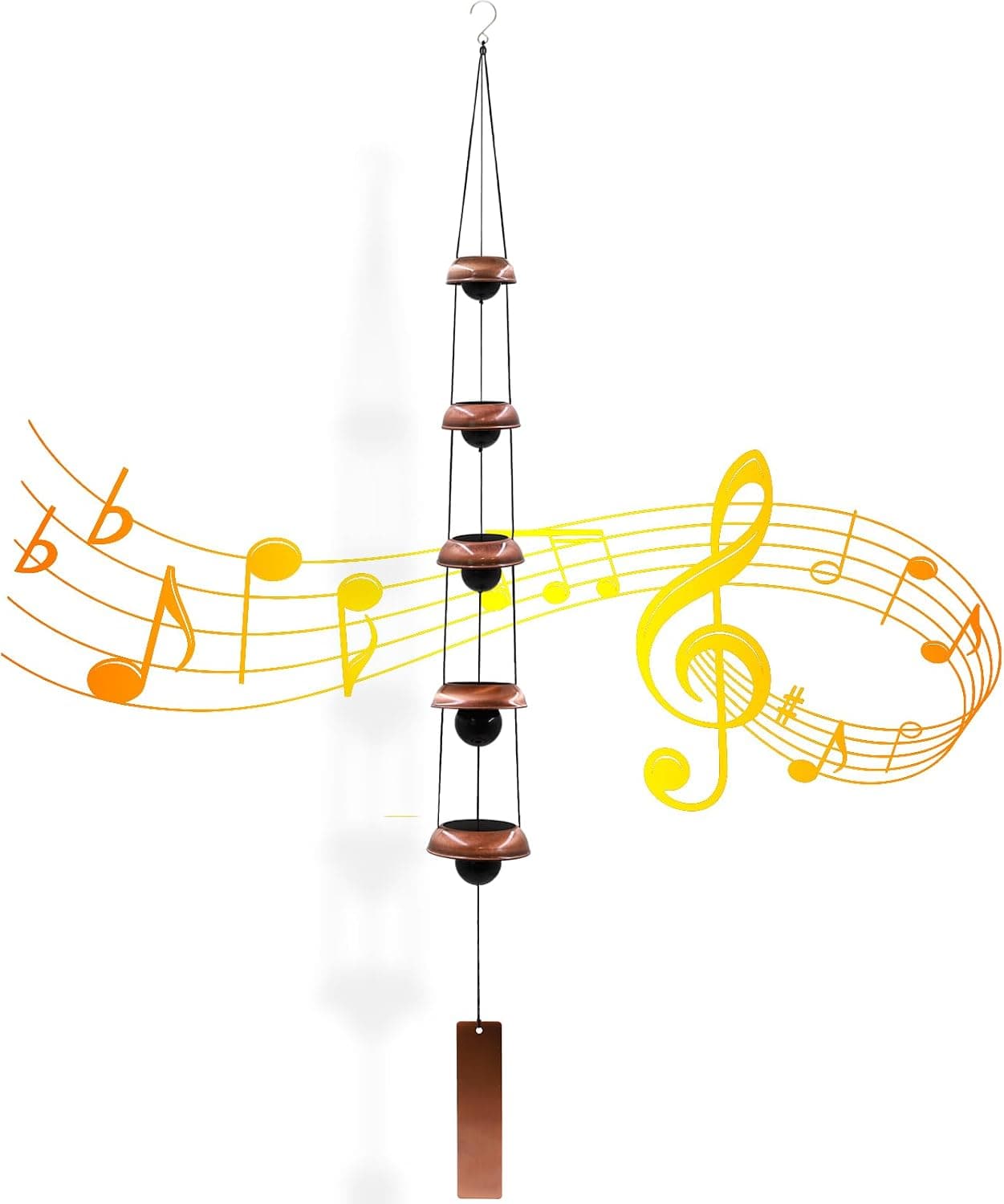
Wind Chimes for Outside with 5 Bell Unique Copper Musical Chimes Feng Shui Wi...
 -5%
YU FENG Evil Eye Money Tree, Blue Feng Shui Decor with Golden Buddha
 -29%
Karma and Luck March Birthstone Crystal Tree of Life, Aquamarine Gemstone Fen...
 -29%
Karma and Luck July Birthstone Crystal Tree of Life, Ruby Gemstone Feng Shui ...
As an Amazon Associate, we earn from qualifying purchases. We only recommend items our practitioners have personally tested.
Continue Your Journey
Explore these related guides to deepen your understanding:


Ready for Deeper Guidance?
Try our free I Ching reading for personalized wisdom, or explore our curated Feng Shui essentials.