A shallow powder room and a long, tunnel-like bath do not respond to the same remedies. Miss that, and the room gets colder, not cleaner.
The Real Story Behind best-items for bathroom feng shui
What's widely believed about best-items for bathroom feng shui isn't the whole picture.
I walked into a narrow guest bath on a Tuesday at 8:40 a.m. in a brownstone off a quiet street in Brooklyn. White subway tile, a chrome towel bar, one small fern on the back of the toilet, and a round mirror above the sink that reflected almost nothing but the door. The owner had done everything she found online: sea salt, a bamboo plant, a blue rug, even a tiny crystal bowl on the windowsill. Yet the room felt tighter after a week, not calmer. She slept worse. The hallway outside that bath started collecting laundry baskets and unopened mail. Not because the bathroom was haunted. Because depth changed the outcome.
Shallow bathrooms and deep bathrooms do not behave the same way. A cramped powder room just off the foyer loses qi fast, so you need containment, softness, and a clear visual boundary. A long, deep bath with a sink on the near wall and the shower tucked far back behaves like a tunnel; energy gets pulled inward, then stalls at the far end where the light is weaker and the air tends to sit still. Common advice ignores that split. It tells people to add the same cures everywhere, as if a six-foot room and a fourteen-foot room were twins.
That's a mistake.
In a shallow room, one well-chosen object can steady the space: a covered container, a neatly framed mirror, or a compact earth-tone accessory placed within arm's reach of the sink. In a deep room, the fix often has to work at the far end, where the eye drops and the body reads the space as unfinished. I have seen a dark navy hand towel at the rear hook do more than three “wealth” trinkets on the vanity. Strange, but true. The room tells you where it leaks.
The first question is not, “What item should I buy?” It is, “How far does the room pull the eye before it stops?” That one detail changes everything. For a shallow bath, too many objects make the room feel boxed in. For a deep bath, too few objects leave the last third of the room emotionally empty, which is why people start closing the door harder, rushing through, and forgetting to wipe the counter. The room trains behavior. Then the behavior feeds back into the room.
Case Notes From a Long Bathroom With a Short Fuse
A client once had a primary bathroom that measured about 5 by 14 feet, with the door opening toward a vanity at the front and the shower at the back wall. Cream paint, brushed nickel fixtures, a pale wood stool, and a slate-gray bath mat by the shower. She had followed a blog post to the letter: blue candles, a glass vase, a bowl of pebbles, and a plant near the sink. The result was odd. The vanity area felt polished; the back of the room felt damp, dim, and emotionally shut down. She said she kept waking up at 3 a.m. needing water, then noticed her partner avoiding the bath altogether. That is not random. A deep room with weak visual closure can leave people feeling unfinished, and unfinished rooms produce unfinished habits.
We checked the layout first, not the décor.
The mirror faced the doorway at a slight angle, which bounced brightness forward but left the shower zone underlit. The plant near the sink was healthy enough, but it had no influence on the far wall, where the eye kept stopping at bare beige tile and a dark vent cover. The “cures” were all clustered in the first half of the space, exactly where the room already had the most activity. Wrong location. Wrong depth. The fix was to move one object to the back, swap the navy mat for a warmer stone color, and add a small framed print with a rounded shape on the back wall to give the eye a place to land. Within ten days, the bathroom stopped feeling like a corridor with plumbing.
That case is why shallow and deep rooms require different thinking. A shallow powder room can be over-treated fast, especially with bold reds, large plants, or multiple reflective surfaces. A deep bathroom, by contrast, can absorb one gentle anchor and still feel underfed. The item matters, sure, but placement matters more. If the room has more length than width, you are dealing with movement and loss. If it is almost square, you are dealing with compression and overfill. These are not subtle differences.
mapping the home correctly helps, but the bathroom itself still needs a local diagnosis. I also cross-check with the five elements behind the room’s behavior, because a deep bath often overdoes water and metal already. Then I look at the adjacent room. A bathroom beside a bedroom can bleed into sleep far more than one hidden near a laundry nook. The house is one system. The bathroom is just where the symptoms show up first.
What Works in Shallow Baths
Think compact, contained, and calm. A shallow powder room near the entry often has a guest-facing job, so it should not announce itself with a scatter of objects. One small ceramic dispenser, one covered waste bin, and one simple framed print can do the work. Choose matte finishes over shiny ones. Use a towel in stone, sage, or charcoal instead of bright blue if the room already feels cool. A powder room under seven feet deep tends to want visual quiet, not decoration piled on top of decoration.
Mirror placement deserves more respect than it gets. In a shallow room, a mirror that reflects the toilet from the doorway can make the space feel sloppy even when it is spotless. Shift it so it captures the sink wall, a plant leaf, or a soft lamp glow instead. The point is not vanity. The point is to prevent the eye from hitting a dead end the moment the door opens. A visitor should exhale, not brace.
I have seen people ruin a tiny bath with enthusiasm. Three jars on the counter, one tall plant, a scented candle, and a metal tray all fighting for a square foot of space. Not helpful. In a shallow room, less really does read as more because the room itself is already doing the job of containment. Give it a little earth, a little softness, and nothing that sparks glare at eye level. That is enough.
There is also a practical side no one likes to admit. Small bathrooms pick up clutter fast because the body moves through them in a hurry. The best item often solves a behavior problem: a lidded basket for toiletries, a hook positioned six inches behind the door, or a dish that keeps jewelry from scattering across the counter. These are not glamorous cures. They work because they stop friction before it starts.
What Changes in Deep, Tunnel-Like Bathrooms
Depth creates a different problem. The room feels as if it is asking for something at the far end, even when the vanity looks fine. That is why a long bathroom can seem “off” despite clean grout and expensive fixtures. The eye travels, the body follows, then everything stops short of completion. In feng shui terms, qi keeps moving but does not settle. In plain English, the room feels like it has a tail that never gets dressed.
For these spaces, the cure usually belongs at the back: a warmer color, a grounded texture, or a deliberate visual endpoint. A taupe hand towel on the rear wall hook can do more than an expensive decorative bowl in front. A small piece of art with a circular motif helps the gaze stop cleanly. If the shower is at the back, keep the glass clear and the curtain fully drawn open when not in use; a half-closed curtain makes the room feel like it is hiding something. Deep rooms need closure.
One couple I worked with in Chicago had a long en suite with slate tile and a dark charcoal vanity. The wife kept buying glossy accessories because the room seemed “too plain.” It got worse. Every shiny object pulled attention to the front half, while the back wall stayed stark and cold. Once she switched to a clay-colored soap pump, a soft ivory mat, and a warm print near the tub, the room finally read as complete. Her words, not mine: “I stopped rushing out of it.” That is the point.
There is a gentle confrontation here. People assume bathrooms always need water symbolism because the room already has water. That logic sounds tidy and fails in practice. Too much blue, too many glass objects, and too many reflective surfaces can make a deep bath feel overcool and emotionally hollow. Sometimes the correction is the opposite of what the internet pushes. Earth steadies. Wood softens. A little fire through warmer light can keep the room from feeling like a tunnel with plumbing.
metal and water decor can be useful, but only when the room is not already saturated with chrome, porcelain, and mirror. If the bathroom is deep, I often check the fire element balance next, because a tiny touch of warmth near the far wall can keep the space from feeling clinically cold. That does not mean adding candles everywhere. One warm note in the right spot beats a dozen icy ones.
Items That Work Because They Solve a Depth Problem
Not every cure belongs in every room. A covered bin helps shallow bathrooms because it removes visual noise. A ceramic tray helps deep bathrooms when it sits near the back sink or tub, where it gives the eye a landing place. A mirror with a soft frame can make a cramped bath feel less boxed in, while a small art print can make a long bath stop feeling like a hallway. Same category. Different job.
Plants are tricky. In a shallow bathroom with decent light, a single healthy plant on the vanity can soften the room without crowding it. In a deep room, the same plant may disappear into the front half and do nothing for the farther end. If the far end gets little daylight, choose a low-maintenance piece that can tolerate it, or skip the plant and use a warm-toned object instead. I have seen a pothos on a sink counter become a shrine to neglect because the owner never looked past it to the real problem.
Color choice matters more than the shopping cart suggests. Pale blue and white can feel clean, but in a deep room they sometimes intensify the sense of cold distance. Clay, sand, soft gray-green, and muted ivory tend to hold the room together better. For shallow spaces, a strong tone can be too loud; a single dark object may anchor the room without squeezing it. The room depth decides whether the item should blend or define.
room color choices only make sense when you account for what the eye does in that exact layout. If you want the broader framework, here is how the bagua is read without the usual mistakes, but do not let the map override common sense. A bathroom that is four feet deep and a bathroom that runs twelve feet deep need different treatment even if they sit in the same sector.
Common Mistakes That Make Things Worse
One of the worst moves is adding too many “protective” objects because the room feels unsettled. Salt bowls, crystals, multiple candles, and a plant can create a mess of intentions that the room cannot carry. The result is not better qi; it is visual fatigue. Your eye becomes busy. Then your nervous system follows suit.
Another mistake is treating every bathroom like a storage shelf for remedies. The toothpaste, extra rolls, lotion bottles, and laundry hamper should not all compete in view. In a shallow room, clutter announces itself immediately. In a deep room, clutter hides at the back and creates a stale pocket that people feel before they consciously notice it. They start avoiding the space. The towel stays damp. The lid stays open. Soon the whole room smells faintly off.
People also overuse mirrors in bathrooms. A large mirror in a shallow room can reflect brightness well, but if it faces the door or catches the toilet, it can bounce a restless feeling right back at you. In a deep room, a mirror placed only at the front does not fix the back half. It just magnifies the wrong half with more light. Use mirrors carefully. They are not universal medicine.
Then there is the bamboo obsession. Bamboo gets recommended so often that people assume it solves everything. Not even close. In a dry, dim bath with no natural light, a stressed plant becomes a visible reminder of failure. The room notices. You notice. That is relationship tension in another form. If the space cannot support living greenery, choose a stable material instead of pretending a plant will save the layout.
For the deeper causes of these mistakes, the neighboring rooms matter too. A bath beside a cluttered closet picks up that pressure. A bath facing the bedroom can disturb sleep if the door line stays open at night, which is why I send people to the bedroom rules that affect rest and relationships when the bathroom sits too close to the sleeping area. Small layout errors travel farther than most people expect.
How I Would Set Up a Bathroom by Depth
For a shallow room, I would keep the palette restrained, put one grounding object within a few feet of the sink, and make sure the door does not open directly onto a bright mirror. I would choose a lidded bin, one clear surface, and a towel color that does not shout. If the room already feels tight, I would avoid adding any more reflective finish than necessary. The goal is ease, not decoration.
For a deep room, I would walk to the back wall and ask what the eye is missing there. Usually it needs one stable focal point: a print, a warm mat, a ceramic accessory, or a towel in a deeper, earthier tone. I would also brighten the rear area so the room does not taper into shadow. A soft overhead light near the shower beats a dramatic pendant that leaves the back in gloom. Place the strongest visual anchor where the room wants to disappear.
And I would stop pretending that more items equals more balance.
One object in the right depth can settle a room faster than five objects in the wrong half of it. That is the lesson people fight because it sounds too plain. They want a special cure. Often the cure is a shift of twelve inches, a less glossy surface, or a color that stops the room from vanishing at the far wall. Small moves. Real effects.
If you are still unsure, compare your bathroom to the adjacent space. Does it feel like a pause point or a passage? Does the eye stop quickly, or keep traveling into a dim end? That answer tells you more than a shopping cart ever will. And if you want the broader home framework, the rules for reading a room by center and perimeter help explain why some spaces swallow objects while others amplify them.
FAQ
Is conventional best-items for bathroom feng shui advice reliable?
Often no. A cure that works in a shallow powder room can fail in a long bath because depth changes how qi moves and where the eye comes to rest. The room’s geometry matters first, the shopping list second.
Should I always add plants to a bathroom?
Only if the light and moisture support them. A healthy plant near the vanity in a bright, shallow bath can help, but a struggling plant in a deep dim room just advertises neglect. That kind of clutter carries a different message than people think.
What if my bathroom is long but very small in width?
Treat it like a corridor with plumbing. Give the far end a warmer anchor and keep the front half uncluttered so the room does not split into “busy” and “dead” zones. A narrow, deep room usually needs fewer items than its length suggests, not more.
Can color alone fix a bathroom that feels wrong?
Sometimes color helps, but only when it supports the room’s depth. A pale, cool palette can make a deep room feel even colder, while a soft earth tone can prevent a shallow room from feeling boxed in. Color works best when it matches the room’s proportions, not just its style.
What should I change first if the bathroom still feels off?
Start with the back wall and the door view. Those two places tell you where energy is leaking or stalling. Move one object, adjust one light, and watch what happens for a week; the room usually gives a clear answer if you stop decorating long enough to see it.
Do mirrors help in deep bathrooms?
They can, but only when they reflect something worthwhile. A mirror that bounces light toward the far end can soften a tunnel effect, while one that reflects only the doorway can make the front half feel overactive. The placement decides the outcome, not the glass itself.
Look at your bathroom tonight with the door half open and stand still for ten seconds. Where does your eye stop?
Mei Chen
Traditionally informed guidance • Cross-referenced with classical Chinese source texts
Content draws from both Compass (Luopan) and Form (Xingshi) school traditions. Illustrative examples are composites based on consultation experiences.
Practitioner-Selected Tools for This Topic
Items our team has tested and found effective for the principles discussed above. Individual results may vary.
 -19%
-19%Wind Chimes for Outside with 5 Bell Unique Copper Musical Chimes Feng Shui Wi...
 -5%
-5%YU FENG Evil Eye Money Tree, Blue Feng Shui Decor with Golden Buddha
 -29%
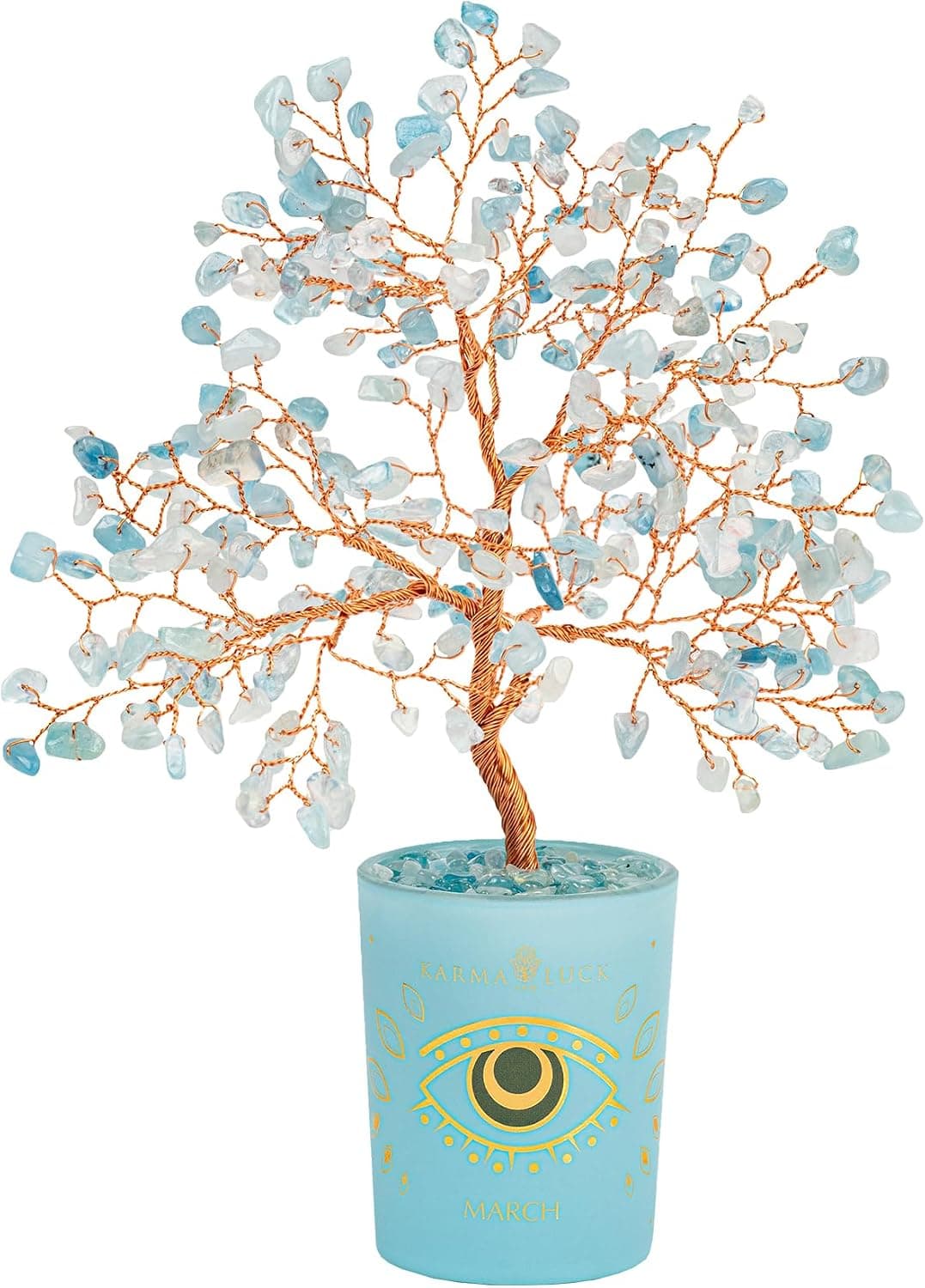
-29%Karma and Luck March Birthstone Crystal Tree of Life, Aquamarine Gemstone Fen...
 -29%
-29%Karma and Luck July Birthstone Crystal Tree of Life, Ruby Gemstone Feng Shui ...
As an Amazon Associate, we earn from qualifying purchases. We only recommend items our practitioners have personally tested.
Continue Your Journey
Explore these related guides to deepen your understanding:


Ready for Deeper Guidance?
Try our free I Ching reading for personalized wisdom, or explore our curated Feng Shui essentials.