
The Bagua is the fundamental tool of Feng Shui. Learn how to map the nine life areas onto your floor plan and activate specific energies.
How to Map Energy in Your Home Without Overthinking It
When the Morning Keeps Getting Stuck at the Same Door
At 8:40 a.m., the kitchen light is on, the coffee is made, and yet the day still feels strangely delayed before it even begins.
I've stood in that kitchen. East-facing doorway, backpack dropped on the floor blocking the first two steps in, a half-finished coffee mug left on the counter, the air carrying burnt toast and dish soap. The owner pauses in the threshold every weekday morning — not deliberately, not dramatically — just a half-second stall before leaving for work. It happens so consistently that they've stopped noticing it. But that pause is the whole story.
Not the clutter. Not the lighting. The pause.
When a body hesitates in the same doorway at the same hour five days a week, something in that room is generating friction before the day has earned it. That friction is what the bagua map was built to locate — not as a decorative overlay, not as a color-coding exercise, but as a diagnostic tool for exactly this kind of stuck morning.
The apartment in question: two bedrooms, front door opening north into a narrow living room, a desk in the far-left corner beside a window, and a daily route from bedroom to kitchen that passes a shoe pile and requires navigating around a dining chair. The resident tidies. The stall remains. Because the problem isn't the mess — it's the path the mess interrupts.
Why One Room Can Tell You More Than a Whole Floor Plan
Most bagua practice starts at the scale of the whole house. Stand at the front door, overlay the nine-zone grid onto the floor plan, identify which sector holds the bedroom and which holds the bathroom, and begin adjusting from there. That approach has genuine value. But it can also produce a kind of analysis paralysis — nine zones, nine life areas, dozens of objects to reconsider, and no clear place to begin.
There's a more immediate entry point.
Pick the room where daily momentum most visibly stalls. Not the most cluttered room. Not the room that bothers you aesthetically. The room where the same behavioral interruption keeps repeating — where you pause, forget, avoid, or abandon something on a loop. That room is where your daily movement pattern and qi are colliding in real time, and it will tell you more in twenty minutes of honest observation than an hour spent color-coding a floor plan.
In the apartment with the east-facing kitchen, the living room is technically the first space you enter. But the kitchen is where the day's intention either consolidates or dissolves. The backpack on the floor, the threshold pause, the half-finished coffee — these aren't random. They're symptoms of a room that has a friction point built into its most-used path, and that friction point sits squarely in the bagua zone that governs how momentum leaves the home.
A single high-traffic room under consistent behavioral stress is a cleaner diagnostic surface than an entire floor plan. Less noise. More signal.
Trace the Repeatable Path, Not the Pretty Layout
Here's what I actually look for when I walk into a room someone says feels off: I look for the worn path. Not the intended path — the actual one. The scuff mark near the dining chair leg. The boot left toe-out in the center of a 3-foot-wide entry corridor. The phone charger stretched across the walking line between bed and bathroom at 11:40 p.m.
In a narrow hallway — 3 feet wide, 22 feet long, north entry to south rear door — the main door sits at the north end with a coat rack on the west side and one boot left in the center of the floor. The floor creaks at the same board every morning. The resident drops keys, turns back for forgotten items, leaves late. Every single day. The layout hasn't changed. The behavior hasn't changed. Because the path itself contains the problem: a threshold interrupted by an object, a coat rack that pulls the body sideways, and a creak that registers subconsciously as resistance.
The route from bedroom to bathroom matters more than whether the bedroom's southwest corner is properly activated. The route from front door to kitchen matters more than whether there's a plant in the wealth sector. Qi follows movement. Movement follows habit. Habit follows the physical path the body takes through a room dozens of times each week.
So before you open the bagua grid, walk the room's actual route. Door to where you drop things. Where you drop things to where you make decisions. Where you make decisions to where you exit. Mark every point where your body slows, pivots unexpectedly, or doubles back. Those points are your diagnostic data.
The desk in the far-left corner of the living room, 24 inches from an east-facing window with the chair back to the room — that placement creates a secondary path problem. Anyone walking from the bedroom to the kitchen passes behind the desk chair. The person sitting there registers peripheral motion every time. The mind begins scanning instead of working. Not because the room is cluttered. Because the path runs through the attention zone.
The Corner That Vanishes and the Job It Stops Doing
Missing corners get treated as automatic defects in most feng shui writing. A room that isn't a perfect rectangle is described as energetically incomplete, with the missing sector needing mirrors, plants, or crystals to compensate. That framing misses something more concrete.
The real question isn't whether a corner is missing. It's whether that corner had a functional job in the room's movement pattern — and what happens to behavior when that job disappears.
Consider a 14-by-18-foot bedroom with a recessed closet that cuts into the southwest corner, leaving an L-shaped footprint. The closet door opens inward, reducing the usable corner by 4 square feet. In bagua terms, the southwest governs relationships and partnership. In behavioral terms, that corner is where a second person might stand while getting dressed, where a chair might sit for reading before bed, where the room's social geometry could anchor. When a closet cut-in removes it, the room doesn't just lose a life-area sector — it loses a physical zone that supported two-person occupancy.
The missing corner in the guest room used as storage tells a different story. West wall lined floor to ceiling with boxes, southwest corner absent due to a closet cut-in, a cold dust-and-cardboard smell when the door opens. The owner mentions that invitations and social plans keep falling through. The room stopped functioning as a space for other people the moment it became a warehouse for deferred decisions. The missing corner didn't cause the social withdrawal — but it mirrors it perfectly, because the room's entire identity as a place of hospitality collapsed along with its usable geometry.
When you find a missing corner, ask what that zone was supposed to do for the people moving through the room. If it was dead space before the cut-in, its absence matters less. If it was the natural landing point for a second person, a reading chair, or a clear exit path, its loss is functional — and no amount of decorative filling restores what the circulation pattern lost.
A Desk by the Window Can Anchor Focus — or Leak It
The desk in the southeast window of the living room at sunset: monitor catching glare, blinds half-closed, a stack of invoices wedged between the chair and the door. The user leans forward, squints, then gives up after 20 minutes. Every evening. The window faces southeast, which in bagua terms is the wealth and abundance sector — theoretically an excellent placement for work that generates income. In practice, it's a 20-minute daily defeat.
Direct side-light hitting a monitor creates a physiological problem before it creates a feng shui one. The eyes and frontal cortex work harder to maintain contrast. Fatigue arrives earlier than it should. The person interprets that fatigue as personal failure — laziness, lack of discipline — when the actual cause is a 3 p.m. sun angle and a desk orientation that puts glass directly in the sightline.
The desk in the apartment's far-left corner is a different case. It faces a closed hallway, not a window. Unopened mail stacked four inches high beside the monitor. Fluorescent glare from a side window washing the keyboard. The user keeps switching tabs instead of starting the report. Here the problem is layered: the hallway keeps peripheral attention active, the mail stack creates a visual pile of unresolved obligation directly in the work zone, and the glare — again — makes the eyes work harder than the task requires.
Common advice says to put the desk anywhere with a window for inspiration. I'd push back on that directly. A window behind or beside a monitor is frequently a liability, not an asset. The desk that anchors focus is the one where the body feels settled — back supported, sightline clear, no peripheral movement pulling attention sideways, no light source competing with the screen. In bagua terms, the southeast placement has potential. But potential means nothing if the physical conditions make the desk uncomfortable to sit at for more than 20 minutes.
The invoice stack between the chair and the door is worth noting separately. It sits in the path between the work zone and the room's exit. Every time the user leaves the desk, they step past unfinished financial business. Every time they approach it, that stack is the first thing they see. The desk isn't leaking energy abstractly — it's leaking it through a very specific sequence of visual cues that prime avoidance before the chair is even pulled out.
A Single Observation About Shoe Piles
The shoe pile at the threshold isn't a tidiness problem.
It occupies the first 30 inches inside the north-wall door — the entry hall, 3 feet wide, coat rack on the west side. Every morning, the body has to navigate around it before it has fully committed to leaving. That navigation is a micro-decision. Should I move these? Should I just step over? Did I leave those there or did someone else? The decision takes half a second. Over 250 workdays, it takes two hours and trains the brain to associate departure with friction.
A beautiful basket by the door — the standard fix — solves nothing if the basket sits in the same first-step zone. The interruption is preserved. The visual is tidier. The stall continues.
The shoe pile is the first link in the day's momentum chain. When that link catches, everything downstream runs slightly late, slightly distracted, slightly behind the version of the morning that was supposed to happen.
How to Read the Bagua Without Treating the Room Like a Poster
The bagua is not a decorating scheme. Placing a purple object in the southeast corner and a pair of candles in the southwest is not the same as reading the room.
Reading the room means identifying which life area the room primarily serves, then checking whether the room's dominant movement pattern supports or contradicts that theme. Those are two different questions, and most bagua guides only ask the first one.
Start with the room's function in your actual life — not its intended function, its real one. The guest room used as storage is technically the creativity or helpful-people sector depending on its position in the home. But its real function is avoidance. It's where deferred decisions live. The bagua sector tells you what the room could be doing for your life. The room's actual use tells you what it's doing instead.
Then overlay the nine-zone grid onto the room itself — not just onto the whole floor plan. A single room has its own internal bagua. The doorway anchors the bottom of the map. The far wall holds the fame, wealth, and helpful-people zones depending on their left-right position. The center holds the health axis. When you map the room this way, the desk in the far-left corner of the living room lands in the wealth sector of that room. The shoe pile at the north-wall entry sits in the career zone of the entry hall. The bed headboard against the south wall, 6 inches below a shelf, sits in the fame sector of the bedroom — under literal overhead pressure.
Now ask whether the movement in that zone supports its theme. A career zone blocked by shoes and a narrow corridor generates daily friction at the exact point where momentum should flow most freely. A wealth zone occupied by a desk the user abandons after 20 minutes due to glare isn't activating abundance — it's rehearsing incompletion. The map tells you where to look. The movement pattern tells you what's actually happening there.
When Tidying Helps and When It Only Delays the Diagnosis
Clutter removal works when the clutter is the path interruption. When the shoe pile moves and the threshold opens, the morning changes. When the invoice stack between the desk chair and the door is filed, the approach to the desk changes. These are real improvements because the physical object was the friction point in a repeated action route.
Clutter removal doesn't work when the underlying path, doorway pressure, or missing zone is the actual problem. The dining nook at 8:15 p.m. — northeast corner of the living room, table shoved 18 inches from the window, one chair permanently occupied by a laundry basket, a cold draft, and a household that eats in front of the TV instead of at the table. Remove the laundry basket. The table is still pushed against the window. The draft is still there. The ceiling fixture still sits over a table that nobody uses. The household still eats on the couch.
Or the study corner at 3:45 p.m.: northeast quadrant of a larger living room, bookshelf 2 feet from the desk, east-facing window, a drooping plant in dry soil. The user reads the same paragraph repeatedly without retaining it. Tidying the desk surface doesn't address the fact that the bookshelf on the northwest wall reaches 7 feet and casts shadow over the desk zone. It doesn't address the fact that the plant — a living thing in visible distress — sits in the direct sightline and keeps pulling a low-level maintenance guilt into the reading experience.
Surface tidying makes a room look resolved. It doesn't make it function differently. The distinction matters because people often tidy a stalled room, feel temporarily better, and then conclude that feng shui didn't work — when what they actually did was clean around the structural problem without touching it.
The diagnostic question is always: after tidying, does the repeated behavior change? If the same stall, avoidance, or interruption reappears within a week, the path itself is the problem, not the objects on it.
The One-Room Audit You Can Finish Before Lunch
Choose the room where you feel the most consistent low-grade friction. Not the most dramatic problem — the most repetitive one.
Walk the room's actual route three times. Door to first drop point. First drop point to main activity zone. Main activity zone to exit. Note every place your body hesitates, pivots, or doubles back. Write them down. These are your friction points, and they matter more than any general sense that the room feels off.
Then stand at the room's doorway and orient the bagua. The door wall is the bottom of the map. Career sits at the bottom center. Knowledge is bottom-left. Helpful people is bottom-right. Wealth is far-left. Fame is far-center. Relationships is far-right. The center holds health. Identify which zone each of your friction points falls in.
Now ask one question per friction point: does the physical condition of this zone support or contradict the life theme it holds? A shoe pile in the career zone contradicts forward momentum — literally. A laundry basket occupying the relationships chair contradicts the idea of another person being welcome at that table. A drooping plant in the knowledge corner contradicts the idea of something living and growing in the zone meant for cultivation.
You don't need to fix everything today. You need to identify the single friction point that sits earliest in the room's daily movement sequence — because that's the one that primes everything downstream. In the entry hall, it's the boot in the center of the corridor. In the kitchen, it's the backpack inside the threshold. In the bedroom, it's the phone charger stretched across the walking line.
Move that one thing. Then walk the route again.
The room won't transform. But the morning might arrive slightly less delayed — and that half-second of ease, repeated 250 times a year, is where the bagua map actually lives.
Mei Chen
Traditionally informed guidance • Cross-referenced with classical Chinese source texts
Content draws from both Compass (Luopan) and Form (Xingshi) school traditions. Illustrative examples are composites based on consultation experiences.
Practitioner-Selected Tools for This Topic
Items our team has tested and found effective for the principles discussed above. Individual results may vary.
 -19%
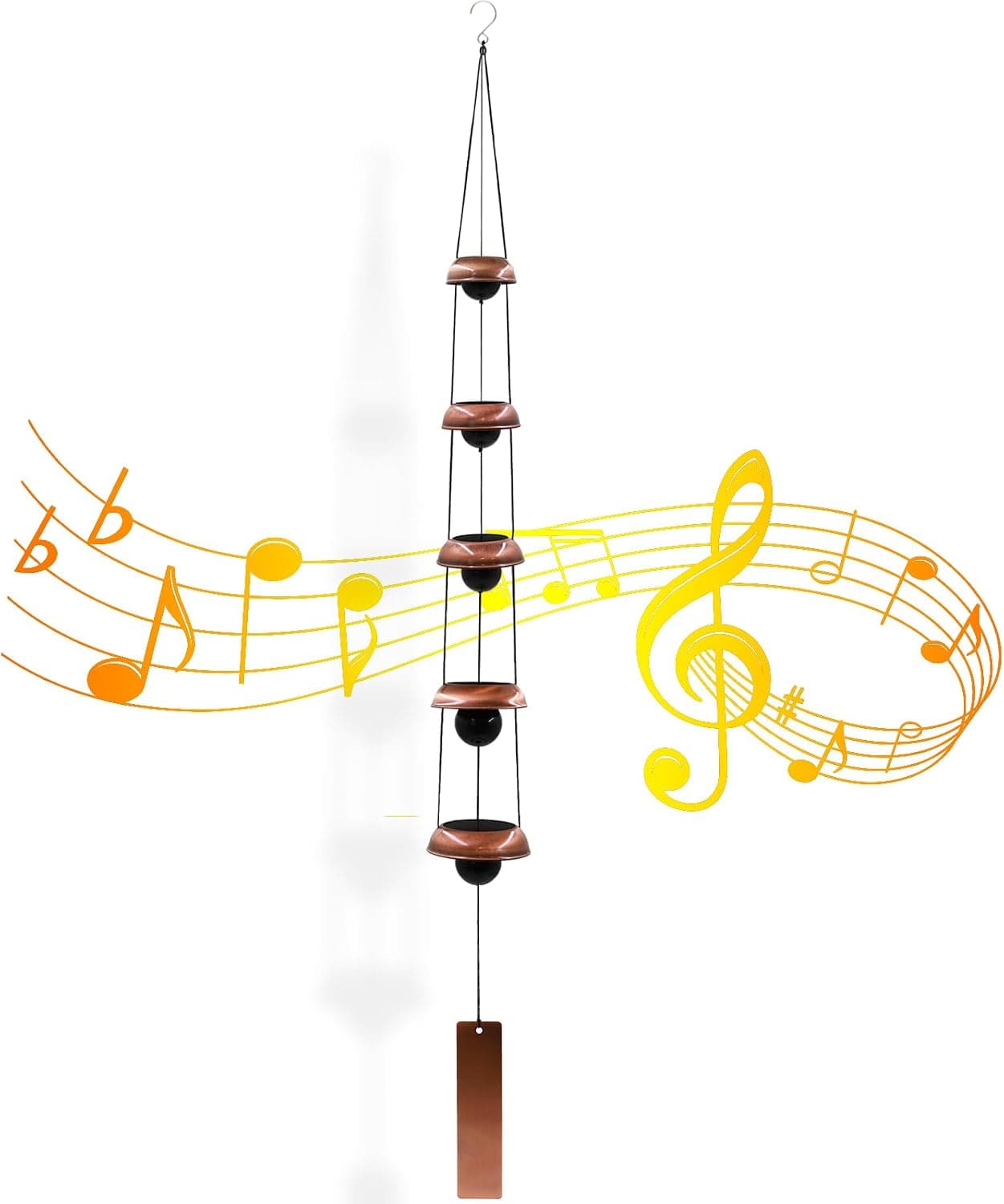
-19%Wind Chimes for Outside with 5 Bell Unique Copper Musical Chimes Feng Shui Wi...
 -5%
-5%YU FENG Evil Eye Money Tree, Blue Feng Shui Decor with Golden Buddha
 -29%
-29%Karma and Luck March Birthstone Crystal Tree of Life, Aquamarine Gemstone Fen...
 -29%
-29%Karma and Luck July Birthstone Crystal Tree of Life, Ruby Gemstone Feng Shui ...
As an Amazon Associate, we earn from qualifying purchases. We only recommend items our practitioners have personally tested.
Continue Your Journey
Explore these related guides to deepen your understanding:


Ready for Deeper Guidance?
Try our free I Ching reading for personalized wisdom, or explore our curated Feng Shui essentials.