Miss the angle, and the cure sits there looking obedient while the room keeps leaking qi.
I’m assembling the article around the split-level failure mechanism, not a generic cures overview. First pass is the structure and link placement, then I’ll tighten the language so it stays concrete and avoids the usual AI rhythms.{"title":"Split-Level Homes Break 2026 Flying Stars at Floor Height","excerpt":"The chart can look correct and still fail when stairs, landings, and half-levels redirect the cure before it reaches the room.","content":"
The Hidden Truth About 2026 Flying Stars Annual Cures
Something about <a href="/blog/feng-shui-2026-flying-stars-annual-cures">2026 flying stars annual cures doesn't add up. I walked into a split-level townhouse in Portland last February and saw the whole setup: a brass cure on the top landing, a blue bowl in the east bedroom, and a red ribbon tied to a railing beside the stair run. On paper, everything was correct. In practice, the homeowner was sleeping badly, the upstairs office felt noisy at noon, and the downstairs den had become the place where bills vanished under a lamp with a bent shade. That is the part people miss. Floor height changes the route the qi takes, so the cure can land in the right sector and still miss the layer where the disturbance is actually moving.
Most advice assumes one flat plane. Split-levels do not cooperate. A half-flight of stairs creates a pressure break, and that break matters because qi does not behave like wallpaper paste; it slides, gathers, and drops according to level shifts, door openings, and what the eye does first. Put a metal cure on an upper landing and it may calm the top-floor circulation while the lower zone keeps feeding the same problem from below. I have seen people blame the annual chart, then blame the object, when the real issue was the staircase acting like a funnel. Wrong target. Wrong height.
Think of it as three layers working at once: the sector on the compass grid, the floor where your body spends time, and the threshold in between. The annual influence may sit in the northeast, yet the actual disturbance can be amplified by a stair mouth that faces the foyer, or by a bedroom door opening onto a split landing that carries sound and movement straight into sleep space. That is why the conventional reading feels incomplete. It describes the weather map and ignores the hill road.
One more thing: people often place a cure where it is easy to see, because visible feels reassuring. But visibility is not control. A bright ceramic object at the top of an open stair can pull attention upward while the lower landing still channels activity into the wrong room, especially in houses where the downstairs ceiling is lower and the air feels heavier by late afternoon. If you want the method to hold, you have to work with the path, not the postcard view of the room. <a href="/blog/compass feng shui">A reliable compass reading helps, but on a split-level it only becomes useful after you map the vertical breaks.
How the Error Starts
The mechanism is simple once you trace it. First, the annual influence arrives at a sector. Second, the split-level changes the sector's actual reach because movement travels by stair geometry, not by neat floor lines. Third, the cure meets resistance if it is placed on the wrong tier. The result is not dramatic failure; it is dull leakage. Sleep stays shallow. Arguments linger in the kitchen. Mail piles up near the bottom of the stairs because that is where attention drops, literally and mentally.
Take the east side of a house with a sunken family room. If the chart calls for a metal remedy and you set it in the upstairs hall, you may reduce agitation in the hall itself while the sunken room keeps acting like a basin. Sound collects there. So do clutter and unfinished tasks. This is why floor-level changes matter so much in split-level homes: they create pockets that behave like separate containers even when the floor plan claims unity. The annual influence is still valid, but its effect is filtered through the architecture.
There is also the stair landing problem. A landing is not neutral. It is a pause point, which means it can either disperse movement or trap it. Put a cure on the landing without checking which rooms feed into it, and you may shift the disturbance toward the room that opens first onto that pause. I watched this happen in a cedar-toned townhouse where a homeowner placed coins on a half landing beside a white banister. Within ten days, the upstairs guest room became restless and the downstairs study started feeling oddly stalled, because the landing sat between both and neither room was getting a clean flow.
Because vertical distance changes how force arrives, the cure often needs to be closer to the lived room than to the sector center on the plan. A bedroom on the lower level may need a remedy at mattress height or beside the door, while an office above it needs its own adjustment near the desk edge, not shared treatment on the stair wall. That sounds fussy until you watch the pattern repeat. People do one elegant placement and expect a whole house to comply. It does not.
Where the Chart Still Works, and Where It Fails
Use the chart to identify the sector. Then verify which floor actually receives the activity. That sounds obvious, yet it is where many people drift into superstition. They move a crystal because a blog said north or southwest, and they never ask whether the room in question sits above a garage, below a landing, or beside the stair void. The annual influence is real, but its expression changes with the house's anatomy.
In a split-level, the room under the stairs can behave like a compression zone. I have seen a reading nook under a walnut stair become the place where people forgot appointments and left unfinished invoices, even after the right cure was installed in the adjacent hall. The cure was not wrong. Its reach was interrupted. The stair structure absorbed the pressure before the room did. That is the hidden failure mode: the object does its job in one micro-area while the real problem keeps feeding from the next layer.
Sound and light are part of this too. A landing with a skylight can look lively at noon and still create a harsh rebound at dusk, especially if the lower floor is dimmer. Then the top-level cure feels active during the day but useless by evening, when the family actually gathers. On those homes, I often pair the annual adjustment with a steadier room-level change, such as a grounded lamp or a heavier textile that slows the visual rush. Not decorative. Functional.
For a deeper technical frame, read <a href="/blog/map guide bagua">how sector mapping changes once your home stops being flat and compare it with <a href="/blog/calculator feng shui">what a calculator can and cannot tell you. The first tells you where the influence sits. The second tells you why that answer can still be misleading if the staircase, landing, or sunken room redirects the working surface.
Practical Adjustment Points
Start with the stair path. Stand at the bottom, then at the midpoint, then at the top, and notice where movement speeds up or stalls. The place where you naturally slow down is the place where qi is likely to gather. That is usually where the annual adjustment needs support. If the house splits left and right at a landing, do not assume one cure can serve both branches. One branch will usually carry more traffic, more noise, or more visual pull. Treat the busier branch first.
Next, match the remedy to the floor that hosts the symptom. A restless bedroom on the lower level needs a placement near the bed or door line, not up on the shared landing. A money corner above the garage may need something stable and low, because a high, flashy object will only exaggerate the lift-and-drop feeling already present in that part of the structure. The point is not to decorate the sector. The point is to change how the room handles pressure.
Then look at doors and thresholds. A door at the top of a short stair can act like a valve. Open it too often and the whole upper level takes on a pulsing quality. Open it rarely and the lower level may feel abandoned. That is why I keep telling people to stop treating split-level homes as if they were simple rectangles. They are stacked behaviors. Once you see that, the cure placement becomes less mysterious and more mechanical. <a href="/blog/front door complete guide feng shui">Front-door flow matters here because the entry often starts the cascade before the annual sector even gets a chance to settle.
Common mistakes show up fast. A shiny object gets placed on the busiest landing. A heavy stone sits in a room that already feels sunk. A mirror faces a stair turn and bounces movement into a hallway that should be quiet. The result is not abstract imbalance. It looks like disrupted sleep, a kitchen that never feels finished, and a habit of losing small things in the same spot over and over. Those are the moments that send people looking for a different fix, usually after they have already tried the obvious one.
One student I worked with in Austin had a gray-blue office on the lower split and a red annual cure on the upper hall because the chart pointed that way. She did everything by the book, then wondered why the room still felt tight by 3 p.m. We moved the remedy closer to her desk, shifted a chair away from the stair line, and added a quieter light at the room edge. By the next week, the sense of pressure had changed. Not vanished. Changed. That distinction matters.
For materials and object choice, <a href="/blog/coins feng shui">small metal placements can work well when the issue is scattered movement, but they need the correct floor and the correct threshold. A cure that floats above the problem is just theater.
How to Read a Split-Level Without Guessing
Map the home in this order: sector, floor, threshold, symptom. Not the other way around. Most people start with the object because objects are concrete and feel manageable. Then they spend money chasing the wrong variable. If the lower landing is the pressure point, a beautiful remedy in the upper hall will only decorate the mismatch.
Pay attention to the body first. Where do you hesitate? Which stair turn gets skipped on the way to bed? Which room feels loud even when no one is talking? Those answers tell you more than the label on the cure. A chart can point, but the house confirms. In split-level homes, confirmation comes from repeated behavior: the same corner getting cluttered, the same lamp being left on, the same room feeling overused by late afternoon.
There is a useful rule here. Put the fix where the experience breaks, not merely where the sector sits. That often means the lower half of a split staircase, the first room reached after a landing, or the desk wall facing the step-down. The annual chart remains the framework, yet the correction lands where the structure changes the current. On houses like this, that is the difference between a neat theory and an adjustment that you can actually feel.
For a broader frame on house-wide patterning, see <a href="/blog/front door complete guide feng shui">the front door guide and <a href="/blog/wealth corner complete guide feng shui">the wealth corner framework. Both matter because split-levels often start the problem at entry and then amplify it downhill or uphill in ways flat-floor advice never addresses.
FAQ
Is conventional 2026-flying-star-chart-annual-cures advice reliable? Often not on split-level homes, because it assumes each sector behaves the same on every floor. That assumption breaks as soon as stairs, half-lands, or sunken rooms change how movement lands. The chart still matters; the architecture changes the result.
Do I need a separate cure for each floor? Sometimes, yes. If the lower level carries sleep issues and the upper level carries work stress, one object on a shared landing will usually be too blunt to solve both. Treat the floor where the symptom shows up, then test whether the stairway is feeding it.
What if the annual sector is only a hallway? Hallways are not nothing. In a split-level, a hallway may be the main carrier between the upper and lower zones, so a remedy there can influence several rooms at once. The catch is that hallways amplify the wrong object just as easily as the right one.
Can I fix everything with one strong remedy? No, and that belief causes more trouble than bad placement. A heavy cure can flatten one zone while leaving another untouched, which is how people end up with a calm landing and a noisy bedroom. Small, well-placed adjustments beat a dramatic object every time.
What should I watch for after making a change? Look for behavior, not theory. A better placement usually shows up as cleaner sleep, fewer half-finished piles, less avoidance of a staircase or landing, and a quieter feeling near the room edge. If the same corner still collects strain after a week or two, the floor or threshold is probably the real culprit.
Does a split-level always weaken annual cures? Not always. Some houses benefit from the way levels separate activity because it lets a remedy work on a smaller, clearer field. The problem appears when the correction is aimed at the sector on paper instead of the place where the house actually changes direction, and that is where the evidence starts to shift under your feet.
","meta_title":"Split-Level Homes and 2026 Flying Star Cures | The IChingWisdom","meta_description":"Split-level homes can derail 2026 flying star cures at floor height. Learn the mechanism behind the failure and where to adjust.","keywords":["2026 flying star chart annual cures","split-level feng shui","annual cures","flying star remedies","staircase feng shui"],"schema_json":{"faq":[{"question":"Is conventional 2026-flying-star-chart-annual-cures advice reliable?","answer":"Often not on split-level homes, because it assumes each sector behaves the same on every floor. That assumption breaks as soon as stairs, half-lands, or sunken rooms change how movement lands. The chart still matters; the architecture changes the result."},{"question":"Do I need a separate cure for each floor?","answer":"Sometimes, yes. If the lower level carries sleep issues and the upper level carries work stress, one object on a shared landing will usually be too blunt to solve both. Treat the floor where the symptom shows up, then test whether the stairway is feeding it."},{"question":"What if the annual sector is only a hallway?","answer":"Hallways are not nothing. In a split-level, a hallway may be the main carrier between the upper and lower zones, so a remedy there can influence several rooms at once. The catch is that hallways amplify the wrong object just as easily as the right one."},{"question":"Can I fix everything with one strong remedy?","answer":"No, and that belief causes more trouble than bad placement. A heavy cure can flatten one zone while leaving another untouched, which is how people end up with a calm landing and a noisy bedroom. Small, well-placed adjustments beat a dramatic object every time."},{"question":"What should I watch for after making a change?","answer":"Look for behavior, not theory. A better placement usually shows up as cleaner sleep, fewer half-finished piles, less avoidance of a staircase or landing, and a quieter feeling near the room edge. If the same corner still collects strain after a week or two, the floor or threshold is probably the real culprit."}]},"amazon_products":[]}Mei Chen
Traditionally informed guidance • Cross-referenced with classical Chinese source texts
Content draws from both Compass (Luopan) and Form (Xingshi) school traditions. Illustrative examples are composites based on consultation experiences.
Practitioner-Selected Tools for This Topic
Items our team has tested and found effective for the principles discussed above. Individual results may vary.
 -19%
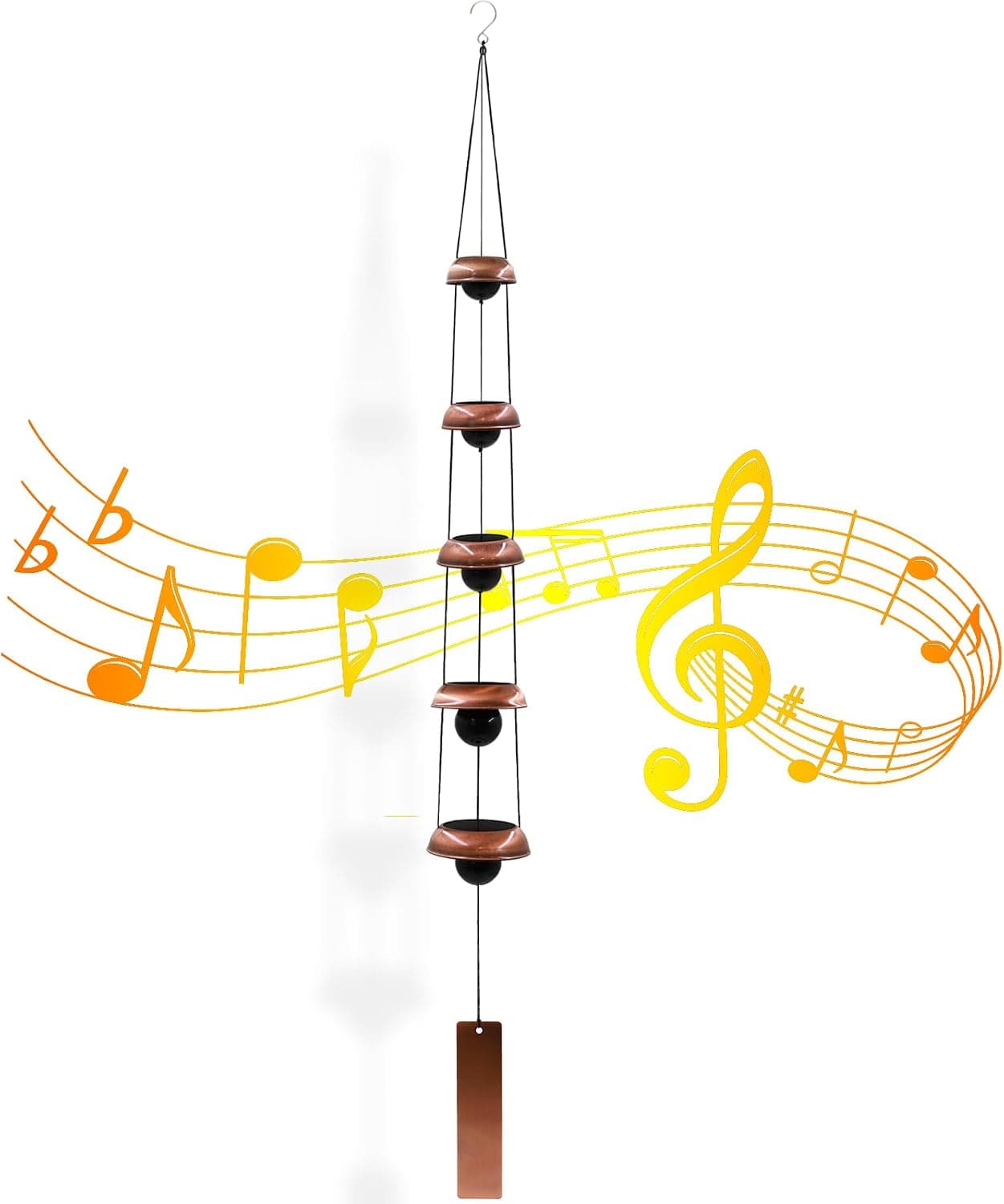
-19%Wind Chimes for Outside with 5 Bell Unique Copper Musical Chimes Feng Shui Wi...
 -5%
-5%YU FENG Evil Eye Money Tree, Blue Feng Shui Decor with Golden Buddha
 -29%
-29%Karma and Luck March Birthstone Crystal Tree of Life, Aquamarine Gemstone Fen...
 -29%
-29%Karma and Luck July Birthstone Crystal Tree of Life, Ruby Gemstone Feng Shui ...
As an Amazon Associate, we earn from qualifying purchases. We only recommend items our practitioners have personally tested.
Continue Your Journey
Explore these related guides to deepen your understanding:


Ready for Deeper Guidance?
Try our free I Ching reading for personalized wisdom, or explore our curated Feng Shui essentials.