A room can look balanced and still feel wrong if the corners outrank the center.
The Hidden Truth About yin-yang-philosophy
People keep arranging a room as if balance were a flat picture, then wonder why the space feels split, restless, or oddly dead at the edges. The missing piece is positional hierarchy: corners, thresholds, and side zones do not carry the same weight as the center, because people experience space in sequence, not in theory. I’ve watched a neatly staged living room with a pale sofa, a round brass table, and two matching lamps feel more strained than a cluttered kitchen, simply because the front-left corner was crowded with a towering plant and a floor mirror that kept pulling attention away from the middle.
That is where the usual advice breaks down. It treats balance like equal parts, but a room does not respond to equal parts; it responds to order. Center collects, corners press, and edges leak. The center acts like a basin. Corners behave like pins. If you put too much visual or functional weight at the perimeter, the middle never settles, and people feel that as hesitation in the body before they can name it.
Someone followed all the usual rules once and called me about the result. Their entry hall had a black console table, a bowl of coins, two red ceramic dogs, and a framed landscape placed exactly at eye level. It looked disciplined. It also felt tense. By the second week, the mail was piling on the stair landing, keys kept disappearing, and nobody wanted to pause there long enough to take off a coat. The room was obeying the language of display, not the mechanics of flow.
That difference matters more than most guides admit. Read how to map energy in your home without overthinking it and you’ll see why position changes the effect of the same object. Then compare it with the alcove advantage that changes a front door fast, because an entry is rarely neutral. For the deeper logic behind why a home can still feel off even when the décor looks right, Five Elements Theory explains why good Feng Shui still feels wrong better than most modern summaries do.
Quick start: look at the room from the doorway, not from the center. Ask which corner is shouting, which wall is underused, and where the eye lands first. Then ask a harder question: what does the center do once that corner starts demanding attention?
How Position Changes the Result
First comes the input. A room receives movement, light, objects, and bodies entering from a threshold. That incoming current does not spread evenly. It bends toward walls, slows at furniture, and collects where the layout gives it a place to stop. So a corner with a lamp, a tall plant, or a heavy cabinet can dominate the whole field even if it occupies only a small square of floor. The center, by contrast, has to earn its influence. If it is blocked, cramped, or used as storage, the room loses its organizing point.
That mechanism explains a mistake I see in bedrooms more often than anywhere else. A bed pushed into a corner may feel cozy to the person arranging it, but the room starts behaving like it has one-sided weight. The near wall traps one side of the body, while the open side stays alert. Turning a bedroom into a sanctuary requires less than you'd think, but it starts with the bed’s relationship to the room, not with scented candles or soft colors. Sleep gets lighter. Arguments feel sharper. Even the laundry basket seems louder when it sits in the wrong line of sight.
Then comes the second step: contrast. Yin and yang are not just “soft versus active.” They are relative conditions that emerge from placement. A dark alcove near the entrance can calm a hectic foyer, but a dark center in the living room feels like a sinkhole because the middle is supposed to organize circulation. A bright white pendant over the center can help if the floor beneath it remains open; that same pendant will feel abrasive if it hangs over a cramped coffee table jammed between oversized chairs.
One late afternoon in a south-facing dining room, I moved a low blue storage bench from the center wall to the far east corner and left the center open except for a simple round table. Nothing dramatic. No mystical drama, no incense, no speech. The room changed anyway. People stopped circling the perimeter and began sitting down sooner. Conversation lasted longer. The annoying habit of leaving dishes on the sideboard disappeared because the sideboard no longer acted like the room’s main event.
That is not symbolism for its own sake. It is behavioral geometry. The eye follows dominant edges; the body follows the clearest path; attention settles where the room gives it permission. Once a corner becomes too loud, the center becomes optional. Once the center becomes optional, everything starts to feel provisional.
Why Corners Often Win
Corners win because they are efficient storage for attention. A tall object at an edge gives the eye a stopping point without requiring much effort. That feels tidy. It also short-circuits movement, because the mind thinks the room has already answered the question of where to look. The result can be a kind of fake calm: the room appears organized, yet people keep hovering near the edges instead of relaxing in the middle.
That is why advice about placing meaningful items “where they feel right” often fails. Feeling right is not the same as functioning right. A crystal on a side cabinet may look lovely under afternoon light, but if it is framed by too many vertical lines, the corner becomes a magnet and the rest of the room loses coherence. Those 'Feng Shui Crystals' on Amazon? Most Are Just Decorative Glass. And a decorative object that steals all the attention can leave the actual seating area oddly thin, almost underfed.
Here’s the surprise: a corner can be too yin or too yang. People usually assume corners are automatically yin because they are tucked away. Not so. A packed corner with stacked books, a red lamp, and a glossy frame can feel aggressively yang because it keeps asking for attention. Meanwhile a bare central zone can feel dull and withdrawn, even if the rest of the room is full of activity. Balance is not a mood. It is a distribution problem.
That’s why the old habit of “equal decoration in every corner” misses the point. Equal does not mean aligned. Three small objects in three corners may actually create more visual noise than one deliberate anchor near the center. The room then behaves like three separate conversations instead of one coherent one. People sense that split without knowing why. They procrastinate there. They leave early. They stop noticing the room as a whole.
One more thing: corners can hold memory longer than the center. Dust gathers there, yes, but so does hesitation. A dead plant in the northeast corner can make a reading chair across the room feel less inviting even if the chair itself is perfect. That is why a neglected edge can quietly undermine a carefully chosen focal point.
How the Center Restores Order
The center does not need to be empty. It needs to be legible. A legible center tells the room where the body can pause without bracing. That could be a round table with a single bowl, a rug that leaves breathing room around the edges, or a low light that does not fight with the ceiling fixture. The point is not austerity. The point is orientation.
When the center is clear, the room stops fragmenting. The eye can sweep, rest, and return. Furniture near the walls stops acting like a border patrol and becomes background. This is where many homes recover a sense of ease, because the middle begins doing what it should have been doing all along: gathering the room into one field instead of letting each side pull in a different direction.
Coin placements that make money feel managed, not chaotic follow the same logic. Coins work better when they are placed with containment and intention, not scattered as a nervous charm. If wealth objects are shoved into a corner beside receipts and chargers, they inherit the corner’s restlessness. Put them where the room can actually register them, and the effect changes from clutter to signal.
Even the bedroom responds to this hierarchy. A bedside table on both sides of the bed does not solve everything, but it often helps because it restores symmetry around the body’s resting axis. Yet symmetry alone is not enough if the center of the room is blocked by a bench, laundry tower, or exercise bike. The body notices the route to the bed, the clearance around it, and the way the room ends its sentences. These details sound small until you spend three nights in the room.
Then there is the practical issue of circulation. A center that is too full forces movement into the margins. People start brushing past furniture, bumping their shins, and taking indirect routes. That physical friction becomes mental friction. Nobody calls it feng shui at that point. They call it annoying.
Practical Adjustments That Change the Mechanism
Start with one room and one question: what in this space is pretending to be important simply because it sits at an edge? Move that object inward only if it can serve the whole room, or remove it entirely if it only performs visual weight. Do not decorate every corner out of fear of blankness. Blankness can be useful. It gives the center room to breathe.
Use the perimeter for support, not for domination. Tall bookcases, strong lamps, and vivid color accents work best when they frame rather than command. In a home office, for example, a deep green cabinet on the west wall can anchor the room, but a second bold object in the opposite corner can make the desk area feel like it is being watched. The worker then avoids the chair, checks email too often, and cannot quite settle into deep focus.
Bedrooms need even stricter handling. Keep the bed’s relationship to the door clear enough that the body does not feel ambushed, but do not make the door the star of the show. If you want a useful reference point, read bedroom rules that affect both sleep and relationships before rearranging furniture by instinct alone. Also pay attention to color, because the wrong wall tone can amplify the imbalance. The bedroom colors that quiet the mind — and the ones that don't are usually the ones that support the room’s center instead of turning the corners into stage lights.
A living room benefits from a different move. Keep the main seating arrangement oriented toward a shared center, not toward the brightest window or the most decorative wall. If the coffee table feels oversized, shrink the visual load on it rather than adding more objects to the corners. And if a corner has become a dumping ground for bags, books, or exercise gear, clear it completely for a week. Watch what happens to the atmosphere. Most people are surprised by how quickly the room stops feeling split.
Need a rule for the skeptical mind? Place one object where it can serve circulation, one where it can calm a corner, and one where it can support the center. Then stop. More is not better. More is usually just louder.
Common Mistakes That Make the Edges Bossy
The easiest error is overfilling corners because they look empty. Empty is not a flaw. Sometimes it is the only thing preventing a room from becoming lopsided. Another mistake is putting mirrors at the perimeter to “expand” the space; in the wrong spot, a mirror multiplies the edge instead of opening the room. People feel watched, not spacious.
There is also the habit of treating every wall as a display surface. That can work in a gallery. In a home, it usually means the center has no job. The room becomes a series of exhibits, and nobody wants to linger in an exhibit. If knives are visible on open shelving near a kitchen’s edge, the effect can be even sharper; Kitchen knives carry more energy than you'd think — here's why placement matters because edge objects can make a room feel sliced into functions rather than gathered into one household.
Another trap: assuming that expensive decor compensates for bad placement. It doesn’t. A costly armchair in the wrong corner still drains movement if it blocks flow or turns the room away from its center. Fancy does not outrank geometry. The room only cares whether the body can enter, orient, and stay.
Some people try to fix imbalance with too many cures at once. One plant. Two crystals. A red ribbon. A money bowl. That usually creates a corner that shouts so hard the center goes mute. Better to remove one competing item than to add three hopeful ones.
And then there is the forgotten room that quietly controls the others. Hallways, entry nooks, and stair landings often set the tone for the whole house because they train movement before people reach the main space. If those zones are cluttered, the home starts every day in a hurry. Fixing them often does more than obsessing over the “wealth corner” ever could.
How This Fits the Larger Pattern
Corner versus center is not a side topic. It is one of the main operating principles behind how homes feel coherent or disjointed. Once you notice it, you start seeing it everywhere: in desks that encourage focus, in sofas that invite conversation, in entryways that make you slow down instead of rush through. The pattern extends into compass directions, too, because direction without position is incomplete. That is why a careful reading of a feng shui compass can still go wrong if the center of the room is neglected.
The same applies to text-based systems like the I Ching. A line does not mean the same thing at the top, middle, or bottom of a hexagram. Position changes function. Bottom lines initiate, middle lines support, upper lines release. Home layout works with the same kind of hierarchy, which is why changing lines are where the I Ching actually speaks feels so useful to practitioners who care about sequence rather than slogans.
That also explains why some people get stuck trying to force a single rule across the whole home. A front door wants one kind of treatment. A bedroom wants another. A study wants restraint in the center and stability on the edges. A kitchen needs clarity around active zones. You can’t flatten all of that into a cheerful “balance everything” slogan and expect the house to cooperate.
Read the room as a hierarchy. Ask which position leads, which supports, and which merely frames. Once you do that, the old yin-yang language becomes useful again, because you stop thinking in opposites and start thinking in order.
What happens when the center is finally allowed to lead while the corners stop competing for attention?
FAQ
Is conventional yin-yang-philosophy advice reliable?
Often not, because most advice treats balance as a decorative idea instead of a positional one. A room can look balanced on paper and still feel unstable if the corners dominate the center. The method works better when you ask what each position is doing, not just how much of each element you have.
How do I know if my room’s corners are overpowering the middle?
Watch where your eyes go first when you enter. If you keep noticing the edges, the middle is probably under-asserting itself. People also reveal it with behavior: they linger near the wall, drop things on side tables, or avoid sitting in the central seat.
Should the center always be empty?
No. A useful center is open, legible, and not overloaded. A low table, rug, or light fixture can anchor it, as long as the object helps the room organize rather than crowding it.
Can a corner ever be the best place for a strong object?
Absolutely, if the room needs grounding at that edge. A bookcase, lamp, or plant can stabilize a corner when the rest of the room has enough breathing room. The problem starts when the corner becomes the loudest part of the layout and the center loses authority.
Why do some spaces feel wrong even after I follow all the usual rules?
Because rules without position produce a half-finished result. A home can have the right colors, the right objects, and the right symbolism, yet still feel off if the spatial hierarchy is scrambled. That’s the part people miss when they only think in objects instead of movement.
What should I change first if I’m overwhelmed?
Clear the center of one room and reduce the visual load in its corners. You do not need a full redesign to test the mechanism. One shift in placement can tell you more than a week of browsing decor inspiration ever will.
David Liu
Traditionally informed guidance • Cross-referenced with classical Chinese source texts
Interpretations cross-referenced with the Zhouyi (周易) and Wilhelm/Baynes translation.
Practitioner-Selected Tools for This Topic
Items our team has tested and found effective for the principles discussed above. Individual results may vary.
 -20%
-20%Aquarius 12 Zodiac Challenge Coin - Twelve Constellations Aquarius Protective...
 -29%
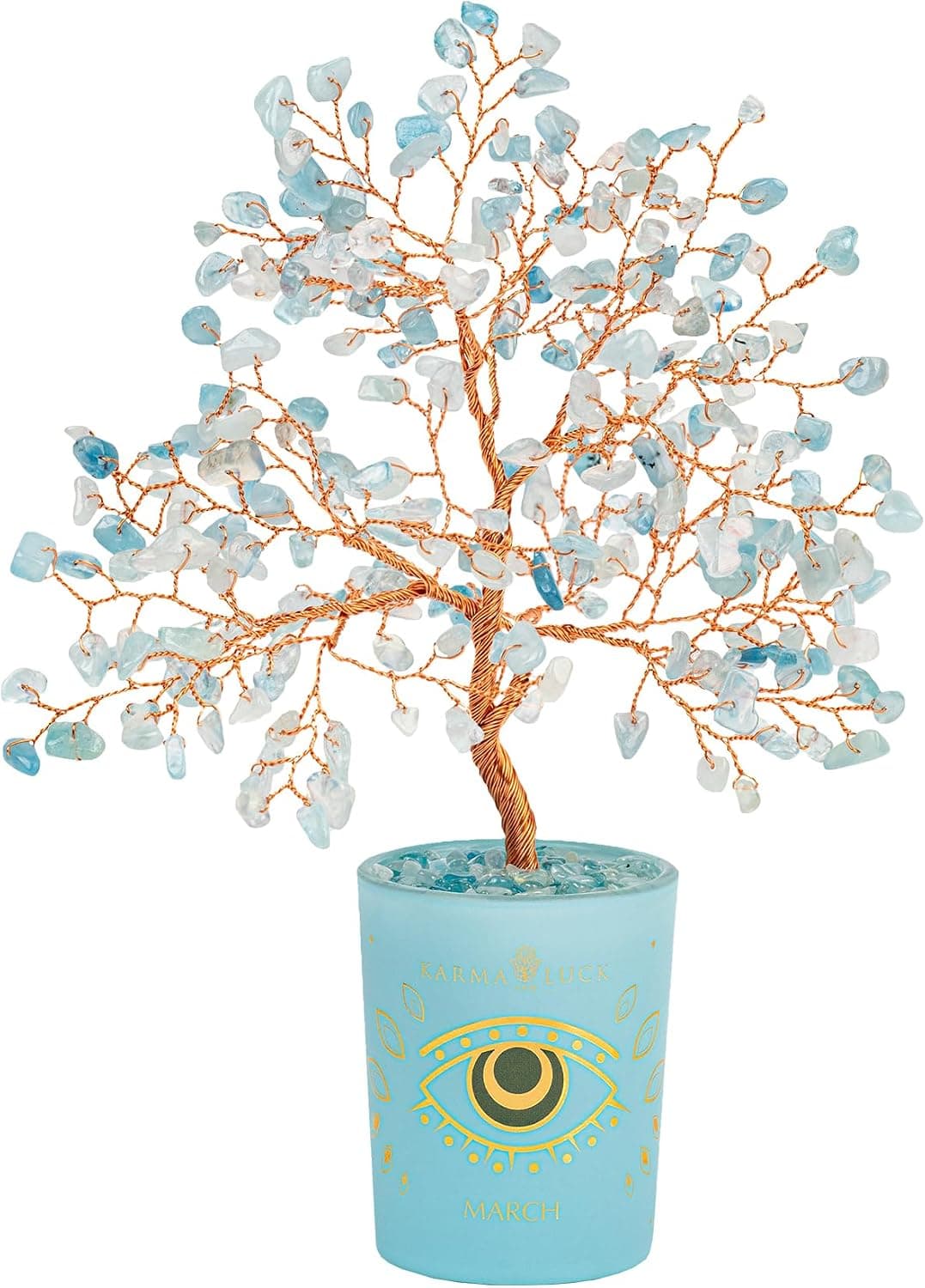
-29%Karma and Luck March Birthstone Crystal Tree of Life, Aquamarine Gemstone Fen...
 -29%
-29%Karma and Luck July Birthstone Crystal Tree of Life, Ruby Gemstone Feng Shui ...
 -29%
-29%Karma and Luck February Birthstone Crystal Tree of Life, Amethyst Gemstone Fe...
As an Amazon Associate, we earn from qualifying purchases. We only recommend items our practitioners have personally tested.
Continue Your Journey
Explore these related guides to deepen your understanding:

The I Ching Doesn't Answer Lazy Questions — Here's What to Ask Instead
8 min readConfucian Commentary Turns the I Ching Into a Moral Floor Plan
9 min readBroken Lines, Solid Lines, and the Real Yin-Yang Logic of the I Ching
11 min readThe Wilhelm I Ching Feels Deep Because It Slows Your Reading
11 min readReady for Deeper Guidance?
Try our free I Ching reading for personalized wisdom, or explore our curated Feng Shui essentials.