If every answer feels vague, you may be asking the wrong question—or ignoring the part that matters.
The reading was clear. The problem was the person.
I once sat with a teacher in a narrow study lined with blue books and a chipped brass lamp, and she kept getting the same answer from the oracle: stop forcing, observe, wait. She hated it. She wanted a date, a decision, a clean yes. Instead, the message pointed at her impatience, and that was the real discomfort. That is where your first encounter with the oracle often gets interesting: not because the answer is mysterious, but because it refuses to flatter you.
The yi jing works best when you stop treating it like a fortune machine. I have seen people cast again and again, hoping the answer will change if they ask with a different tone. It will not. The pattern usually sharpens, not softens, when you are resisting it. That can feel rude. It is also useful.
Here is the shift most Western readers miss: the book is not trying to predict every detail of your future. It is showing the shape of the moment you are inside right now. Once you understand that, the text becomes less like a crystal ball and more like a map of tendencies, pressure, timing, and inner posture.
And yes, that is why a reading can feel uncannily personal even when the language is old and spare.
What the method actually is
The simplest way to use the yi jing is to bring it a real question, one that matters now. Not “Will I be happy someday?” That is too wide. Ask about the meeting on Thursday, the relationship pattern you keep repeating, the move you are considering, the offer on the table. Precision gives the oracle something solid to answer.
The response then needs interpretation, not worship. You read the hexagram, the moving lines if they appear, and the overall direction of the change. If you want to go deeper, the trigrams matter because they show the blend of forces at work. A careful study of the eight trigrams and their moods will teach you more than memorizing a dozen random keywords ever will.
What you are really doing is matching your situation to a symbolic structure. That structure can show tension, release, blockage, advance, retreat, caution, or a needed correction in attitude. People often expect a command. Instead they get a condition. That is more subtle, and far more practical.
Take a real example. I worked with an architect named Daniel in a loft office with a concrete floor, a red desk chair, and a wall calendar that still showed March when it was already June. He kept asking about a partnership deal and kept receiving messages about restraint, simplification, and waiting for the right alignment. Two weeks later, he found the contract had hidden obligations that would have swallowed his margin. The reading did not “save” him in a theatrical way. It sharpened his judgment.
How to work with a reading without muddying it
Start before you cast anything. Sit still long enough to notice what you actually want to know. If the question is tangled, the answer will be tangled too. A clean question does not guarantee a pleasant answer, but it does improve the quality of the conversation.
Then read the result once, slowly. Do not immediately hunt for reassurance. Do not jump to the one sentence that seems to bless your plan and ignore the rest. The oracle often speaks in tension: part caution, part opening, part timing. If you want a deeper practice around your responses, keeping a reading log will reveal patterns you would otherwise miss.
After that, translate the image into action. If the answer points to delay, delay. If it points to correction, correct. If it points to restraint, stop adding fuel. This is where many people get lazy. They admire the wisdom and then do whatever they were going to do anyway. That is not consultation. That is decoration.
I walked into a small bedroom last spring in a San Diego apartment where a nurse named Elise had a white metal bed, a black velvet throw, and a mirror facing the footboard. Her question was about whether to stay in a relationship that felt increasingly draining. The reading pointed to imbalance and overextension, but she kept asking if the other person would change. She moved the mirror, stopped checking her messages at midnight, and within three weeks she told me the room felt quieter, and so did she. The point was not the mirror alone. The point was that the reading had exposed the pattern she had been feeding.
One more thing: do not make the oracle perform your fear. If you ask the same question five times in one day, you are not seeking insight. You are seeking emotional anesthesia. That rarely works.
Where people go wrong
The first common mistake is asking vague, inflated questions and then complaining that the response feels vague. The second is treating every line as a literal forecast instead of a symbolic instruction. A line about travel may not mean a plane ticket. It may mean movement, transition, or a change in position. If you want a sharper method for binary decisions, see how to frame yes-or-no questions without flattening the result.
Another mistake is confusing neutrality with passivity. A good reading does not always say “do nothing.” Sometimes it says act, but act in the right direction and at the right tempo. That nuance matters.
And yes, some people try to compare it with every other divination system as if the point were competition. That misses the spirit entirely. If you are curious about the contrast, this comparison with tarot will help you see why the two systems work differently.
How to read the message like a practitioner
Begin with the main image. Ask yourself what it describes in your life right now. Not in theory. In the office, the home, the relationship, the decision you keep postponing. The image is rarely random. It usually points toward a condition you can name if you are honest.
Then look at movement. If the reading suggests change, what is changing? If it shows stillness, what needs to stop? If it shows conflict, where are you fighting the facts? This is not poetry for poetry’s sake. It is a discipline of attention.
Finally, watch what happens after you act. The book of changes rewards experiment and observation. Make a small adjustment and notice the result. Ask again later only after something real has shifted. That is how the conversation matures. If you want a deeper sense of its philosophical roots, the Taoist connection shows why timing and non-forcing matter so much.
There is a reason seasoned readers keep records. Memory is flattering. Notes are honest. Without them, every answer starts to sound like the last answer, which is exactly how people drift into superstition.
One sentence can change everything: the oracle is not there to make your choices for you.
It is there to show you the condition of your choice.
FAQ
Can I ask about the same issue more than once?
You can, but only if something has truly changed. Repeating the exact question in the same emotional state usually produces noise, not clarity. Wait until new facts, a new mood, or a new decision has entered the picture.
Do moving lines always matter most?
They matter a great deal, but not in isolation. The whole hexagram frames the situation, and the changing lines show where the pressure is active. If you focus only on the lines, you can miss the larger movement.
Is it normal for the answer to feel uncomfortable?
Absolutely. A surprising fact: the readings that sting a little are often the ones people remember best. Discomfort usually means the message touched the part of your story you were avoiding.
Should beginners use the same method every time?
At first, yes. Consistency teaches you how to read your own bias. Once your notes and observations get stronger, you can explore other approaches, but a stable method gives you a reliable baseline.
David Liu
Traditionally informed guidance • Cross-referenced with classical Chinese source texts
Interpretations cross-referenced with the Zhouyi (周易) and Wilhelm/Baynes translation.
Practitioner-Selected Tools for This Topic
Items our team has tested and found effective for the principles discussed above. Individual results may vary.
 -20%
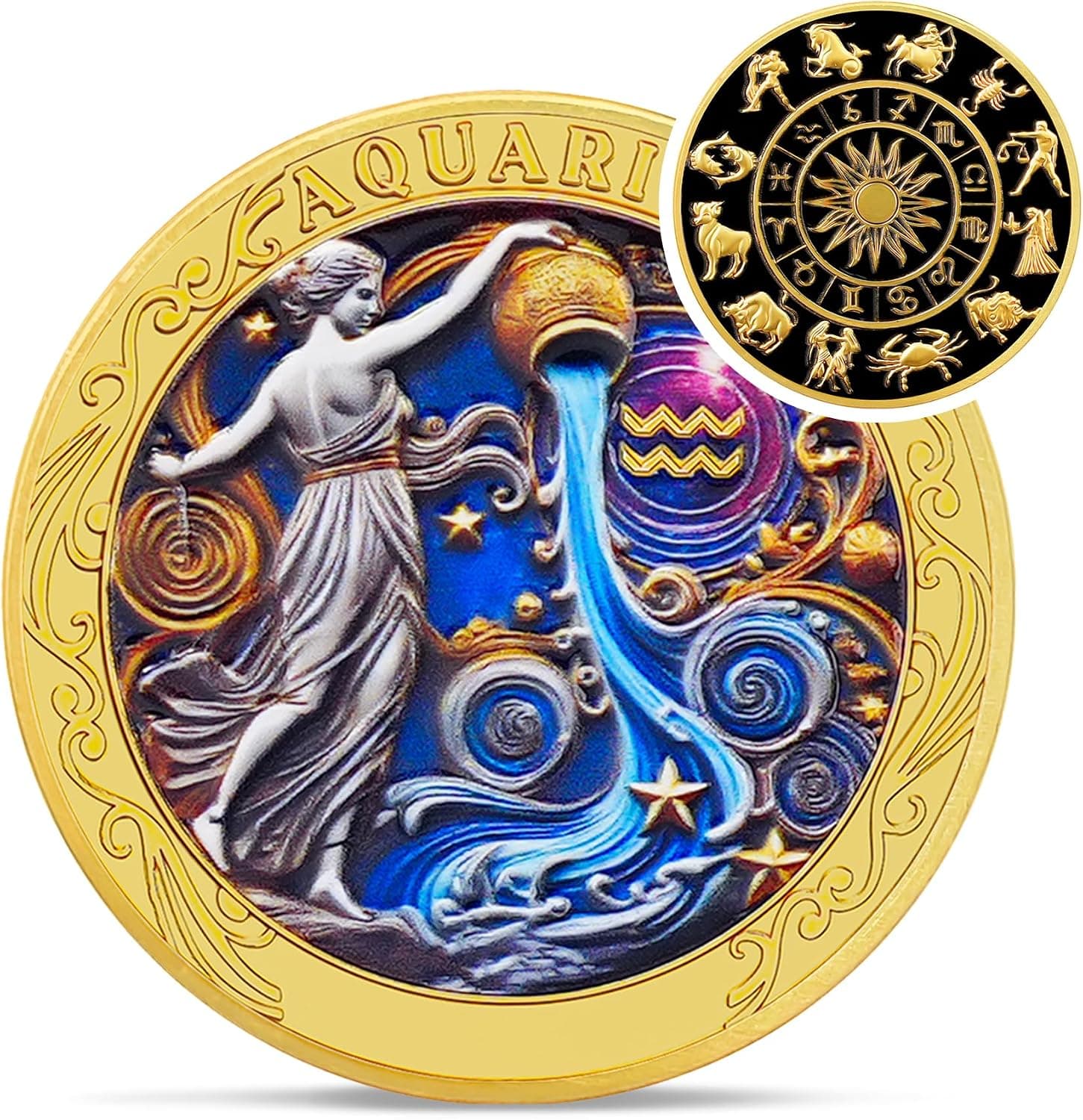
-20%Aquarius 12 Zodiac Challenge Coin - Twelve Constellations Aquarius Protective...
 -29%
-29%Karma and Luck March Birthstone Crystal Tree of Life, Aquamarine Gemstone Fen...
 -29%
-29%Karma and Luck July Birthstone Crystal Tree of Life, Ruby Gemstone Feng Shui ...
 -29%
-29%Karma and Luck February Birthstone Crystal Tree of Life, Amethyst Gemstone Fe...
As an Amazon Associate, we earn from qualifying purchases. We only recommend items our practitioners have personally tested.
Continue Your Journey
Explore these related guides to deepen your understanding:

The I Ching Doesn't Answer Lazy Questions — Here's What to Ask Instead
8 min readConfucian Commentary Turns the I Ching Into a Moral Floor Plan
9 min readBroken Lines, Solid Lines, and the Real Yin-Yang Logic of the I Ching
11 min readThe Wilhelm I Ching Feels Deep Because It Slows Your Reading
11 min readReady for Deeper Guidance?
Try our free I Ching reading for personalized wisdom, or explore our curated Feng Shui essentials.