Every guide tells wood element types to grow. Almost none tells them what to push against — which is the part that decides whether they thrive or scatter.
Eleven Plants, One Window, No Air
A 380-square-foot studio. Pothos on the bookshelf, a fiddle-leaf fig wedged between the desk and the radiator, three succulents crowding the sill, and a monstera wide enough to swallow the lower third of the only window in the apartment. Every plant was alive. The room was not.
The tenant had read that wood element people need greenery. She had a chart full of wood — a Yi day master, two more wood stems, the whole vertical column — and she had done exactly what the internet told her to do with it. Her own summary, delivered while standing in the one clear square meter of floor she had left: “I feel like I'm being crowded out of my own room.”
Nothing was wrong with her chart.
Something was wrong with the advice.
Every Wood Profile Says the Same Four Words
Search for wood element personality traits and you will get a remarkably consistent list: creative, flexible, growth-oriented, visionary. Occasionally “stubborn” gets tacked on the end, like a warning label nobody reads. Then come the prescriptions. Add plants. Add green. Put wood furniture in the east or southeast. Let them expand.
The list isn't wrong. It's just describing the plant and skipping the soil.
That's the trouble with a trait list. It tells you what wood looks like when it is working and nothing about what makes it work, so people build rooms — and lives — that supply the appearance of wood and none of the conditions. Which is how you end up in a studio that looks like a greenhouse and feels like a closet.
Wood Is Not a Plant. It's a Wedge.
The classical formula is two characters: 木曰曲直 — wood is bending and straightening. Not “wood is growing.” Bending and straightening. It describes a material that gets compressed and returns to shape. Bamboo in wind. A branch under snow that springs back and drops the load.
That is a fundamentally different thing from expansion. Expansion is what happens when nothing is in the way. Bending-and-straightening is what happens because something is in the way, and the material has the structure to answer it.
There's a clean demonstration in plant physiology, and it is worth sitting with. A seedling grown in perfectly still air grows tall, thin, and weak — growers call it leggy. The same seedling, given the same light but regular mechanical disturbance, thickens its stem and lays down denser tissue. The response has a name: thigmomorphogenesis. Wind, rain, a hand brushing past on the way to the sink — the plant reads the resistance and invests in structure. Take the resistance away and you get height without strength. Growth, yes. Wood, no.
Read that again against the standard advice. “Let them expand” is a recipe for a leggy wood type.
The Mechanism, Step by Step
Wood, in the five-phase system, is a vector. It has magnitude and direction — a force aimed at something. That is why wood-dominant people get described as visionary so often: they are genuinely pointed somewhere.
But a vector with no bearing surface does not travel. It disperses. This is the part the trait lists leave out, and it is the entire mechanism.
Input: a person with strong wood — high drive, clear direction, low tolerance for stasis.
Step one: the drive seeks a boundary. Not a wall to stop it. A wall to push off. Think of a beam in traditional Chinese timber framing: the mortise-and-tenon joint holds because the wood is under compression. Loosen the joint and the beam is still wood, still strong, and it carries nothing. Load is what turns material into structure.
Step two: in the built environment, that boundary takes physical form. A door you pass through. A desk with a solid wall behind it. A path from the entry to the far window that isn't cluttered. Architects call these thresholds — the transition zones where a space changes character, and the places where the nervous system registers that one thing has ended and another is beginning. Thresholds are where wood gets its grip.
Step three: when a small apartment has no thresholds, the force has nowhere to convert. A studio with one door, one window, and a single continuous floor plane is a room with almost no load-bearing edges. Wood energy in that room does not get stronger. It gets diffuse.
Output: what looks like a wood imbalance — restlessness, twelve half-finished projects, irritability that spikes around four in the afternoon, a calendar with no white space in it — is frequently just unloaded wood. A force with no bearing surface, looking for something to be about.
Where It Goes Wrong
The plant wall is the most common failure, and it fails for a measurable reason. Biophilic design does improve mood and attention; the research on that is solid and I don't argue with it. But foliage in front of glass reduces daylight transmission, and in a north-facing studio with a low daylight factor to begin with, the loss is not cosmetic. By mid-afternoon the room reads as heavy rather than alive. The occupant added life and subtracted light, then wondered why she felt flat in a room full of growing things.
Green walls are the second failure. Green is a mid-value color with low contrast against itself; painted across all four walls of one room, it flattens the depth cues your eye uses to judge distance. Small rooms painted uniformly green feel smaller, not more natural. I've watched people do this, feel vaguely wrong in the space, and conclude that wood feng shui doesn't work. It works. The room was just reading as a hedge.
The third failure is the expensive one: wood types told to say yes. Nearly every profile praises flexibility and adaptability, which in practice becomes a person with no fixed commitments, no deadlines, and nobody to disappoint. That is etiolation applied to a life. Tall, thin, and reaching for light that isn't there.
None of these people need more wood.
They need a wedge to push against, and almost nobody sells one.
What Wood Actually Needs From a Room
Four things, in order of how much they matter.
A threshold. One clear path from the door to the farthest window, wide enough to walk without turning sideways. In a studio that path is often the only legible line in the entire floor plan, and blocking it with a plant stand or a bike destroys the room's sense of direction. Measure it. Thirty-six inches is the number where it stops feeling tight.
A bearing surface. Wood needs a back. A desk floating in the middle of a room, or facing a window with open floor behind it, leaves the occupant scanning for approach — an old, low-grade vigilance response that architecture calls poor prospect-and-refuge and that everyone else calls “I can't concentrate in here.” Put the desk against a wall. Solid, not glass. This single change does more for a wood type than any object you can buy, and it costs nothing in a rental.
A sightline. The longest diagonal in the apartment should stay open. Small rooms don't feel small because of square footage; they feel small because every sightline terminates within six feet. Vertical grain — a tall narrow shelf, a floor-to-ceiling curtain, a mirror hung high — buys height where you have no floor area to spare, and height reads as room.
Air and quiet. This is where renters get stuck, because you cannot renovate a ventilation system you don't own. But you can stop fighting the one you have. Wood types are stimulus-hungry, and they will absorb every sound in a hard-floored studio as a demand on their attention. One rug, one upholstered chair, one bookshelf with actual books on it: soft surfaces drop the noise floor enough that the nervous system stops treating the hallway as an event. Cross-ventilation matters for the same reason. Still air and rising CO₂ produce the exact flat, foggy feeling that wood types misdiagnose as boredom and try to fix by starting a new project.
The Real Fix in a Rental You Can't Repaint
Start by subtracting, not adding. Remove the plant that blocks the window and give it a side position with its own light. Clear the entry path. Move the desk to a solid wall. That's an afternoon's work, it costs nothing, and it addresses the mechanism instead of the symbol.
Then add resistance where it actually lives — your calendar. Wood without a deadline is a hobby. Pick the project that has been open longest and give it a date and a person who will notice if you miss it. This is not motivational filler; it is the same load-bearing principle applied to time instead of space. The joint holds because something is pressing on it.
If you want a classical frame for the timing, the twenty-four solar terms are precisely a calendar of this — each term marks a shift in whether the season is asking you to push or to store. Wood's own season is spring, and spring is short. A wood type who tries to run spring all year will burn out by the summer solstice and blame the room.
And if the push-and-yield logic feels foreign, it's worth seeing that it isn't a wood-specific quirk. It's the same alternation described in the practical application of yin and yang principles — expansion and contraction as two halves of one cycle, neither of which functions alone. Wood is simply the phase where expansion is most visible, and therefore the phase where a missing container shows up first.
One more thing, because it surprises people: the element you are is not the element you need more of. A wood-dominant person who keeps adding green, plants, and tall furniture is usually topping up a force already running at full pressure. What's missing is the metal that prunes and the earth that holds the roots. That's a separate conversation, but it's the reason so much wood-focused advice leaves people exactly where they started — overgrown, and oddly tired.
Questions I Get Asked About Wood Types
Do wood element people need plants at all?
Not necessarily, and the plants are the least important part of the equation. What foliage actually supplies is softness, humidity, and a little visual complexity — all of which a wool rug, a wooden shelf with objects on it, and an unblocked window will give you. One well-placed plant in a room with a clear path and a solid-backed desk outperforms eleven plants in a room with neither.
Is east or southeast placement really the wood direction?
The associations are classical and they aren't arbitrary — east is sunrise, spring, the direction of beginning. But direction is a modifier, not a cause. A southeast corner stuffed with clutter and a dead ficus generates nothing, while a west-facing desk against a solid wall generates quite a lot. Treat the direction as a tiebreaker when two options are otherwise equal, never as a substitute for function.
How do I know if wood is actually my dominant phase?
The honest answer is that this needs a chart, not a quiz — your day master in BaZi plus the season you were born into tells you far more than any personality test will. There is a rough behavioral tell, though: wood types feel physical discomfort in stagnation. A week without forward motion produces a specific irritability, and it usually surfaces as impatience with people moving slower than you. If that's familiar, the useful question isn't how to get more wood. It's what you are supposed to be pushing against, and why you haven't found it yet.
David Liu
Traditionally informed guidance • Cross-referenced with classical Chinese source texts
Rooted in classical Chinese metaphysics and cross-referenced with original texts. Product recommendations are based on traditional symbolism, not guaranteed outcomes.
Practitioner-Selected Tools for This Topic
Items our team has tested and found effective for the principles discussed above. Individual results may vary.
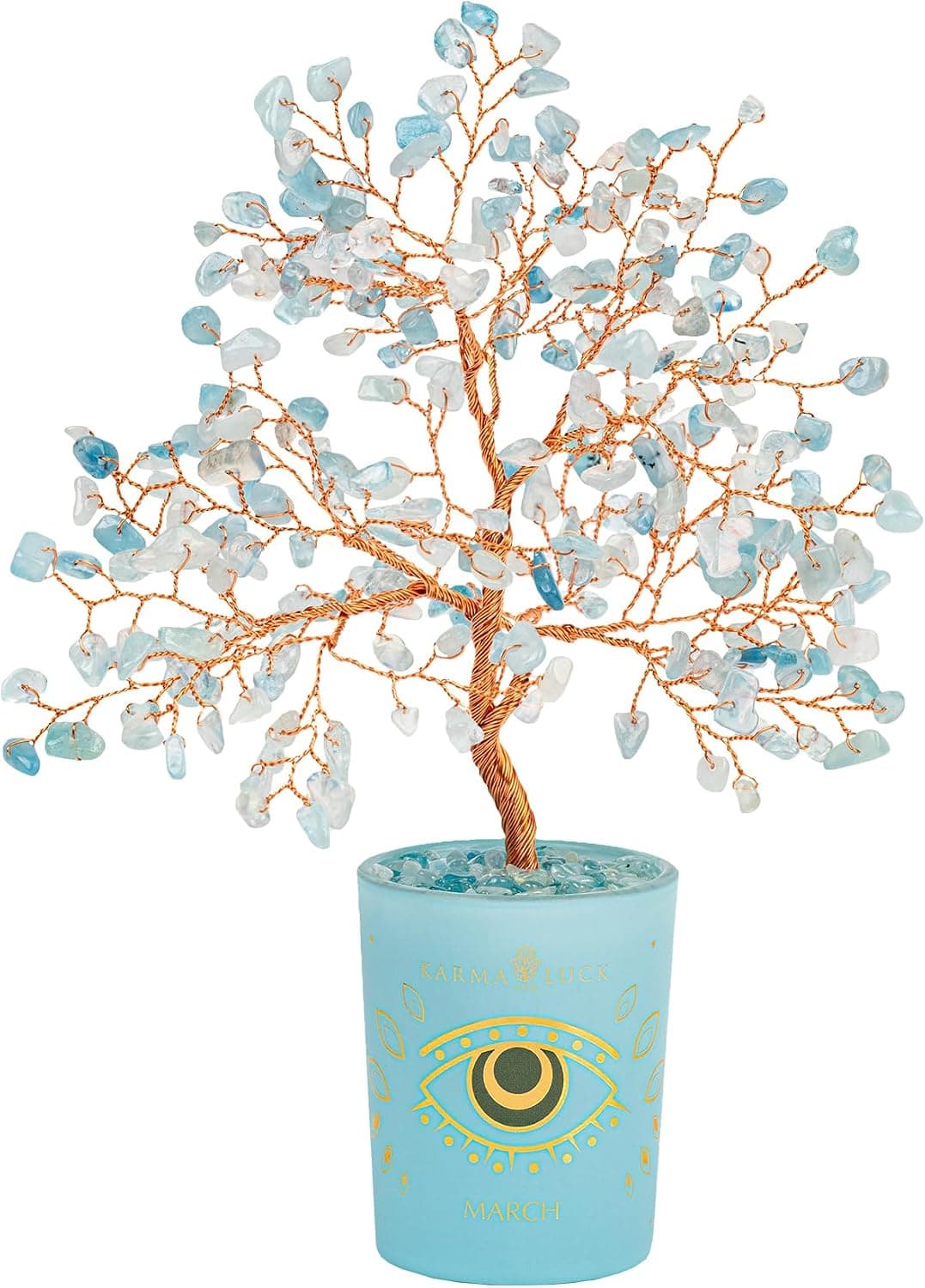 -29%
Karma and Luck March Birthstone Crystal Tree of Life, Aquamarine Gemstone Fen...
 -29%
Karma and Luck July Birthstone Crystal Tree of Life, Ruby Gemstone Feng Shui ...
 -29%
Karma and Luck February Birthstone Crystal Tree of Life, Amethyst Gemstone Fe...
 -50%
biuufish Feng Shui Black Obsidian Bracelet for Men Women, 24K Gold Plated Pix...
As an Amazon Associate, we earn from qualifying purchases. We only recommend items our practitioners have personally tested.
Continue Your Journey
Explore these related guides to deepen your understanding:

Ready for Deeper Guidance?
Try our free I Ching reading for personalized wisdom, or explore our curated Feng Shui essentials.