The I Ching can be strangely right once you stop treating it like a fortune machine and start reading it as a map of changing conditions.
Is the I Ching accurate, or are you only noticing the hits?
The short answer is this: it can be accurate, but not in the blunt, calendar-prediction way many Western readers expect. The stronger readings often name a threshold, a pressure point, or a relationship already forming around you. That is a different kind of truth. It is the kind you feel in the hush before a door opens.
I have watched people get a hexagram, set it aside, and only later realize it described the room they were already standing in. One reader asked about leaving a job, cast the coins at a kitchen table with a blue ceramic bowl beside the candles, and received an answer that spoke of holding still at the edge of movement. Two weeks later, they understood the message was not “quit now” or “stay forever,” but “you are in the narrow passage where a decision is ripening.” That is why the question of whether the I Ching is accurate cannot be answered well if accuracy means only literal prediction.
The click of three coins on wood does something subtle. It makes the question feel formal enough to matter. It narrows attention. It tells the mind that this is not casual chatter; this is a consultation. And once attention sharpens, people notice details they were too scattered to see before.
That does not make the system fake. It means the system is working with human perception, symbolism, and timing all at once.
What 'accurate' meant before English readers turned it into a yes-or-no test
In classical Chinese use, the I Ching was not mainly a carnival oracle that spit out a fortune. It belonged to a world where change was ordered, patterned, and morally serious. The text was read in relation to time, context, ritual, and cultivated judgment. A ruler, adviser, or scholar did not ask, “Will I win?” in the modern lottery sense. The deeper question was, “What is the quality of this moment, and how should I move through it?”
That difference matters because it changes what counts as a successful reading. In the original frame, accuracy was not measured by whether the book guessed a future event in isolation. It was measured by whether the response fit the situation well enough to improve conduct. A reading that named hesitation, overreach, imbalance, or readiness could be accurate even if it did not describe a specific event in advance, because it clarified the forces already shaping that event.
Think of it less like forecasting the weather and more like reading pressure in the air. A barometer does not tell you the exact minute rain will begin, but it can still be right in a way that matters because it reveals the conditions that are already changing. Classical I Ching use worked similarly: it pointed to the direction of change, the texture of the moment, and the appropriate stance to take before the outcome became visible.
The English-language world often flattened this into fortune-telling. That translation error still haunts the way people ask whether the I Ching is accurate. If you expect a fixed answer about a fixed future, the text will seem slippery. If you read it as a structured response to a changing situation, it starts to make more sense.
The proportion is elegant when you see it clearly. Yin and yang, broken and unbroken lines, restraint and advance, waiting and acting: these are not isolated symbols. They are relationships. The accuracy lives in the relationship.
What got lost when the Book of Changes crossed into English
English translations often preserve the words and lose the atmosphere around them. They can keep the line texts and still flatten the living context that gave those lines force. That is not a small loss. It is the difference between reading a floor plan and walking through a building with light on the walls.
Take a temple courtyard. Light slides through carved thresholds and narrow corridors. You do not understand the place by standing at one stone and naming it. You understand it by moving through it. Classical Chinese readers approached change in a similar way. Modern Western readers often approach it as though one answer should settle everything. That is a cultural mismatch, not a failure of the text.
There is also the matter of language itself. Chinese classical expression can be compact, layered, and allusive. English tends to force it into cleaner statements. Clean statements feel reassuring, but they can be too rigid for a book built around transition. Some nuance leaks out at every translation step.
That translation shift changes the reader’s expectation before the reading even begins. In Chinese, a terse phrase can remain open enough to work as a prompt for judgment, reflection, and timing. In English, the same phrase may be rendered as if it ought to behave like a prediction. Once that happens, the user starts testing the oracle for exactness instead of responsiveness, and the book can appear vague precisely because its original function was broader than a binary answer.
That is why a translation can sound vague in English and still be precise in use. A line may not predict your Tuesday in literal terms, but it may describe the shape of your Tuesday with disturbing accuracy.
When readers ask how the Book of Changes speaks, the real issue is often not whether the oracle is true. It is whether the translation preserved enough of the original logic for the answer to be recognizable.
Why a reading can feel unnervingly right
Pattern recognition is doing some of the work. Human beings are built to spot structure, even when a pattern is partly open-ended. A hexagram gives the mind a scaffold. Once there is a scaffold, the questioner begins arranging their own situation around it. That can create real insight, but it can also create the feeling that the text knows more than it does.
Projection deepens the effect. You bring your context, your worry, your unfinished conversation, your unspoken fear. The text gives you a symbolic frame, and your mind pours meaning into it. Suddenly the answer seems personal because it is personal. Not in a fraudulent way. In a psychological way.
Confirmation bias keeps the strongest impressions in memory. A reading that lands beautifully is remembered for years. A reading that was muddy or useless fades. So over time, the hits feel heavier than the misses. This is true for tarot, astrology, omens, and ordinary advice from friends too.
Here is the surprising part: none of that automatically disproves usefulness. A system can work through the mind without being merely imaginary. In architecture, a narrow passage changes behavior. People slow down. They turn their shoulders. They become attentive. The passage does not force wisdom, but it shapes movement. The I Ching often works the same way. It shapes the questioner into a more exact state of attention.
In early spring of 2026, with the air still cold and the yearly Flying Star shifts changing the feel of rooms, that attention matters even more. A consultation held in a bright office with a north window and a metal desk may feel different from one held in a dim dining room with too much clutter on the east side. Environment affects perception. Perception affects interpretation. Accuracy is never floating in a vacuum.
Where it helps, where it breaks, and the mistakes that waste it
The I Ching is most useful when the question concerns timing, attitude, transition, relationship, or the quality of a decision rather than a hard external fact. It can be excellent for questions like whether to wait, where tension is building, what kind of response is appropriate, or what hidden condition you are ignoring. It is much weaker when you ask it to serve as a surveillance camera for facts you could verify directly.
It also breaks down when people turn it into a vending machine for certainty. Ask vague questions and you will get vague usefulness. Ask the same question ten times in a row and you are no longer consulting the oracle; you are chasing reassurance. One of the most common mistakes is treating a reading as a verdict instead of a mirror. Another is using the answer to dodge responsibility. A reading can point to the threshold, but you still have to cross it.
For readers who want the practical side, the best approach is simple. Ask one clear question. Write it down before you cast. Use a method you can repeat, such as coins or yarrow stalks, and note the exact date, the wording, and the result. Then wait. Not passively. Observe. Track what actually happens over the next days or weeks. That record will tell you more than a hundred excited impressions.
I've seen a bedroom in a small apartment where the bedside lamp was clipped with a red shade, the mirror faced the bed, and the owner was asking whether their readings were “working.” The room was too active, too bright, and too visually fragmented for the person to settle long enough to hear anything subtle. Once the mirror moved and the red shade was replaced with a pale linen one, the same person said the answers felt clearer. That was not magic. It was circulation. The room stopped shouting.
If you need a place to start, compare methods and wording before you doubt the oracle itself. The way you cast matters, and so does the question you bring. A careful look at how to ask a better I Ching question usually improves the result faster than changing your beliefs about the text.
For some readers, the coins feel more immediate; for others, the old stalk method has a steadier rhythm. The method is not decoration. It affects the tone of the consultation, just as a narrow stair and a wide hall produce different bodily awareness. If you want to compare those approaches, study the logic behind the coin method and the yarrow stalk method rather than assuming they are interchangeable.
A fair answer: accurate in what sense?
If by accurate you mean “Does it consistently predict external events with laboratory-style precision?”, the answer is no. That is not what it was built to do, and that is not the best standard for judging it. If by accurate you mean “Can it sometimes identify the shape of a situation with unusual clarity, especially when the question is thoughtful and the reader is honest?”, then yes, often it can.
The fairest position is a layered one. Some of the accuracy comes from psychology: pattern recognition, projection, and memory. Some comes from the discipline of asking well and paying attention. Some readers will also say there is a deeper correspondence at work, a meaningful ordering of change that the text helps reveal. I do not need to reduce those layers to one explanation to respect them.
The real test is whether the reading improves your judgment. Does it help you notice the threshold you were ignoring? Does it clarify timing, proportion, or relationship? Does it make you less reactive and more exact? If yes, then it has value. If it only entertains you or flatters your wish for certainty, it is being misused.
So, is the I Ching accurate? Sometimes remarkably so. But the accuracy is often architectural rather than forensic. It does not usually point like a finger at a fixed future. It lays out circulation, openings, and pressure points. It tells you where the building of your life is narrowing, brightening, or turning.
That is enough for many serious readers. It should be enough for a skeptical one too.
FAQ
Can the I Ching predict the future?
It can seem predictive when the answer captures a transition before you can name it yourself. Still, it works better as a reading of conditions than as a crystal-clear forecast. The most reliable use is often practical guidance in motion, not prophecy.
Why do some readings feel so specific?
Specificity often comes from the meeting of a symbolic system and a highly focused question. You supply the context; the hexagram supplies a frame. When those two align, the result can feel startlingly exact.
Should I ask the same question again if I dislike the answer?
That is usually a bad sign. Repeating the question can turn the consultation into anxiety management, and the signal gets noisy fast. If the situation changes materially, ask again; if only your nerves have changed, wait.
Is the I Ching better for spiritual people than skeptics?
Surprisingly, no. Skeptics can use it as a disciplined reflective tool, and spiritual readers can use it as an oracle. The difference is not belief alone; it is whether the reader is willing to meet ambiguity without forcing it.
David Liu
Traditionally informed guidance • Cross-referenced with classical Chinese source texts
Interpretations cross-referenced with the Zhouyi (周易) and Wilhelm/Baynes translation.
Practitioner-Selected Tools for This Topic
Items our team has tested and found effective for the principles discussed above. Individual results may vary.
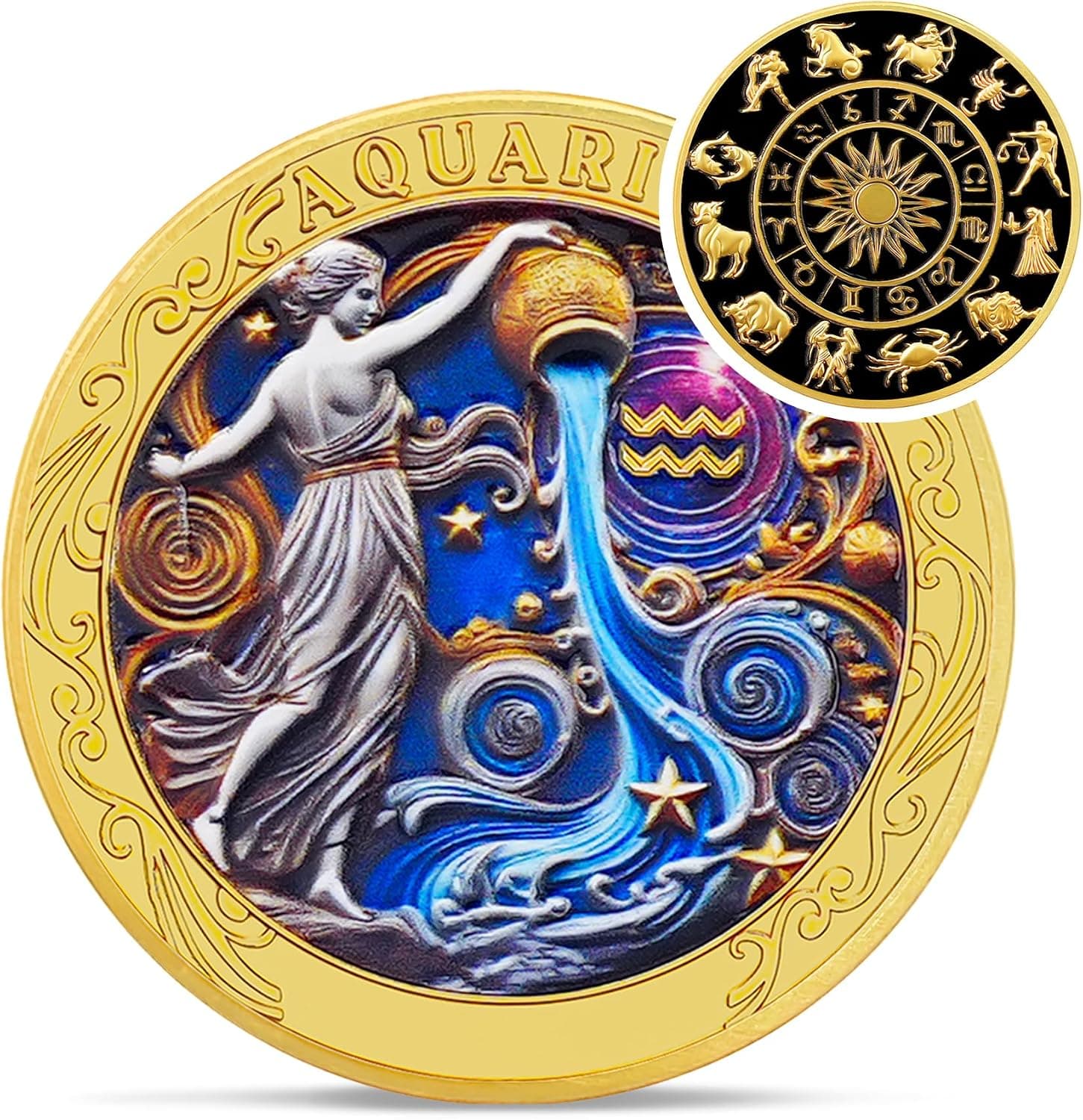 -20%
-20%Aquarius 12 Zodiac Challenge Coin - Twelve Constellations Aquarius Protective...
 -29%
-29%Karma and Luck March Birthstone Crystal Tree of Life, Aquamarine Gemstone Fen...
 -29%
-29%Karma and Luck July Birthstone Crystal Tree of Life, Ruby Gemstone Feng Shui ...
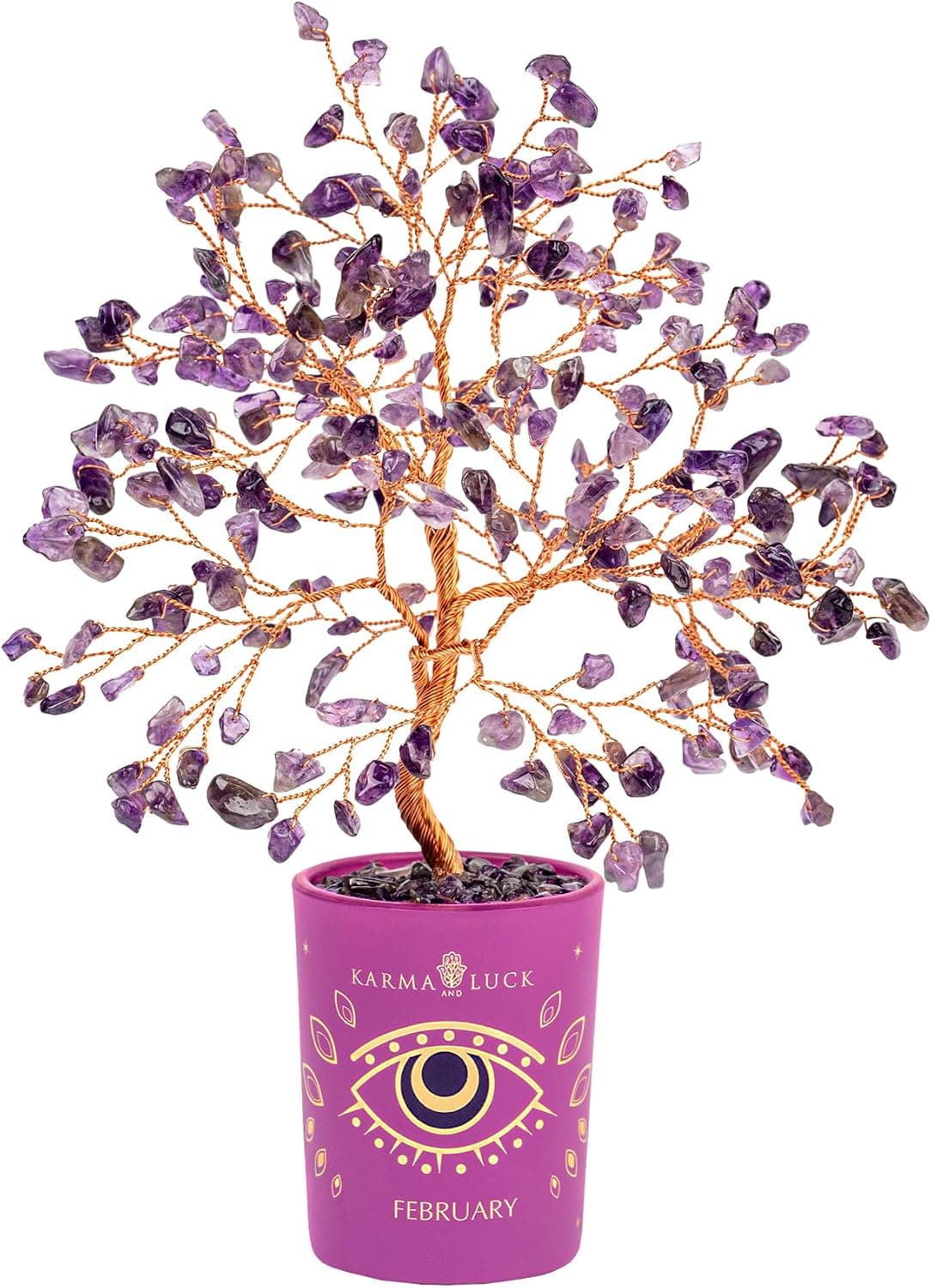 -29%
-29%Karma and Luck February Birthstone Crystal Tree of Life, Amethyst Gemstone Fe...
As an Amazon Associate, we earn from qualifying purchases. We only recommend items our practitioners have personally tested.
Continue Your Journey
Explore these related guides to deepen your understanding:

The I Ching Doesn't Answer Lazy Questions — Here's What to Ask Instead
8 min readConfucian Commentary Turns the I Ching Into a Moral Floor Plan
9 min readBroken Lines, Solid Lines, and the Real Yin-Yang Logic of the I Ching
11 min readThe Wilhelm I Ching Feels Deep Because It Slows Your Reading
11 min readReady for Deeper Guidance?
Try our free I Ching reading for personalized wisdom, or explore our curated Feng Shui essentials.