The better choice is not the prettier tool. It is the system whose structure matches how you think, feel, and decide.
The real choice is not cards versus coins
If you want a reading that opens like a room with many doors, tarot usually gives you that. If you want a reading that tightens the question until the change becomes unmistakable, the I Ching usually does that better. The mistake is comparing objects instead of systems, because the object only matters after you understand how meaning is built.
I have seen people sit at a kitchen table with a red-backed tarot deck spread in a neat cross, and the room seems to widen. The cards become separate chambers: one for the past, one for the obstacle, one for the likely movement ahead. That layout changes attention. The question is no longer one beam of light. It becomes a whole floor plan.
Then I have seen another reader stand at a small desk near a window, cast coins, and wait while the page of hexagrams gathers itself into a compact answer. The atmosphere is different. More threshold than stage. Less storytelling, more structure. That is why the comparison matters so much for the practical buyer.
The phrase what is the I Ching often gets reduced to a history lesson, but for this decision you need something sharper: the I Ching is a change system, while tarot is an image system. Both can be used for reflection, timing, and guidance, but they train the mind in different habits.
That difference is not decorative. It determines whether the reading expands your sense of possibility or narrows it into a disciplined pattern. And if you ask the wrong system the right question, you still get a poor fit.
How each system builds meaning from chance
Tarot builds meaning through placement, image, and relationship. A card does not stand alone for long; it immediately starts talking to the cards beside it because the spread gives each position a job. One card may name the past, another the obstacle, another the likely direction ahead. The result is not just a pile of symbols. It is a set of roles, and those roles tell the mind how to read the chance event.
The image itself also carries weight. A figure’s posture, a color choice, a tool, a doorway, a storm cloud, a crown: these details invite association before the reader has even started to interpret. That is why tarot often feels quick to understand. It lets the eye move first, and the mind follows by linking image to memory, emotion, and story. Meaning emerges from the tension between what the card shows and where it sits in the spread.
The I Ching builds meaning differently. A cast produces a six-line figure, and the answer depends on how those lines combine, where they shift, and what that pattern suggests about the present moment. The core unit is not a character in a scene but a configuration of forces. Yin and yang are not merely symbols; they are load-bearing oppositions that define what can hold and what can move. The reading works because one state contains the conditions for another. Change is the message, and the lines show where that change is happening.
That is why the I Ching can feel so concentrated. It behaves more like a narrow beam of light than a wide lamp. Tarot spreads meaning outward across a visual field; the I Ching compresses meaning into a dense verbal architecture. One favors juxtaposition. The other favors transition. One invites the mind to wander among symbols. The other asks the mind to register the hinge where conditions turn.
yin and yang meaning matters here because the I Ching does not treat contrast as a side note; contrast is the engine. A strong line beside a yielding line is not just pretty philosophy. It is the mechanism by which the reading says, “This is where the system is under pressure, and this is where it can move.”
Tarot, by contrast, can let the question unfold like a corridor with several lit doorways. The architecture is intentional. You are not simply pulling symbols at random. You are entering a spatial logic where position changes interpretation. That is why people often feel tarot is more immediately narrative, while the I Ching feels more austere and exacting.
And yes, randomness is part of both. But randomness is never the whole story. The real act is how the system disciplines chance into meaning.
Why the two traditions feel different in the mind
Tarot tends to support associative cognition. The mind sees a figure, a color, a gesture, a landscape, and quickly links it to memory, emotion, and story. That can be a gift. It can also become projection if the reader is sloppy. But when handled well, it is remarkably good for questions that are relational, layered, or emotionally charged.
The I Ching tends to support pattern cognition. It asks you to notice shifts, thresholds, and phase changes rather than personalities or scenes. People often call this “quieter,” but quiet is not weakness. Quiet can be precision. A restrained system sometimes gives a steadier answer because it does not flood the room with imagery.
There is a psychological reason this matters. When a reading is visually saturated, the mind has more places to attach feeling. That can open intuition, but it can also amplify anxiety. When a reading is structurally sparse, the mind has fewer hooks and must work harder to interpret the pattern. That can feel less exciting. It can also feel more grounded.
Picture a home office with one narrow desk lamp and a large white wall. Tarot is the wall covered in images, each one reflecting some part of the question. The I Ching is the lamp. It does not show you everything, because it is not trying to. It shows you the line that matters now.
That difference explains why people who say they want “just the truth” often do better with the I Ching, while people who need emotional context and symbolic breadth often do better with tarot. The systems are not ranking each other. They are shaping different kinds of attention.
A careful reader notices that this is not really about belief. It is about how the brain organizes uncertainty.
When tarot fits the question, and when the I Ching does
If your question is relational, layered, or full of competing feelings, tarot often has the better architecture. It excels when you want to see several forces at once: what you feel, what the other person may be carrying, what the surrounding atmosphere is doing, and how the situation is likely to develop if nothing changes. The spread gives each force a seat at the table.
If your question is about timing, transition, or the shape of a shift, the I Ching usually cuts cleaner. It is strong when you need to know what phase you are in, what kind of resistance is present, and what adjustment preserves movement. The answer may be less theatrical, but it is often more usable.
Take a career decision. One person asks both systems before accepting a position with a smaller title but better long-term prospects. Tarot may open a narrative corridor: the job looks like a doorway, but the path inside is uncertain, and another card might show fear of losing status. The I Ching may compress the same dilemma into a few decisive lines about retreat, timing, or gradual advance. Same life issue. Different architecture.
That difference is also spatial. Tarot spreads meaning across distinct stations, like rooms connected by a hall. The I Ching moves like circulation through a structure, where one condition transforms into the next through thresholds. Architecture teaches this plainly: some buildings are organized by rooms, others by flow. Neither is better. They serve different movement patterns.
For a person who feels overwhelmed, tarot can be helpful because it gives the psyche more places to put its material. For a person who feels stuck in overthinking, the I Ching can be more useful because it reduces clutter. It does not encourage endless story. It asks, “What is the phase, and what fits it?”
That is the commercial decision underneath the spiritual one. You are not buying “the more powerful oracle.” You are choosing the tool that matches the kind of question you actually have.
how to ask the I Ching a question matters here because a disciplined question will reward the I Ching, while a sprawling emotional question may be better served by tarot’s spread logic. Ask each system in the language it understands.
What people miss about cultural context and interpretive ethics
Calling the I Ching “Chinese tarot” sounds convenient, but it flattens the whole thing. That comparison works only at the most superficial level: both can be used for divination. After that, it starts breaking down fast, because their interpretive grammars are different, their historical roots are different, and the role of the reader is different.
Tarot often invites a strongly image-based, symbolic conversation. The reader moves among archetypes, scenes, and spread positions. The I Ching is more textual, more structural, and more compressed. It asks for patience with nuance. It rewards reading the lines, not just the headline. If you treat it like a card deck with Chinese styling, you miss the point.
This is where ethics enters the room. In both systems, the reader should avoid forcing certainty where there is only pattern. But the I Ching especially punishes theatrical overstatement because its authority comes from careful calibration. If a reading points to modest progress, do not inflate it into a dramatic breakthrough just to satisfy your mood. That is not insight. That is impatience.
I once watched a study room in a narrow apartment where the walls were painted a dull cream and a blue lamp threw hard shadows across a wooden desk. A tarot spread lay open beside a mug and a notebook, and the spread immediately seemed to pull the owner into a story about a relationship and a move across town. Later, the same question was cast with coins for the I Ching, and the room changed. The issue stopped feeling like a story to narrate and started feeling like a structure to respect. One answer did not cancel the other. They exposed different layers of the same pressure.
That is the ethical advantage of understanding systems instead of objects. When you know what a method is for, you stop demanding that it perform a different job. That alone saves readers from a lot of confusion.
duality is useful as a bridge, because both systems rely on contrast. But the I Ching turns contrast into sequence, while tarot often turns contrast into juxtaposition. That small difference changes how responsibility feels in the reading.
Choosing the system that matches your threshold for structure
If you like a reading that gives the psyche space to roam, tarot may be the better first choice. If you want a reading that narrows attention and makes a phase change visible, the I Ching may fit better. The key variable is your threshold for structure. Some people need more visual density before insight arrives. Others need less.
Think of the threshold like a doorway. Too much structure, and the room feels cramped. Too little, and the mind starts drifting. Tarot often occupies the middle of a broader visual field, because it lets meaning fan outward. The I Ching often works near the threshold itself, where one condition turns into another. That is why it can feel so exacting. It is watching the hinge.
So if you are choosing between i ching vs tarot, ask a cleaner question than “Which one is stronger?” Ask: Do I need a narrative map, or do I need a structural diagnosis? Do I want image-led reflection, or do I want change-led discernment? Do I want the reading to expand my view, or refine my next move? Those are different needs.
One more practical adjustment: if you are emotionally flooded, do not force the most symbol-heavy option just because it looks richer. Rich can become noisy. And if you are mentally scattered, do not demand a sparse system to perform emotional labor it was never designed to do. Choice matters because method shapes response.
The best readers I know do not belong to one camp forever. They choose by question type. They choose by state of mind. They choose by the amount of structure the moment can bear.
your first I Ching reading should feel clear enough to hold, not overloaded with theatrical meaning. When the system matches the question, the answer usually feels less dramatic and more exact. That is often the better signal.
the coins method is the most familiar entry point for many Western readers, but the method is only the doorway. What matters is whether you are stepping into a room made of images or a structure made of change. That is the real decision.
Choose the system that fits your question, your mood, and your tolerance for ambiguity. That is not a compromise. That is good judgment.
And avoid the two common errors. First, do not treat tarot as though it must be “more intuitive” and the I Ching as though it must be “more serious.” That is lazy stereotyping. Second, do not ask either system to confirm what you have already decided. A reading is not there to decorate your certainty.
Frequently asked questions
Is tarot better for beginners than the I Ching?
Tarot often feels easier at first because the images offer immediate hooks for the mind. The I Ching can feel denser, because the answer depends on structure and nuance rather than a single picture. That said, beginners who like clear pattern logic sometimes take to the I Ching very quickly.
Can I use both systems for the same question?
Yes, and that can be useful if you are comparing the style of insight each system produces. The important thing is not to treat them as competing judges. Use each one to reveal a different layer: tarot for atmosphere and narrative, the I Ching for phase and direction.
Does one system give more accurate answers?
Surprising as it sounds, accuracy is often the wrong yardstick. A method is “accurate” when it fits the kind of question being asked and the kind of response the reader can actually use. A rich image spread can be more accurate for a relationship question, while the I Ching may be more accurate for timing, restraint, or
David Liu
Traditionally informed guidance • Cross-referenced with classical Chinese source texts
Interpretations cross-referenced with the Zhouyi (周易) and Wilhelm/Baynes translation.
Practitioner-Selected Tools for This Topic
Items our team has tested and found effective for the principles discussed above. Individual results may vary.
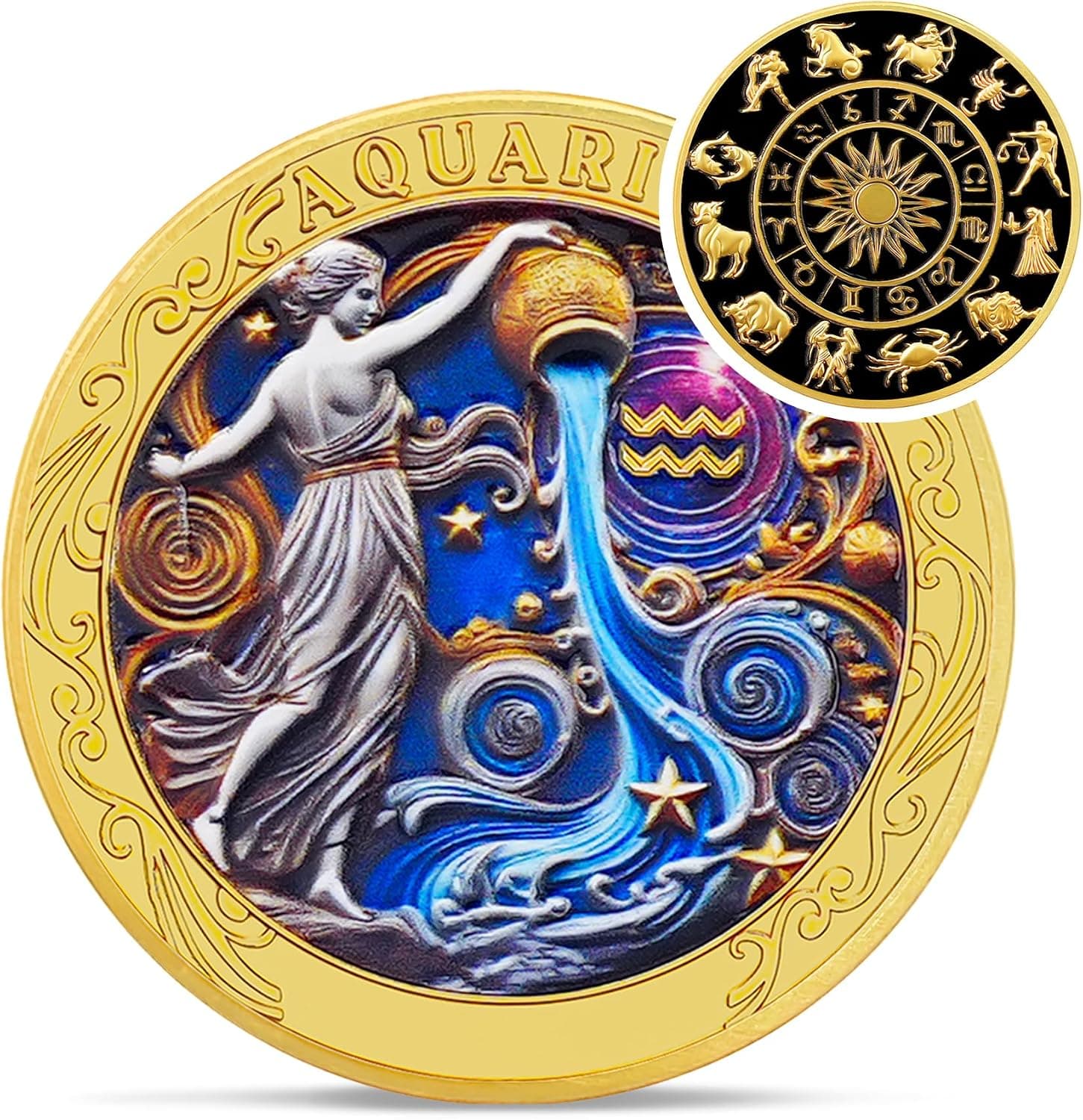 -20%
-20%Aquarius 12 Zodiac Challenge Coin - Twelve Constellations Aquarius Protective...
 -29%
-29%Karma and Luck March Birthstone Crystal Tree of Life, Aquamarine Gemstone Fen...
 -29%
-29%Karma and Luck July Birthstone Crystal Tree of Life, Ruby Gemstone Feng Shui ...
 -29%
-29%Karma and Luck February Birthstone Crystal Tree of Life, Amethyst Gemstone Fe...
As an Amazon Associate, we earn from qualifying purchases. We only recommend items our practitioners have personally tested.
Continue Your Journey
Explore these related guides to deepen your understanding:

The I Ching Doesn't Answer Lazy Questions — Here's What to Ask Instead
8 min readConfucian Commentary Turns the I Ching Into a Moral Floor Plan
9 min readBroken Lines, Solid Lines, and the Real Yin-Yang Logic of the I Ching
11 min readThe Wilhelm I Ching Feels Deep Because It Slows Your Reading
11 min readReady for Deeper Guidance?
Try our free I Ching reading for personalized wisdom, or explore our curated Feng Shui essentials.