If your readings feel vague, the mistake may be in how you read the trigrams—not in the oracle.
When the answer feels clear but the message still slips through your fingers
You cast a hexagram, recognize the moving lines, and still end up asking the same question an hour later: so what, exactly, is this telling me?
That frustration usually appears when people treat the trigrams like decorative symbols instead of a living pattern of movement, pressure, and timing. I’ve seen it in students who can recite names from memory and still miss the one thing the reading was pointing to: the shape of the situation. The oracle was not being obscure. The reader was looking too flatly.
If you want real use from a dependable I Ching translation, you have to stop hunting for a single “meaning” and start noticing what the trigram is doing. Heaven does not behave like Lake. Fire does not behave like Water. That sounds obvious until you see how often people force every symbol into a moral lesson.
The eight trigrams are not labels stuck on a chart. They are eight recurring forces: movement, receptivity, stillness, danger, joy, tension, adaptation, and realization. Once you see them that way, the whole system becomes sharper. Less mystical fog. More practical intelligence.
The framework: read the movement, not just the image
The phrase i ching trigram meanings eight trigrams gets repeated so often that people begin to hear it like a glossary term. It is better understood as a map of behavior. Each trigram shows how energy enters a situation, how it changes shape, and where it is likely to press next.
Heaven is creative force. Earth is yielding support. Thunder starts things with a jolt. Wind or Wood penetrates, arrives gradually, and works by persistence. Water does not rush for the exit; it falls into trouble, then keeps moving through it. Fire attaches, clarifies, and reveals. Mountain stops. Lake opens and releases. That is the basic set of eight, and yes, it is more useful when you think in verbs than in nouns.
People often ask me which trigram is “good” and which is “bad.” That question misses the point. Mountain is not bad. It prevents collapse. Water is not bad. It teaches depth and survival. The real issue is fit. A Mountain response in a relationship reading means something entirely different from a Mountain response in a career reading, because the same energy is serving a different context.
One afternoon I worked with a retired engineer who kept getting hexagrams with Water over Mountain while he was deciding whether to move from San Diego to Portland. He had been reading it as “dangerous, therefore no.” But the situation was not saying no. It was saying proceed carefully, because the crossing is real and the terrain changes fast. He stopped trying to force a clean yes-or-no answer, and the reading became accurate within a week of his planning.
That is the habit you need: take the trigram seriously as an action pattern. Ask what it does, how fast it moves, where it meets resistance, and what kind of environment it thrives in. If you do that, the symbols stop feeling abstract. They begin to act like weather forecasts.
How to work with the eight trigrams in a reading
Start with the outer feel of the hexagram. The upper trigram often shows the atmosphere above the situation, the outcome pressure, or the way events are presenting themselves right now. The lower trigram tends to show the engine underneath: the motive force, the hidden condition, the emotional ground, or the pattern already in motion. Read them together and you get a full sentence instead of a single word.
Then ask whether the two trigrams support each other or strain against each other. Fire above Water is not the same as Water above Fire. Heaven above Earth has a completely different feel from Earth above Heaven. This is where many readers go wrong. They memorize correspondences and never learn combinations. That is like knowing the alphabet but refusing to read words.
When I interpret a reading for a client, I often begin with the lower trigram because it tells me what is actually alive in the matter. If a bedroom reading has Earth below and Fire above, I expect a tired foundation with restless surface energy. If a business reading has Thunder below and Mountain above, I look for a startup impulse being blocked by delay, paperwork, or fear of exposure. The trigram pair is the story.
Use concrete questions. What is moving? What is resisting? What is clarifying? What is soaking in? What is overreaching? What is waiting? These questions keep you honest. They also keep you from turning every answer into a spiritual slogan.
The simplest way to practice is to read one trigram at a time before you interpret the pair. Name its temperament. Name its speed. Name its relationship to the issue. Then combine the two names into a sentence. For example: “Thunder beneath Mountain” can read as an impulse that keeps hitting a wall, or as a pressure that needs containment before it becomes chaos. That is already more usable than a vague line about “change.”
If you are new to casting, start with your first reading habits before you try to memorize every symbolic layer. The trigrams make more sense when you have a real question in front of you.
Practical ways to bring the trigrams into daily use
Do not wait for grand decisions. The trigrams show themselves in ordinary life, and ordinary life is where your skill gets built. A kitchen that feels too hot, a meeting that drags, a friend who keeps circling the same issue without landing anywhere—these are all trigram situations. If you can recognize the energy in small things, you will read the larger questions better.
Suppose you cast a reading about your home office and see Fire over Lake. The obvious mistake is to call it “good energy” because Fire sounds positive and Lake sounds pleasant. But the real question is whether joy is being used for focus or for distraction. If the desk is next to a bright window, papers are spread across a coral-colored surface, and you keep bouncing between tabs instead of finishing the report, the symbol is telling the truth with uncomfortable precision. Energy is present, but it is leaking sideways.
Or imagine a bedroom with Mountain over Water: a heavy headboard, dark blue bedding, and a single lamp left on all night. That combination can suggest containment over depth, which may feel restful for a while and then turn stagnant. The room does not need drama. It needs adjustment. Better air, softer light, less pressure at the foot of the bed. The reading is not asking for superstition. It is asking for alignment.
If you want to compare your result with a physical compass method, study how a Luo Pan is used in classical practice. The direction tool and the trigram pattern often reinforce each other when you are reading a space, and that combination can save you from guessing.
When you practice, keep a notebook. Write the question, the hexagram, the upper trigram, the lower trigram, and one sentence about the relationship between them. Then write what happened. After a month or two, the patterns start to repeat in a way that is impossible to ignore. That is how the trigrams become real to you. Not through theory. Through proof.
Do not force symmetry where there is none. Not every reading will feel elegant. Some are blunt. Some are messy. Some repeat the same warning in different clothes until you finally listen. That repetition is not failure. It is the teaching.
Two common mistakes that distort the whole reading
The first mistake is treating each trigram as a personality type. People love this because it is easy. It also flattens the system. A trigram is not just “the Water person” or “the Fire mood.” It is a movement in context, and context changes everything.
The second mistake is using symbols as wallpaper. A lot of readers collect meanings the way others collect crystals, then feel sophisticated while doing very little actual interpretation. If you are unsure whether you are making that error, look at your own environment and ask whether the advice would change anything tangible. If it would not, you are probably just decorating the question.
For readers who keep placing cures without understanding the pattern, the problem is often not the object. It is the interpretation. Before you reach for a remedy, compare the reading with when a bagua mirror is actually appropriate so you are solving the right problem instead of escalating it.
I once walked into a small guest room in a teacher’s apartment in Brooklyn where the woman had arranged three jade objects on a shelf, hoping they would calm the room. The walls were pale gray, the curtains were heavy navy, and a ceiling fan hung too low over the bed. She was exhausted, but not because she lacked remedies. The room was full of stopping energy and weak circulation. One hour later, after we simplified the shelf and brightened the lighting, she said the room felt like it could breathe. That is the level at which these symbols matter.
FAQ
Do I need to memorize all eight trigrams before I can read the I Ching well?
No. Memorization helps, but it is not the same as understanding. Start by learning what each trigram does in motion, then practice reading pairs in actual questions. A small working vocabulary used often is better than a perfect chart used rarely.
Which trigram should I focus on first?
Begin with Water, Fire, Mountain, and Thunder. Those four tend to be easier for Western readers because the actions are vivid: danger, clarity, stopping, and beginning. Once those feel natural, the rest of the eight fall into place faster.
Can the same trigram mean different things in different situations?
Absolutely, and that is part of the point. Mountain in a health question may suggest rest or blockage, while Mountain in a career question may suggest delay, caution, or needed restraint. The image stays the same, but the message changes with the terrain.
Is there one surprising thing beginners miss?
Yes: the trigrams are often more helpful for timing than for verdicts. A reading may not be saying “go” or “stop” so much as “not yet,” “slow down,” or “move, but with a different rhythm.” That nuance is where the oracle becomes practical instead of theatrical.
David Liu
Traditionally informed guidance • Cross-referenced with classical Chinese source texts
Interpretations cross-referenced with the Zhouyi (周易) and Wilhelm/Baynes translation.
Practitioner-Selected Tools for This Topic
Items our team has tested and found effective for the principles discussed above. Individual results may vary.
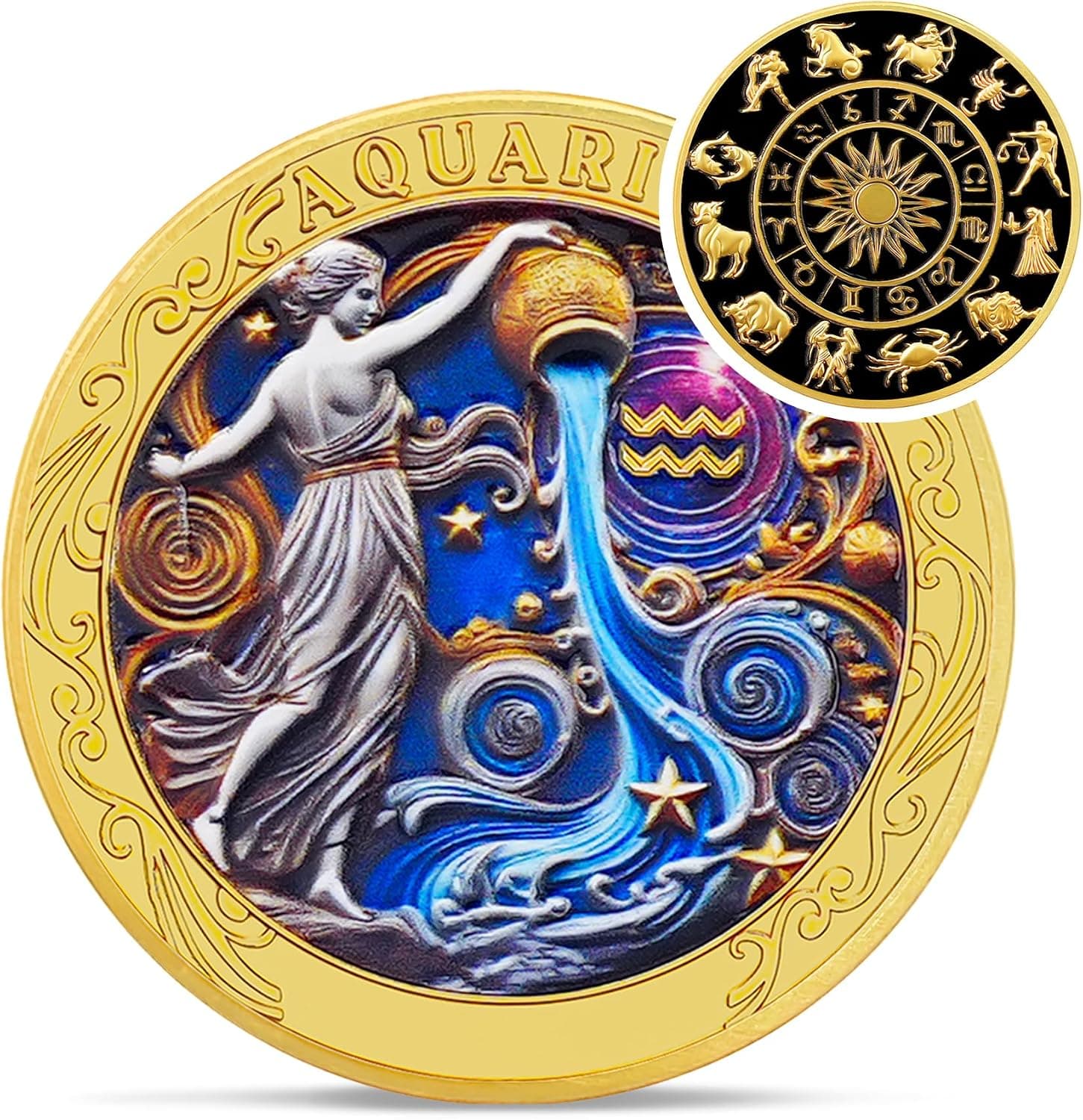 -20%
-20%Aquarius 12 Zodiac Challenge Coin - Twelve Constellations Aquarius Protective...
 -29%
-29%Karma and Luck March Birthstone Crystal Tree of Life, Aquamarine Gemstone Fen...
 -29%
-29%Karma and Luck July Birthstone Crystal Tree of Life, Ruby Gemstone Feng Shui ...
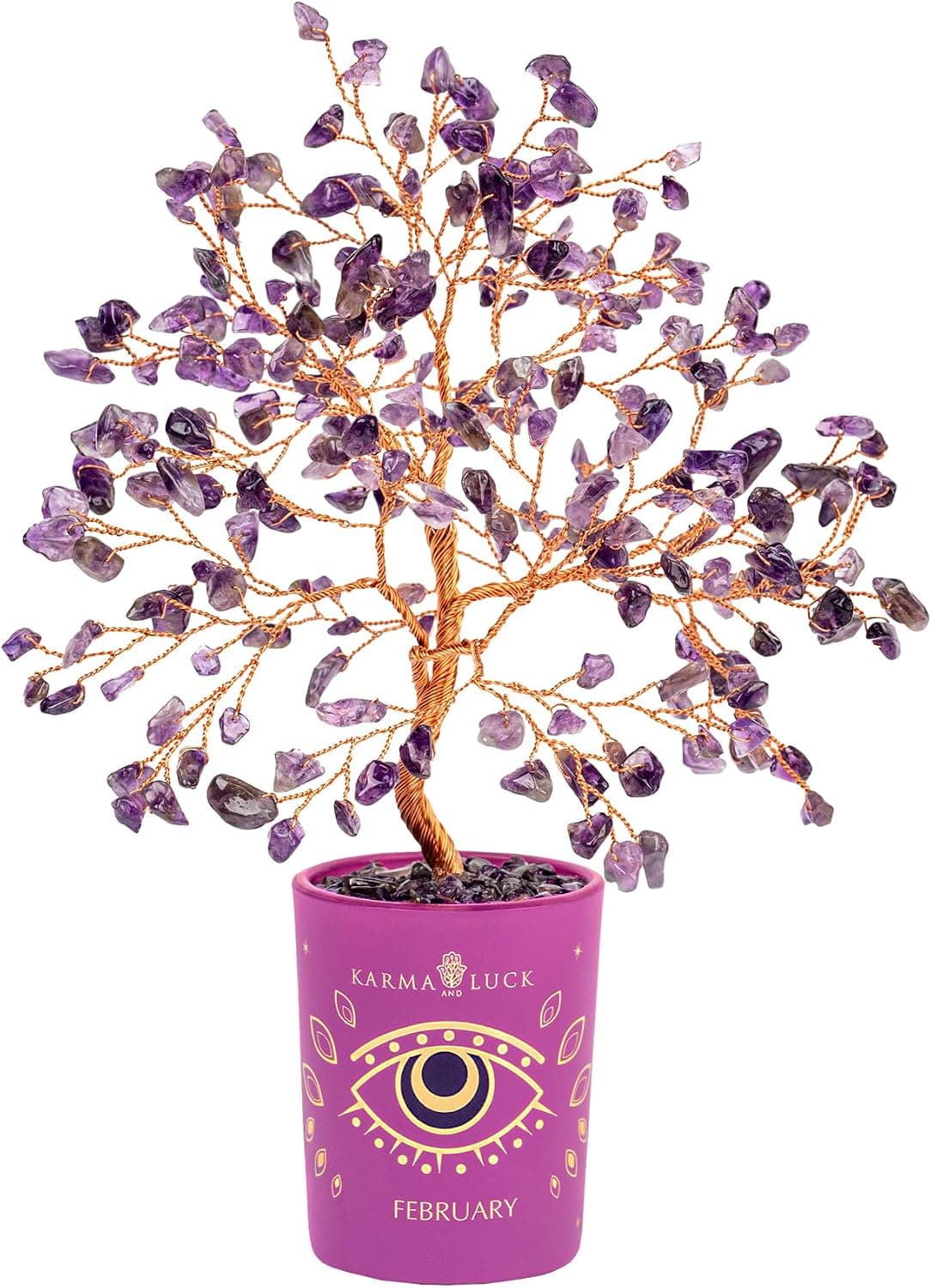 -29%
-29%Karma and Luck February Birthstone Crystal Tree of Life, Amethyst Gemstone Fe...
As an Amazon Associate, we earn from qualifying purchases. We only recommend items our practitioners have personally tested.
Continue Your Journey
Explore these related guides to deepen your understanding:

The I Ching Doesn't Answer Lazy Questions — Here's What to Ask Instead
8 min readConfucian Commentary Turns the I Ching Into a Moral Floor Plan
9 min readBroken Lines, Solid Lines, and the Real Yin-Yang Logic of the I Ching
11 min readThe Wilhelm I Ching Feels Deep Because It Slows Your Reading
11 min readReady for Deeper Guidance?
Try our free I Ching reading for personalized wisdom, or explore our curated Feng Shui essentials.