The symbols do not predict first; they build meaning from line, position, and repetition.
A Symbol Is Not a Prediction
Open a hexagram chart and the first thing you see is not a prophecy. You see a structure: six stacked lines, some whole, some split, and a visual rhythm that asks to be read before it asks to be believed.
That matters because people often want symbols to behave like labels. They want a line to mean one fixed thing, fast. But the system works more like a building section than a dictionary entry, with lower and upper parts creating context through placement, balance, and movement.
In a narrow hallway I once studied, a black-framed print of Hexagram 23 hung beside a white door, and the contrast was almost rude: solid dark bars, open gaps, then a second layer above them. The room felt unsettled before anyone spoke because the eye registered interruption, not story. That is the real starting point for your first encounter with an I Ching reading: not a prediction, but a pattern that changes how attention moves.
The psychology here is simple. The mind can hold a symbol only after it recognizes the grammar behind it, and the I Ching rewards that slower recognition. Learn the visual rules first, and the meanings stop floating away.
From One Line to a Pattern
A single line is the smallest unit, and it already carries tension. A solid line suggests continuity, presence, firmness, light without interruption. A broken line suggests opening, receptivity, interruption, shadow, or a place where movement can pass through.
That difference matters because the meaning of a line is never only in the line itself; it is in what the line does to the sequence around it. A solid line can act like a brace, holding the pattern together. A broken line can act like a hinge, letting the figure turn or breathe. The same mark therefore changes function depending on whether it is supporting, yielding, interrupting, or transitioning.
Do not rush past that contrast. A continuous stroke and a split stroke are like beam and threshold. One spans. One yields. In spatial language, the first resists pressure; the second allows circulation.
That is why line meaning becomes clearer when you look at proportion. A line sitting at the bottom of a figure behaves differently from the same line at the top because the surrounding lines change its role. Near the base, it feels like footing. Near the top, it feels like outcome or weather. In between, it can function as a pivot, which is where many readings become more nuanced: a middle line may signal process rather than result, or adjustment rather than arrival.
People often expect a symbol to be self-contained, but this tradition is positional. The same mark can feel stable in one place and unstable in another because the pattern around it has shifted. That is not mysticism for its own sake; it is compositional logic.
The best way to notice it is to compare repetition. Two solid lines together read differently from one solid line isolated between broken ones. Repetition strengthens tone. Disruption changes tempo. Over time, you start to see that a line does not just mean something; it changes the balance of everything touching it.
Eight Trigrams as Building Blocks
The eight trigrams are where the code becomes readable. Each trigram is three lines, and each one gathers a natural image, an atmospheric quality, and a movement pattern. I Ching symbols meaning becomes far easier once you learn these eight units because the larger figures are built from them.
Qian, three solid lines, feels like pure force, initiative, and active expansion. Kun, three broken lines, feels like yielding, containment, and fertile openness. The others work through mixed line patterns that suggest thunder, wind, water, mountain, lake, fire, and earth-like qualities depending on context and tradition.
Think of them as architectural modules, but with different jobs. Some trigram forms imply initiation, some containment, some movement, and some stopping. That makes them more than labels for natural forces: they are recurring behaviors. One trigram can act like foundation, one like canopy, and one like a transition band between them. In a well-proportioned building, the base and roof are never identical; they answer each other. The same is true here.
A reader sees this most clearly in a chart spread on a table. The three-line forms repeat, and suddenly the hexagrams stop looking random. A trigram with upward motion at the bottom and a trigram with stillness at the top produces a different emotional field than the reverse, because circulation changes direction. The change is not symbolic in the abstract; it is structural, because the eye reads where energy starts, where it slows, and where it meets resistance.
Habit matters here. Once you repeatedly meet the same eight shapes, your eye stops translating every line from scratch. Recognition becomes faster, and faster recognition creates more room for judgment. That is why so many beginners feel overwhelmed at first and then oddly relieved after a few sessions.
The Earlier Heaven arrangement is useful here because it shows the trigrams as a balanced system, not just a list of names. It helps the eye group forms by contrast and relation instead of memorizing them as isolated facts.
How Two Trigrams Become One Hexagram
A hexagram is not one symbol glued to another by accident. It is two trigrams stacked, which means each six-line figure contains a lower condition and an upper condition. That vertical order is not decorative; it is the mechanism.
The lower trigram usually reads as the base situation, the interior condition, or what is already under way. The upper trigram tends to read as the influence above, the frame around the situation, or the pressure shaping what rises. Together they work like a room meeting a ceiling through a doorway.
When I teach this, I ask people to picture a room with a low wooden bench near the entrance, pale light on the floor, and a darker upper wall. The lower level suggests where energy gathers. The upper level suggests where it disperses, meets resistance, or turns. The hexagram lives in that exchange.
This is why a single changed line can alter the entire feel of the figure. A shift in one structural element can change the balance of the whole composition, much like moving a partition or widening a threshold changes how a room is used. Proportion is doing the work.
Here the phrase i ching symbols meaning becomes more precise. It is not only about what the symbol names. It is about how the symbol is assembled, because assembly creates tone. One hexagram can feel tense and upward-striving; another can feel enclosed, porous, or stalled, even before you consult commentary.
That is also why the upper and lower trigrams should be read together, not separately. If you isolate one and ignore the other, you flatten the structure. If you read them as a pair, you see a small but complete system: foundation, transition, canopy.
Reading the Symbol on the Page
Start with the visual grammar. First ask: is the line whole or split? Then ask: where is it placed? Then ask: does the pattern repeat, alternate, or break? Those three questions usually give you more than a quick symbolic label ever will.
The eye notices contrast before it notices meaning. A solid line reads as mass. A broken line reads as openness. When those alternations stack, the symbol begins to suggest ascent, descent, interruption, or enclosure. That is because our perception organizes vertical sequences into paths.
Look at the middle lines especially. They often act like thresholds. In architecture, a threshold is where one condition becomes another: inside to outside, low to high, private to public. In a hexagram, the middle is where the pattern starts to turn, and that turn matters.
One of the most common beginner mistakes is to jump immediately to a moral reading. Strong looks good. Weak looks bad. That is too crude. A broken line can mean receptivity, timing, and useful openness. A solid line can mean overpressure, rigidity, or simply the right firmness at the right point.
Here is a practical way to study one figure: trace the bottom line with your finger, then move upward line by line and name only what you see, not what you hope it says. After that, divide the six lines into lower trigram and upper trigram. Finally, ask how the top modifies the bottom. This sequence reduces overload because the brain handles small pattern steps better than abstract summaries.
A hexagram chart for reference helps because it gives you a stable visual field. Stable reference builds memory, and memory makes the symbols feel less mysterious without making them shallower.
Using Symbol Meaning Without Overclaiming It
The strongest readings respect limits. A symbol can describe structure, but it cannot do your discernment for you. It can show pressure, openness, ascent, containment, or friction, yet it will not hand you a guaranteed outcome.
That restraint is not a weakness. It is what keeps the system honest. When people overpromise, they turn a pattern language into fortune-cookie theater, and then they blame the text when reality stays complicated.
What the symbols do well is sharpen attention. They make you notice whether a situation is bottom-heavy, top-heavy, blocked, open, stable, or changing. They help you see the shape before you decide the meaning. That sequence is the right order.
If you want a clean next step, work from the line upward. Learn the two line types, then the eight trigrams, then the way those trigrams combine into six-line figures. After that, the symbols stop feeling like a pile of marks and start feeling like a readable system.
For readers who want the broader interpretive frame after learning the symbols themselves, this companion piece on applying I Ching insight today bridges structure and everyday use without turning the book into a slogan machine.
The point is not to make the I Ching smaller. The point is to make it legible. Once the visual grammar is clear, the symbols can do their real work: they show relationship, not fantasy; pattern, not hype.
FAQ
What is the basic meaning of a broken line versus a solid line?
A solid line usually signals continuity, firmness, or active presence. A broken line suggests openness, receptivity, interruption, or space for movement, depending on its position in the figure.
Do I need to memorize all eight trigrams before reading hexagrams?
No. Start with two or three trigrams and learn them well enough to recognize them instantly. The rest become much easier because repeated exposure trains pattern recognition faster than isolated memorization.
Is the symbol meaning the same as the divination meaning?
Not exactly. The symbol meaning is the structure itself: lines, trigrams, and their relationships. Divination meaning adds context, question, and timing, which can shift how the same figure applies in a real reading.
Reflection
If the I Ching feels abstract at first, that is normal. Abstract things become usable only after the eye learns their grammar. Once you can see line type, position, and repetition, the symbols are no longer decorations on a page; they are a compact map of movement and relationship.
That is the real value of i ching symbols meaning. Not certainty. Not theatrics. A sharper way to see what kind of structure you are standing inside.
David Liu
Traditionally informed guidance • Cross-referenced with classical Chinese source texts
Interpretations cross-referenced with the Zhouyi (周易) and Wilhelm/Baynes translation.
Practitioner-Selected Tools for This Topic
Items our team has tested and found effective for the principles discussed above. Individual results may vary.
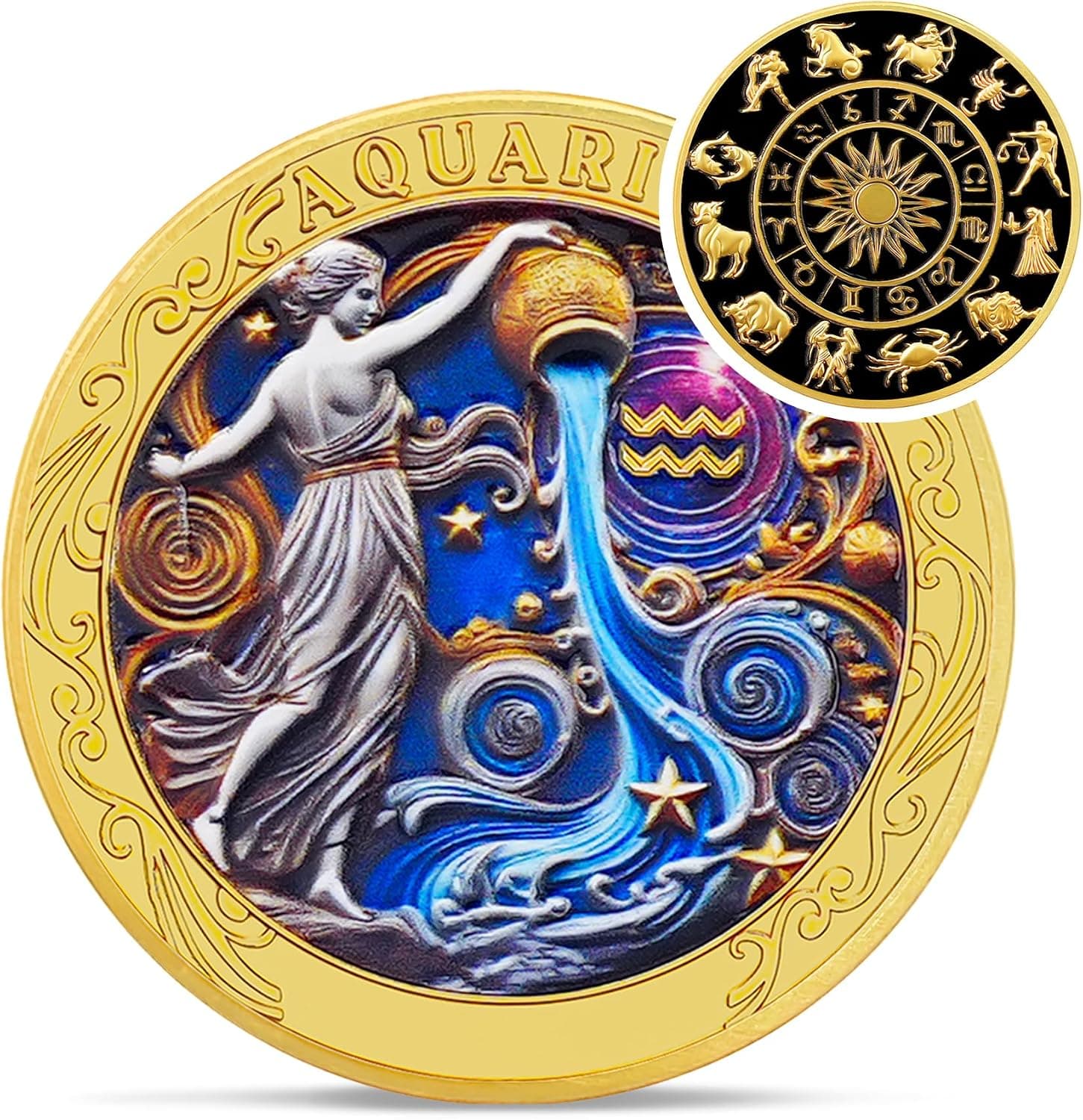 -20%
-20%Aquarius 12 Zodiac Challenge Coin - Twelve Constellations Aquarius Protective...
 -29%
-29%Karma and Luck March Birthstone Crystal Tree of Life, Aquamarine Gemstone Fen...
 -29%
-29%Karma and Luck July Birthstone Crystal Tree of Life, Ruby Gemstone Feng Shui ...
 -29%
-29%Karma and Luck February Birthstone Crystal Tree of Life, Amethyst Gemstone Fe...
As an Amazon Associate, we earn from qualifying purchases. We only recommend items our practitioners have personally tested.
Continue Your Journey
Explore these related guides to deepen your understanding:

The I Ching Doesn't Answer Lazy Questions — Here's What to Ask Instead
8 min readConfucian Commentary Turns the I Ching Into a Moral Floor Plan
9 min readBroken Lines, Solid Lines, and the Real Yin-Yang Logic of the I Ching
11 min readThe Wilhelm I Ching Feels Deep Because It Slows Your Reading
11 min readReady for Deeper Guidance?
Try our free I Ching reading for personalized wisdom, or explore our curated Feng Shui essentials.