If your question is muddy, your reading will be too.
The part people miss before they cast
The worst readings I see start with a shrug and a pile of vague worry: career, love, money, meaning, all mixed together. The coins or stalks answer that mess faithfully, which is exactly the problem. A clear question is not a technical detail; it is the doorway.
I walked into a small study in Oakland once and saw a black desk, a brass lamp, and three sticky notes stuck to a laptop screen. The owner, a nurse named Elena, had asked the oracle about her future in general and felt offended by the answer. She expected a spotlight. She got a mirror.
That is how an first reading with the I Ching usually begins for Western students: with too much expectation and too little precision. People want prediction. The book gives pattern.
The surprise is that the pattern becomes useful only when you stop treating the question like a test and start treating it like a diagnosis.
What the oracle is actually doing
The Book of Changes does not behave like a fortune machine that spits out a fixed future. It reflects the shape of a situation at the moment you ask. That sounds simple, but it changes everything. You are not asking, “What will happen?” You are asking, “What is the structure of this moment, and how should I move inside it?”
The method works because it forces relation. The answer is never just about you, and never just about the outer event. It is about the interplay between your timing, your attitude, your environment, and the pressures already in motion. That is why a reading can feel uncomfortably accurate even when the wording is spare.
People often compare it to tarot, but that comparison only helps up to a point. Tarot can be richly imagistic and narrative; the oracle is more architectural. If you want to understand that difference more cleanly, I recommend reading how it differs from tarot in practice before you force the two systems into the same box.
Here is the part that catches beginners off guard: the answer can be correct even when it does not flatter you. I have seen ambitious people ask about a business launch and receive a hexagram that clearly warned them to slow down, simplify, and stop decorating uncertainty with optimism. They called it bad news. It was actually restraint.
And yes, a reading can feel strange because the mind wants a sentence while the oracle gives a landscape. That is not a flaw. That is the point.
How to ask so the reading has teeth
Start with one real issue. Not seven. Not a cloud of anxiety with a label slapped on top. If the question is about work, ask about this job, this project, this conversation, or this decision. If the question is about a relationship, ask about the next step, the current dynamic, or your response to the other person. The narrower the frame, the sharper the answer.
Then remove hidden double meanings. “Should I leave?” sounds simple, but it often conceals three separate questions: can I leave, do I want to leave, and what happens if I stay. Split those apart. The oracle is generous, but it is not a magician trying to untangle a knot you refuse to show.
Spend a moment before you cast. Breathe. Put your phone down. If you like a ritual, make it plain: a quiet table, three coins, a notebook, and one honest sentence written before the toss. I have seen better results from that kind of restraint than from elaborate ceremonies performed by people who were already distracted. You do not need incense to be sincere.
One student, an architect named Marcus, asked about a renovation plan while standing in his kitchen beside a stack of paint samples. The room had white cabinets, a red kettle, and a loud refrigerator that kicked on every few minutes. He kept asking the same vague question in different words, and every answer looked confusing. When he finally asked, “What is the right pace for this remodel over the next six weeks?” the reading became straightforward: slow down, sequence the work, and do not force a finish date just to soothe impatience. Two weeks later, he told me the project finally stopped fighting him.
That is the real discipline of the oracle: precise questions, then less interference. You ask. You listen. You do not immediately rush to rewrite the answer into something more convenient.
Reading the answer without twisting it
Once you receive the hexagram, read the text slowly and keep the original question in front of you. Do not start by searching for the one line that confirms your wish. Start by asking what kind of situation this describes. Is it gathering? Retrenchment? Excess? Receptivity? Pressure? Movement? The pattern usually announces itself before the details do.
The moving lines, if you have them, are not decorative footnotes. They show where the situation is alive, unstable, or changing fast. A strong line in the wrong place can warn you that your strength is poorly timed. A weak line can show where humility protects you. That is why line reading should never be reduced to “good line, bad line.” Life is not that polite.
You will get better results if you keep a record. A simple journal lets you compare your initial impression with what later happened. If you need a clean method, my reading log approach for the I Ching is the most practical place to start. Without a record, memory becomes a liar and every old answer gets polished by hindsight.
And no, you do not need to be spiritually perfect for the reading to work. That myth causes more trouble than it solves. The oracle responds to attention, not performance.
Common mistakes that waste a reading
The first mistake is asking the same question three times because you dislike the answer. That is not persistence. That is noise. If the first reading is unclear, the problem is usually the wording or your own refusal to face the issue, not the hexagram.
The second mistake is making the question so abstract that the answer has nowhere to land. “What is my path?” sounds profound, but it often produces mush. Better to ask how to handle the next month, the current relationship, or the offer in front of you. For yes-or-no situations, there is a cleaner way to frame them, which is why I point readers to this method for direct questions when the situation is truly binary.
One more thing: people love to treat every awkward answer as a no. Sometimes the oracle is saying not yet, not like this, or not with that attitude. That distinction matters.
When the answer feels personal
The most useful readings often feel uncomfortably specific because they touch the real friction point. The answer is not there to entertain you. It is there to name the shape of your moment before events harden around it.
If you want to understand why this can feel eerie, the connection between symbolic pattern and meaningful timing is worth studying in the synchronicity discussion. Some people need that bridge before they can trust the process. Others need one honest reading and suddenly stop arguing with the method.
I have seen this with a retiree in a blue guest room, a chipped ceramic teacup on the windowsill, asking whether to move closer to her daughter. The room was quiet except for a ticking clock and the sound of traffic below. Her reading did not say, “Move now.” It said, in effect, that the ground was shifting but she needed to prepare the inner move before the outer one. She sold the house four months later, but only after clearing old resentments that had nothing to do with real estate.
That is the kind of answer people miss when they want drama. The oracle often speaks in leverage, not headlines.
FAQ
How often should I consult the oracle?
Use it when a question is real, not when you are nervous and bored. Repeated consulting on the same issue usually dilutes your own judgment. A good reading should sharpen action, not replace it.
Do I need to believe in anything for it to work?
You need attention more than belief. Skepticism can still produce a meaningful reading if you are honest and specific. The method breaks down when you try to test it like a parlor trick instead of using it to think clearly.
What if the answer seems contradictory?
Contradiction is often the point. A situation can be advancing and blocked at the same time, or ready and not ready in different places. The oracle is better than the ego at holding that tension.
Is the i ching oracle better for big decisions than small ones?
Surprisingly, small decisions can be easier to read because the stakes are clean. Big decisions often carry too much emotional static, which means the question must be framed carefully. The size of the issue matters less than the clarity of the inquiry.
David Liu
Traditionally informed guidance • Cross-referenced with classical Chinese source texts
Interpretations cross-referenced with the Zhouyi (周易) and Wilhelm/Baynes translation.
Practitioner-Selected Tools for This Topic
Items our team has tested and found effective for the principles discussed above. Individual results may vary.
 -20%
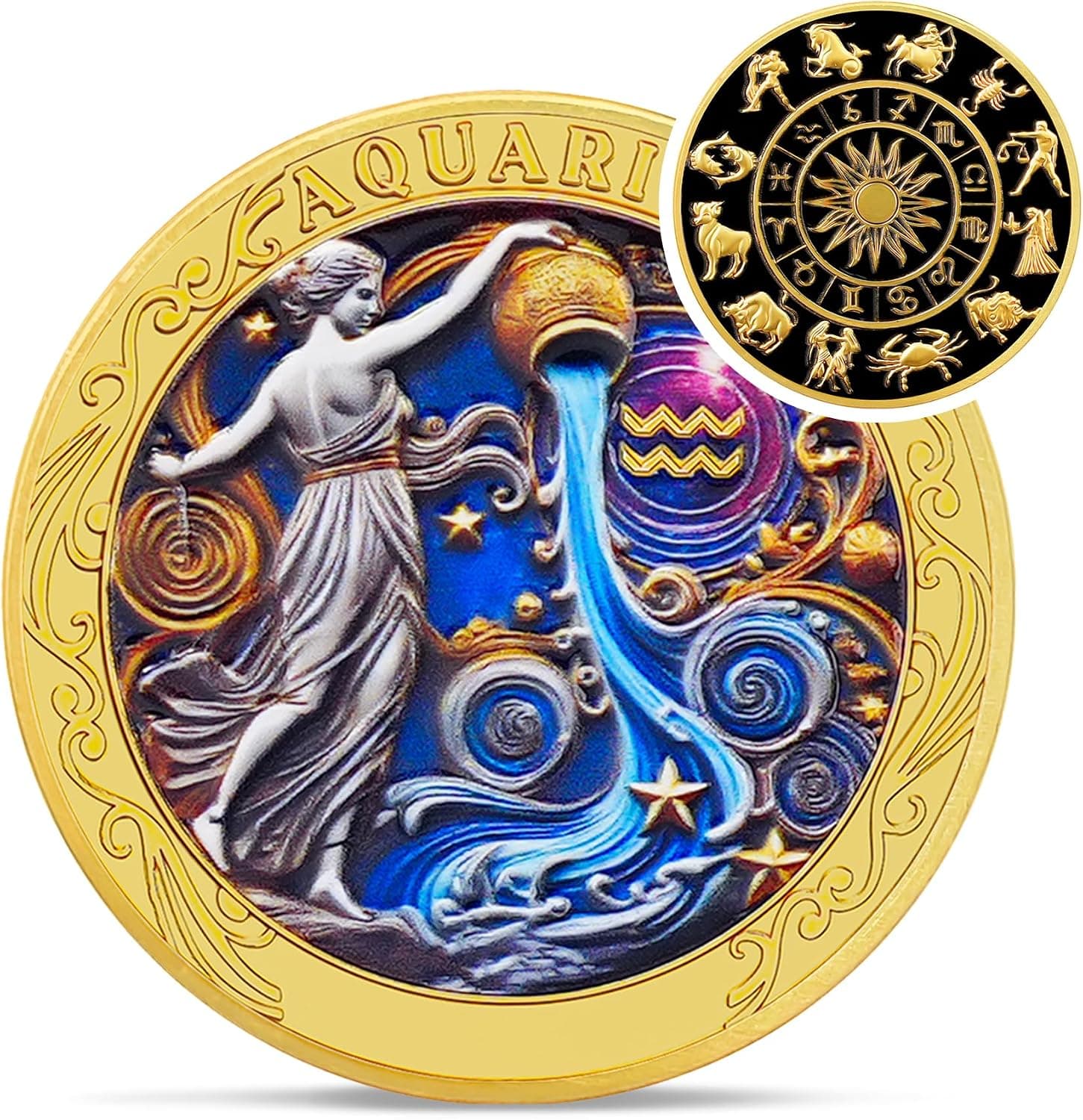
-20%Aquarius 12 Zodiac Challenge Coin - Twelve Constellations Aquarius Protective...
 -29%
-29%Karma and Luck March Birthstone Crystal Tree of Life, Aquamarine Gemstone Fen...
 -29%
-29%Karma and Luck July Birthstone Crystal Tree of Life, Ruby Gemstone Feng Shui ...
 -29%
-29%Karma and Luck February Birthstone Crystal Tree of Life, Amethyst Gemstone Fe...
As an Amazon Associate, we earn from qualifying purchases. We only recommend items our practitioners have personally tested.
Continue Your Journey
Explore these related guides to deepen your understanding:

The I Ching Doesn't Answer Lazy Questions — Here's What to Ask Instead
8 min readConfucian Commentary Turns the I Ching Into a Moral Floor Plan
9 min readBroken Lines, Solid Lines, and the Real Yin-Yang Logic of the I Ching
11 min readThe Wilhelm I Ching Feels Deep Because It Slows Your Reading
11 min readReady for Deeper Guidance?
Try our free I Ching reading for personalized wisdom, or explore our curated Feng Shui essentials.