The I Ching can answer a question before your mind has finished asking it—and Jung knew that discomfort mattered.
When the coin toss lands on the exact answer you were trying not to ask
You ask about a stalled relationship, and the first hexagram points straight at restraint. Not softness. Not hope. Restraint. The room goes quiet in a way that feels almost rude. That is usually the moment people stop treating the I Ching like a novelty and start paying attention to pattern.
I’ve watched this happen in a small study lined with oak shelves, a brass desk lamp, and a blue ceramic bowl full of coins. A teacher in a charcoal sweater cast her first reading after months of pretending a difficult conversation could be postponed forever. She drew Hexagram 52, Keeping Still, changing to 31, Influence. She laughed once, then stopped. Three days later she told the truth to her partner. The reading did not force the outcome. It named the condition.
That is the heart of a first I Ching consultation: not prediction as theater, but an encounter with timing. Jung recognized that some events arrive with a meaning that cannot be reduced to cause and effect. He called that synchronicity, and he used the I Ching as one of the clearest examples. If that sounds mystical, fine. It is. But it is also disciplined.
The phrase i ching jung synchronicity explained gets searched by people who want a clean intellectual bridge between East and West. They want the mystery without the mess. That bridge exists, but it is not a slogan. It is a method of attention. The Oracle speaks in images, and Jung’s contribution was to say that meaning can appear through correspondence rather than mechanical proof.
Synchronicity is not random coincidence wearing a costume
Jung did not claim that every strange coincidence is profound. That would be sloppy. He argued something narrower and stronger: at certain moments, an inner state and an outer event line up in a way that is meaningful to the person experiencing it, even if no ordinary chain of cause explains the link.
The I Ching works well in this frame because it does not ask for belief first. It asks for a question, a stable method, and your willingness to see what appears. You toss coins or yarrow stalks, but the real action is not the arithmetic. It is the meeting point between your question and the pattern that emerges. That is why Jung respected it. He saw a symbolic system that could mirror the psyche without pretending to be a laboratory instrument.
Here is the practical distinction: random means “without an accessible cause.” Synchronicity means “without an accessible cause, yet not without meaning.” Those are very different claims. One empties the moment. The other gives it weight.
That weight is often felt most clearly when the reading seems to answer the part of you that has been circling the issue for weeks. Not the version you wrote down. The one underneath it. A finance director I worked with cast a reading after his office was remodeled in dark gray and white, with a row of dead succulents on the windowsill and a glass wall facing the elevator. He had asked about a new role. The result emphasized dispersal and recovery. He later admitted the office itself had started draining him before the job did. The hexagram was not “about” the décor, but it named the condition accurately enough that he finally listened.
This is where choosing a solid translation matters more than beginners expect. A muddy rendering can flatten a living symbol into a fortune-cookie line. A good translation preserves tension. It lets the reading remain charged instead of becoming cute.
The method is simple. The discipline is not.
Start with a question that can actually be held. Not “What is my destiny?” That’s too wide, and people ask it when they are unwilling to name the real problem. Ask about a decision, a pattern, a relationship, a move, a project, a timing issue. Keep it specific enough that the answer can land somewhere.
Then slow down. Clean the space if you can. Not because the room has magical dust in it, but because your own attention benefits from a threshold. Put your phone away. Sit for a minute. If you like ritual, use it; if you do not, keep it plain. The I Ching does not require performance. It requires presence.
When you cast the hexagram, read the first image before you rush to the commentary. That image is the doorway. The Judgment comes next, then the changing lines, and finally the relating hexagram if there is one. Do not cherry-pick the line that flatters you. Beginners do this constantly. They read the “good” sentence and ignore the sentence that actually changes their week.
What you are looking for is a pattern of fit. Does the language echo your situation in a way that feels too exact to shrug off? Does it describe the mood, the obstacle, the trap, the opportunity, the timing? Jung would say that meaning appears when the psyche recognizes itself in the symbol. I would add something more practical: if the reading makes you slightly uncomfortable, you are probably closer to the center than you think.
There is no need to force a dramatic interpretation. Sometimes the answer is modest. Sometimes it says wait, retreat, simplify, or stop pushing. Those are not glamorous answers. They are often the right ones.
If you want a better feel for timing and sequence, study how one reading leads to another over days or weeks, rather than treating each cast as a sealed prophecy. The pattern becomes clearer when you see the movement. For that reason, some readers keep a journal of the question, the hexagram, and the actual outcome. The record is humbling. It also prevents fantasy from taking over.
What synchronicity looks like in real life
One of the most persuasive things about synchronicity is that it often arrives in ordinary settings. Not under moonlight. Not on a mountaintop. In a kitchen with a humming refrigerator. In a hallway. At the office printer. That is precisely why people miss it. They expect thunder. Instead they get a sentence, a pause, a repeated image, a line in the reading that mirrors a text message they received an hour later.
I once sat with a retiree named Helen in her sunroom, where a pale yellow sofa sat under a framed landscape and a bowl of oranges had gone soft at the edges. She had asked whether to move closer to her daughter. The cast pointed to gradual influence and shared warmth, but also to the danger of scattering her own center. Two weeks later she reported that the daughter, unprompted, had invited her for a trial stay of one month rather than a permanent move. The reading had not dictated the solution. It clarified the shape of the path.
That is the Jungian aspect people often miss. Synchronicity is not just “weird stuff happens.” It is weird stuff that seems to respond to a psychic state, a question, or a threshold moment. The I Ching is powerful because it gives you a language for noticing that response without turning every coincidence into a superstition.
If you are trying to understand the experience in a broader metaphysical context, you may also find it useful to compare it with other symbolic systems that emphasize orientation and placement, such as the traditional compass method used in feng shui. The logic is different, but the lesson overlaps: when you pay attention to pattern, your environment stops being background noise.
Common mistakes that ruin the reading fast
The first mistake is treating the oracle like a yes-or-no vending machine. People ask the same question three times in a row, hoping the answer will soften. It will not. It usually gets blurrier. Ask once, then live with the result long enough to see whether it applies.
The second mistake is forcing the reading to fit the fantasy. I see this most often when someone receives a warning and immediately hunts for the single optimistic line that can be used as a loophole. That is not interpretation. That is self-defense dressed up as spirituality. If you need an omen to flatter you, the work has already gone off-track. If this sounds familiar, read the habits behind common first-reading errors before casting again.
Some readers also overdecorate the process. Candles, incense, special cloths, a dramatic voice, a table full of crystals. None of that is required. A plain desk can be more honest than a shrine built from anxiety. If you want atmosphere, choose it deliberately; just do not confuse atmosphere with accuracy.
How to let the answer work on you
After the reading, do not leap into action immediately unless the message is obviously urgent. Sit with it. Write it down. Read it again later in the day, then the next morning. A meaningful oracle answer often reveals a second layer once the first emotional reaction settles.
Ask yourself three questions in plain language: What in my situation is this pointing to? What am I resisting? What would change if I respected the timing instead of my impatience? Those questions do more for the reading than endless symbolic theory.
Also, keep the question and the outcome together. The way synchronicity proves itself is through continuity. The initial cast, the events that follow, and your own inner shifts become one thread. That thread is what Jung was after. Not proof in the courtroom sense. Recognition in the human sense.
If you prefer a concrete way to deepen the practice, note the exact moment you cast, what was happening in the room, and what stood out first in the hexagram text. A red chair, a cracked mug, a message pinging on your laptop, the line that made you pause—those details matter because they show how meaning arrives through context, not abstraction.
FAQ
Is Jung saying the I Ching is scientifically proven?
No, and that restraint matters. He was not trying to convert symbolism into physics. He was pointing to a class of events where meaning appears with striking precision, even when ordinary causation cannot explain the timing.
Should I ask the same question again if I dislike the answer?
That urge is common, but it usually weakens the practice. A better move is to study the answer you received and see whether your resistance tells you something useful. The oracle is often most honest when it annoys you.
What if the reading feels vague?
Sometimes the question was vague first. A blurred question tends to produce a blurred response. Narrow the issue, then try again later with cleaner language and less emotional noise.
Do I need to believe in synchronicity for the I Ching to work?
Surprisingly, no. Skepticism can actually improve the process if it keeps you honest. What matters is whether you are willing to test the reading against lived experience instead of treating it as entertainment.
How do I know I am not just projecting my hopes onto the hexagram?
Projection is real, and every serious reader has to watch for it. The safeguard is comparison over time: does the reading keep showing the same structural truth in different forms, or are you cherry-picking what flatters you? A journal helps more than intuition alone.
David Liu
Traditionally informed guidance • Cross-referenced with classical Chinese source texts
Interpretations cross-referenced with the Zhouyi (周易) and Wilhelm/Baynes translation.
Practitioner-Selected Tools for This Topic
Items our team has tested and found effective for the principles discussed above. Individual results may vary.
 -20%
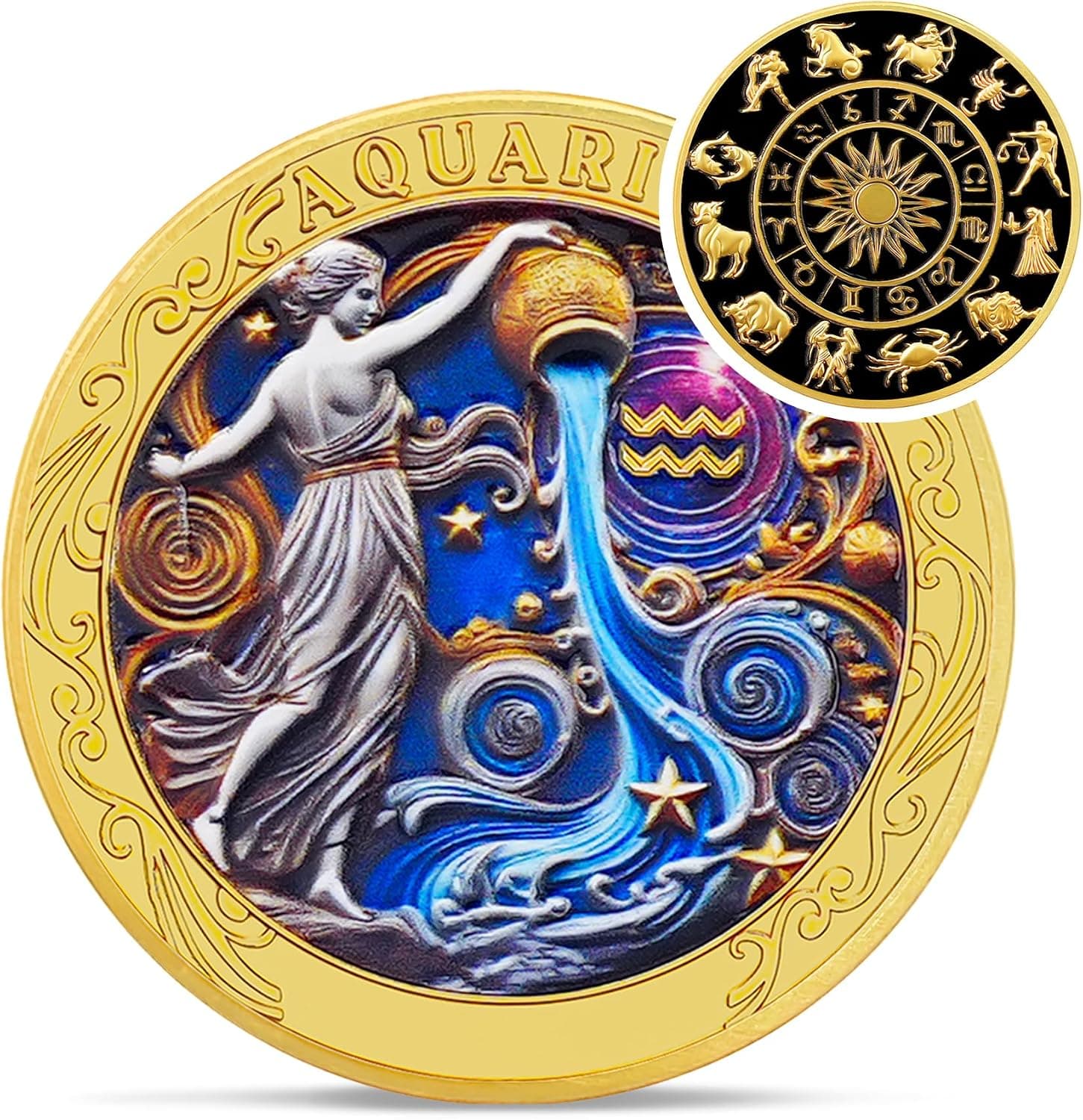
-20%Aquarius 12 Zodiac Challenge Coin - Twelve Constellations Aquarius Protective...
 -29%
-29%Karma and Luck March Birthstone Crystal Tree of Life, Aquamarine Gemstone Fen...
 -29%
-29%Karma and Luck July Birthstone Crystal Tree of Life, Ruby Gemstone Feng Shui ...
 -29%
-29%Karma and Luck February Birthstone Crystal Tree of Life, Amethyst Gemstone Fe...
As an Amazon Associate, we earn from qualifying purchases. We only recommend items our practitioners have personally tested.
Continue Your Journey
Explore these related guides to deepen your understanding:

The I Ching Doesn't Answer Lazy Questions — Here's What to Ask Instead
8 min readConfucian Commentary Turns the I Ching Into a Moral Floor Plan
9 min readBroken Lines, Solid Lines, and the Real Yin-Yang Logic of the I Ching
11 min readThe Wilhelm I Ching Feels Deep Because It Slows Your Reading
11 min readReady for Deeper Guidance?
Try our free I Ching reading for personalized wisdom, or explore our curated Feng Shui essentials.