Revolution in the I Ching is not rebellion for its own sake; it is the right change at the right time, after pressure has done its work.
A tight feeling before the break
I once walked into a narrow bedroom with pale gray walls, a brass lamp, and a quilt folded too neatly at the foot of the bed. The room belonged to a software architect who had not slept well in months. He kept saying, almost apologetically, that nothing was wrong. Yet the air felt locked. His desk faced the bed, the mirror reflected the pillow, and a small black fan hummed all night in the corner like a nervous witness.
That is the kind of moment where Hexagram 49 shows its face. Not in a dramatic explosion. In pressure. In the quiet certainty that the old arrangement has stopped fitting. The first step in reading the I Ching well is noticing that this kind of message is rarely about comfort. It is about timing, readiness, and the point where a skin can no longer hold the body it once served.
People often want revolution to mean chaos. They picture protest, rupture, and reckless reinvention. The I Ching is more disciplined than that. It asks a harder question: what has become so stale, so compressed, so false that change is now an act of truth?
What Hexagram 49 is really pointing at
The i ching hexagram 49 revolution meaning is tied to transformation that has been fully ripened by circumstances. This is not the energy of a whim. It is the energy of a lawful turning. A system, relationship, role, or habit has reached the edge of its lifespan, and forcing more of the old shape only creates distortion.
That is why this hexagram often appears after long discomfort. You do not receive it when everything is thriving. You receive it when you have already endured enough friction to know that decoration will not solve the problem. I have seen people repaint kitchens, buy crystals, and shuffle furniture while the real issue was simpler: the home, or the life, wanted a different structure.
Hexagram 49 carries an unusual discipline. It does not reward emotional outbursts. It asks for legitimacy. If a change is meant to last, it must be timed well, announced clearly, and grounded in inner authority. Without that, revolution becomes theater.
That is a surprise to many Western readers. They assume transformation is best when it is intense. Chinese metaphysics usually says the opposite: the strongest change is often the one that has waited until it could happen cleanly. The shell cracks when the new form is already alive inside.
The inner mechanics of the change
Hexagram 49 is traditionally associated with the skin of an animal shedding. That image is not poetic ornament. It is precise. Skin is protective, but once it no longer fits, it becomes a burden. The old layer is not evil. It was useful. Still, usefulness has an expiration date.
This distinction matters. Many people delay necessary change because they mistake familiarity for safety. A job with constant tension, a marriage that survives on silence, a bedroom that never quite lets the body rest, a social role that no longer matches your values—these can all become skins that fit too tightly. The point is not to destroy them with anger. The point is to know when they have finished their work.
If you want to understand this hexagram through practical life, think in terms of sequence. First comes pressure. Then comes awareness. Then comes preparation. Only after those three does the actual change become wise.
There is a reason Hexagram 49 is often read alongside the quiet reset of Hexagram 24. Return is the pulse of coming back to what is essential. Revolution is the act of changing the vessel so that the essential thing can live properly again. One restores direction. The other restores form.
When the line between truth and drama matters
Here is where people get sloppy. They hear “revolution” and think any dissatisfaction justifies a dramatic break. Not so. Hexagram 49 demands evidence. It asks whether the old pattern has truly completed its cycle, or whether the ego is just bored.
I saw this clearly in a dining room with dark green cabinets and a red runner on the table. The homeowner, a retired nurse, wanted to “shake up the energy” because she felt stuck. But the room was already shouting. The knife block sat directly in the center of the table, an oversized calendar covered the east wall, and the chairs were mismatched in a way that made the space feel permanently unsettled. We did not need a revolution. We needed order. Two weeks later, after clearing the table and softening the color contrast, she said the room finally felt like it could hold conversation again.
That is the difference. Hexagram 49 is not random disruption. It is change with a moral shape. It says: only cut what has already been judged by time.
It also explains why some people feel relief immediately after making a clear decision. The relief is not from the decision itself. It is from no longer lying to the situation.
Signs you are in Hexagram 49 territory
You may be in this energy if the same problem keeps returning in a new costume. The boss changes. The partner changes. The mattress changes. The sleep does not. The issue is deeper than the surface object.
You may also notice a strange combination of restlessness and certainty. You are tired of the current arrangement, but you are not yet sure what the next one should be. That is normal. Revolution in the I Ching does not require a full blueprint on day one. It requires honesty about what no longer works.
Another sign is that external fixes feel thin. A bonus does not solve the job. A new shelf does not solve the clutter. A vacation does not solve the decision. The old vessel is failing the contents.
And sometimes the sign is bodily. Tight jaw. Poor sleep. A sense that the chest never fully opens. The body often knows before the mind admits anything.
How to work with this hexagram without forcing it
Start with restraint. Write down what is ending, and be specific. Not “everything.” Not “my life.” Name the actual form that has outlived itself. A department. A friendship pattern. A corner of the house. A daily habit. Precision keeps this hexagram honest.
Then ask what must remain untouched. This is the step people skip. Revolution is not obliteration. You are not burning the whole field because one row has gone sour. Decide what belongs to the deeper structure, and protect it.
Next, remove one obvious obstruction. If the bedroom feels agitated, do not buy ten remedies. Move the mirror away from the bed. If the office feels oppressive, clear the path to the door. If the kitchen feels stuck, get rid of one dead object. I have watched a blue vase, placed awkwardly beside a stove, disappear into a cabinet and change the whole feel of a room within a day. Small physical acts can signal a deeper turning.
Then wait and observe. Hexagram 49 rewards the person who changes once, then watches the consequences. Do not keep rewriting the same decision because you are anxious. A clean shift needs room to breathe.
If you want to go deeper into the pattern of change after confrontation, read about the stripping away process in Hexagram 23. It clarifies what happens when old structures fall before new ones are ready.
How this hexagram speaks to a home
In feng shui, revolution is often less about dramatic rearrangement and more about removing the wrong authority from a room. A bedroom should not be ruled by sharp reflections. A home office should not be dominated by clutter at the doorway. A living room should not make every visitor feel as if they must perform.
Consider a guest room I worked on for a teacher in Portland. The walls were soft peach, the bedding was clean white, and the one thing that ruined the room was a heavy walnut dresser that blocked the natural flow from door to window. It was a fine dresser. Wrong place. We moved it, replaced it with a lower piece, and the room lost its stubbornness. That is Hexagram 49 in domestic form: the room did not need more things. It needed a different order.
Do not confuse this with the empty-bowl fantasy of minimalism. Empty is not always better. Aligned is better. The right objects, in the right relationship, tell the room who is in charge.
Practical application: a 5-step revolution check
First, identify one area of life that feels compressed. Write it on paper. No metaphors. Use plain language.
Second, ask whether the problem is decay or transition. Decay repeats. Transition ripens. If you are simply tired, rest. If the structure is dead, change it.
Third, make one visible correction. Move the chair. End the delay. Clear the shelf. Send the email. A revolution that stays abstract is usually just resentment.
Fourth, tell one trustworthy person what you are changing. Not for permission. For witness. Legitimate change benefits from being spoken aloud.
Fifth, leave the rest alone for three days. This matters. Over-adjustment kills momentum.
That sequence sounds simple because it is. Hard things rarely require complicated rituals. They require clean courage and fewer excuses.
Back to the larger pattern
Hexagram 49 belongs to a larger family of turning points. It is useful to study alongside other transition images, especially the repair work of Hexagram 18, because decay often precedes the need for a revolution. First you see what has gone bad. Then you decide whether to restore it or replace it.
If you are reading this as part of a larger study, let the pillar page hold the wider map while this page sharpens one terrain: the moment a life shape no longer fits. The broader teaching matters. But this hexagram asks for something very specific. It asks whether you have the nerve to stop calling a stale form “normal.”
That is the heart of the i ching hexagram 49 revolution meaning. Not rebellion. Not noise. A rightful change of skin.
FAQ
Is Hexagram 49 always about big life changes?
No. Sometimes it is about a small but decisive correction that restores order to a larger pattern. A moved mirror, a closed chapter, a changed habit can carry the same message if the timing is right.
Does this hexagram mean I should leave my job or relationship?
Not automatically. A surprising fact: Hexagram 49 often appears before you know the exact form of the next step. It asks you to recognize that the current structure has expired, then act with integrity rather than panic.
How do I know the change is legitimate and not impulsive?
Watch the aftertaste. Impulsive moves usually leave confusion and more noise. Legitimate changes create relief, clarity, and a stronger sense of inner alignment within a few days.
David Liu
Traditionally informed guidance • Cross-referenced with classical Chinese source texts
Interpretations cross-referenced with the Zhouyi (周易) and Wilhelm/Baynes translation.
Practitioner-Selected Tools for This Topic
Items our team has tested and found effective for the principles discussed above. Individual results may vary.
 -20%
-20%Aquarius 12 Zodiac Challenge Coin - Twelve Constellations Aquarius Protective...
 -29%
-29%Karma and Luck March Birthstone Crystal Tree of Life, Aquamarine Gemstone Fen...
 -29%
-29%Karma and Luck July Birthstone Crystal Tree of Life, Ruby Gemstone Feng Shui ...
 -29%
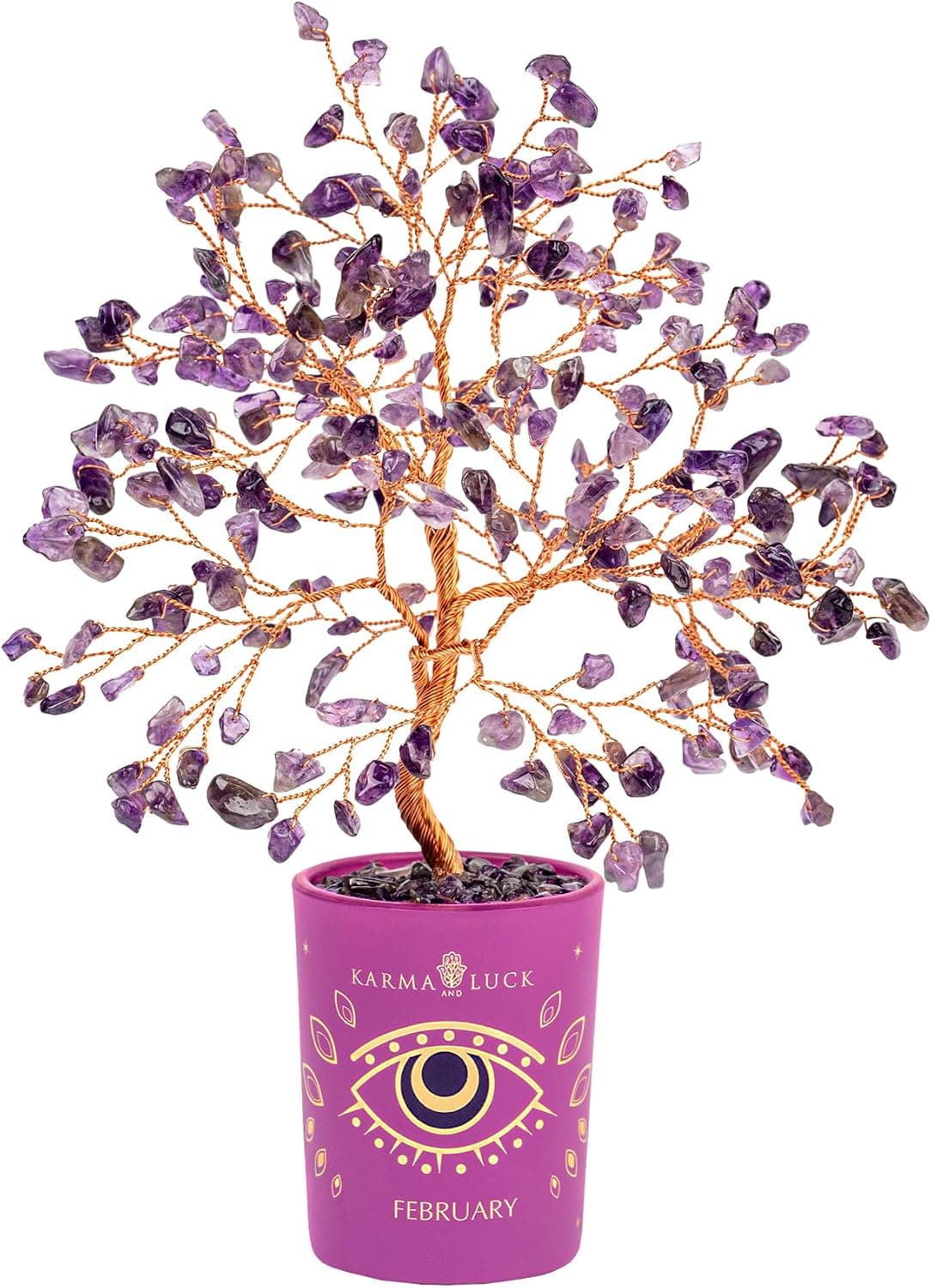
-29%Karma and Luck February Birthstone Crystal Tree of Life, Amethyst Gemstone Fe...
As an Amazon Associate, we earn from qualifying purchases. We only recommend items our practitioners have personally tested.
Continue Your Journey
Explore these related guides to deepen your understanding:

The I Ching Doesn't Answer Lazy Questions — Here's What to Ask Instead
8 min readConfucian Commentary Turns the I Ching Into a Moral Floor Plan
9 min readBroken Lines, Solid Lines, and the Real Yin-Yang Logic of the I Ching
11 min readThe Wilhelm I Ching Feels Deep Because It Slows Your Reading
11 min readReady for Deeper Guidance?
Try our free I Ching reading for personalized wisdom, or explore our curated Feng Shui essentials.