Stop asking the oracle for a yes or no; ask it to show you the pattern holding your relationship still.
When the relationship keeps stalling, the question is usually wrong
You know the feeling: the texts have slowed down, the tone has changed, and every conversation seems to end one step short of clarity. People come to the oracle hoping for a clean answer about love, but the real issue is often hidden in the pattern between two people, not in one dramatic moment.
I’ve seen this in a quiet apartment off a narrow street in Portland, where a teacher sat at a round kitchen table with a blue mug, a torn envelope, and three unanswered messages on her phone. She did not need a poetic speech from the first reading many people ever receive; she needed to see why the connection had gone thin. The hexagram did not tell her to chase. It showed her that the relationship had become all intention and no follow-through.
That is the first lesson of an i ching for love relationships reading: do not treat it like a love lottery. Treat it like a mirror. The oracle is far better at exposing structure than at feeding fantasy.
And that can be uncomfortable. Good.
What the reading is actually doing
In love, people usually ask one of three questions: Will they come back? Are they the one? Should I stay? Those are emotional questions, but the I Ching answers by showing movement, tension, timing, and the quality of the situation. It does not flatter you. It does not care what your friends think. It looks at the energy of the relationship as it stands right now.
That is why the method works best when you ask a plain, honest question. Not, “Will this become perfect?” Better: “What is shaping this connection now?” or “What do I need to understand before I act?” The difference matters. One asks for reassurance. The other asks for intelligence.
If you want a dependable interpretation, start with the question you are willing to hear answered. I have watched people ask about soulmates while ignoring the fact that their partner has not returned a call in nine days. The oracle does not reward wishful thinking. It rewards clarity.
A strong reading also depends on the text you use. Some translations lean philosophical, others more direct. If you have ever felt lost in elegant but foggy wording, compare editions first by reading a few lines side by side. I point many readers toward a clear comparison of I Ching translations because love readings are hard enough without muddy language.
What you are looking for is not a prediction in the modern Western sense. You are looking for a pattern of change. In a relationship, that might show up as waiting, pressure, overreach, retreat, mutual nourishment, or imbalance. Each of those tells you something different about how love is moving, or failing to move, between two people.
How to approach the casting so the answer stays honest
Begin by getting out of performance mode. Sit somewhere quiet. Put the phone face down. If you are asking about a specific person, name that person privately before you cast. Do not spread the question across five worries at once. The oracle responds better to focus than to emotional clutter.
Then ask one question, not three. A love reading goes sideways when people ask, “Does he love me, will he text, and should I break up?” That is not one question. That is a traffic jam. Choose the deepest point of uncertainty and let the rest wait.
When you cast, write down the exact wording and the date. The details matter more than people expect. I once worked with a nurse who had cast her reading in a bedroom with pale green walls, a white ceramic lamp, and a cracked silver frame on the dresser. Two weeks later she noticed the reading had predicted not romance, but delay: her situation was not ready because she herself was still split between grief and attraction. The reading had been accurate all along, but only because we kept the wording and the timing precise.
After you get the hexagram, look first at the overall mood. Is it movement or stillness? Expansion or contraction? Cooperation or resistance? In love, the main mistake is to jump straight to one changing line and ignore the shape of the whole figure. The big picture tells you whether the relationship is growing roots, testing boundaries, or running on borrowed momentum.
Then read the changing lines as a sequence, not as fortune-cookie fragments. A line showing caution at the beginning and harmony at the end may point to a slow mending. A line showing charm at the top but weakness underneath may warn that the connection looks better than it functions. That is the kind of thing people miss when they only want reassurance.
What to do with the answer after you get it
Use the reading to change your behavior, not to control the other person. That distinction is everything. If the oracle shows retreat, do not rush forward harder. If it shows excess, stop feeding the drama. If it shows receptivity, listen instead of making a speech you rehearsed in the mirror.
There are also practical ways to support the question with the environment. A bedroom that feels harsh, overlit, or cluttered can make relationship questions feel more volatile than they already are. When the space is restless, the mind becomes restless too. I often suggest checking the room before assuming the problem is only emotional.
For readers who are already working with the atmosphere of the home, a few small adjustments can help settle the nervous system before a love reading. Soft light, fewer sharp objects near the bed, and a calmer scent profile make a bigger difference than people expect. If you want to build that kind of support, you may also want to explore bedroom scents that support rest and warmth.
The point is not to “fix” romance with a ritual. The point is to remove static so you can hear what is already happening.
Common mistakes that distort the message
The first mistake is asking the same question over and over until you get the answer you want. That is not devotion; that is anxiety in a nicer coat. Recasting every hour turns a reading into noise, and noise is exactly what makes love situations harder to read.
The second mistake is treating a difficult answer as a punishment. Sometimes a reading shows absence, delay, or limits because the relationship itself is not yet capable of what you want from it. That can sting, but it is not cruelty. It is information.
Another trap is ignoring the environment around the question. I have watched people obsess over a partner while sitting beside a bedroom mirror aimed directly at the bed, a pile of laundry on a chair, and a harsh ceiling light buzzing overhead. Then they wonder why the whole situation feels agitated. If your home is amplifying confusion, that matters. For a related caution, read about when a protection cure belongs outside, not in your relationship space.
And yes, some people mistake emotional intensity for deep compatibility. They are not the same. A blazing start can be nothing more than friction with chemistry layered on top. The I Ching is excellent at separating heat from substance.
Reading the signs without forcing romance into them
Here is the hard part: a good love reading may tell you to wait, and waiting is miserable when you want certainty now. But timing is not a side note in Chinese metaphysics. Timing is often the message.
If the reading points to stillness, resist the urge to manufacture movement. If it points to progress, notice whether progress means honest conversation, not declarations. If it points to difficulty, ask what kind of difficulty it is. Some difficulty is protective. Some is transitional. Some is a sign that the bond is being asked to mature.
I have seen couples survive because one person took the reading seriously enough to stop pushing. I have also seen people waste months because they used the oracle as a romantic permission slip. Same method. Very different results. The reading does not save you from honesty.
That may sound strict, but it is kinder than fantasy. Fantasy keeps people waiting in the wrong doorway.
FAQ
Should I ask about one person or the relationship itself?
Start with the relationship itself if your emotions are scattered. A person-focused question can turn into projection fast, especially when you are anxious or hurt. The broader question usually gives you a cleaner view of the pattern.
Can a reading tell me if someone is my soulmate?
It can show the quality of the connection, but it should not be used as a shortcut around discernment. A powerful bond can still be unhealthy, delayed, or badly timed. That is the part most people do not want to hear.
What if I do not like the answer?
Then you have probably found the point of the reading. A difficult answer is often more useful than a comforting one because it gives you something real to work with. Give it a day, then return to the question with a calmer mind.
Do I need to do anything special before casting?
Clean focus matters more than elaborate ritual. Silence helps, as does writing your question before you cast. If you are new to the process, a simple, steady approach beats a dramatic one every time.
David Liu
Traditionally informed guidance • Cross-referenced with classical Chinese source texts
Interpretations cross-referenced with the Zhouyi (周易) and Wilhelm/Baynes translation.
Practitioner-Selected Tools for This Topic
Items our team has tested and found effective for the principles discussed above. Individual results may vary.
 -20%
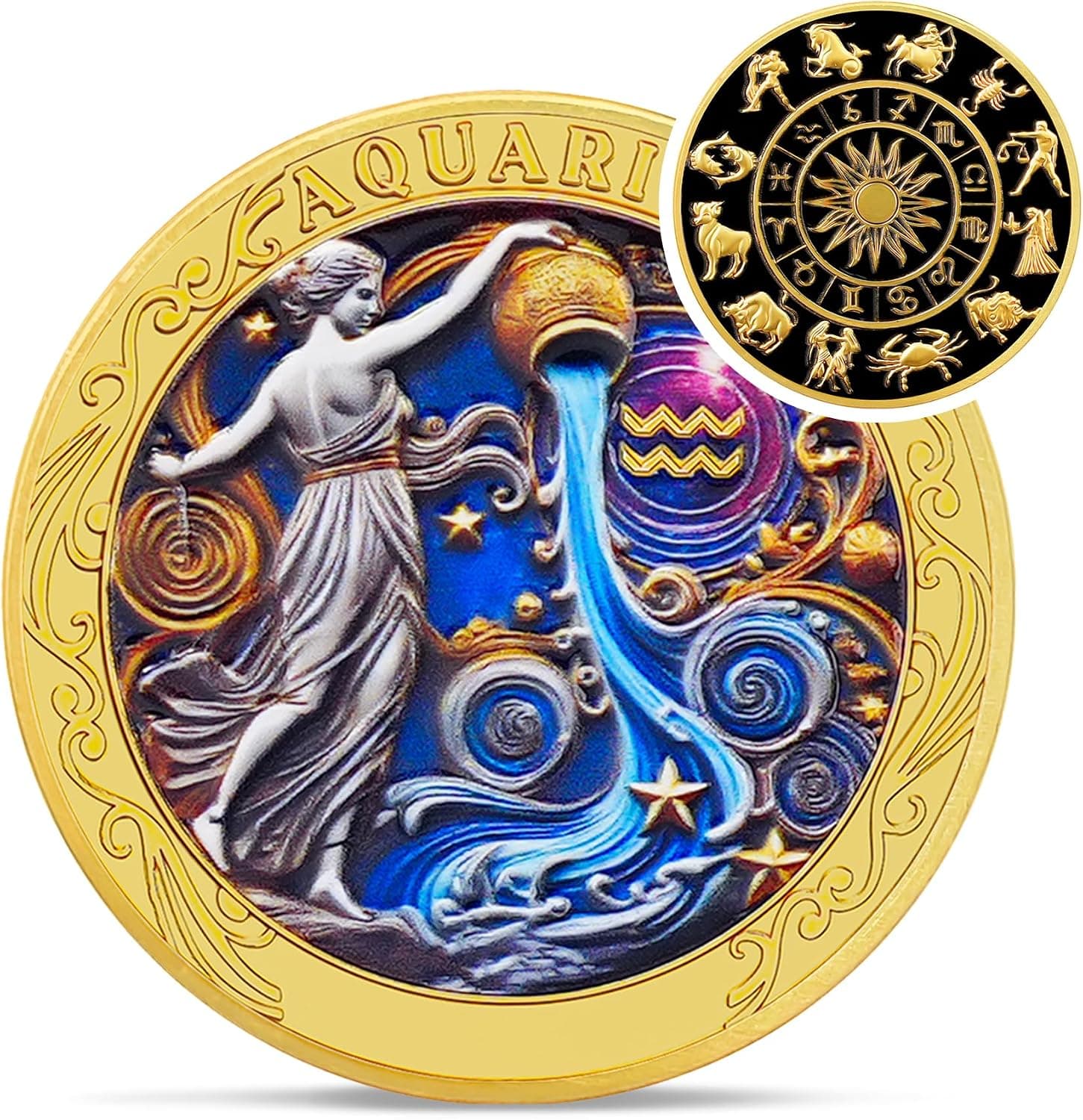
-20%Aquarius 12 Zodiac Challenge Coin - Twelve Constellations Aquarius Protective...
 -29%
-29%Karma and Luck March Birthstone Crystal Tree of Life, Aquamarine Gemstone Fen...
 -29%
-29%Karma and Luck July Birthstone Crystal Tree of Life, Ruby Gemstone Feng Shui ...
 -29%
-29%Karma and Luck February Birthstone Crystal Tree of Life, Amethyst Gemstone Fe...
As an Amazon Associate, we earn from qualifying purchases. We only recommend items our practitioners have personally tested.
Continue Your Journey
Explore these related guides to deepen your understanding:

The I Ching Doesn't Answer Lazy Questions — Here's What to Ask Instead
8 min readConfucian Commentary Turns the I Ching Into a Moral Floor Plan
9 min readBroken Lines, Solid Lines, and the Real Yin-Yang Logic of the I Ching
11 min readThe Wilhelm I Ching Feels Deep Because It Slows Your Reading
11 min readReady for Deeper Guidance?
Try our free I Ching reading for personalized wisdom, or explore our curated Feng Shui essentials.