The I Ching did not appear as a neat philosophy book; it grew out of cracked shells, court politics, and hard decisions under pressure.
You open the book because life feels unstable.
Maybe the job offer looks good on paper, but your stomach says no. Maybe the relationship is not broken, but it keeps rattling in the same three places. Maybe you already tried logic, talking, journaling, and a dozen opinions from friends, yet you still cannot tell which move fits the moment.
That is where the old text earns its keep. The first experience with the I Ching is often less about prediction and more about recognizing pattern. People reach for it when they are tired of forcing certainty out of a situation that is not ready to give it.
And that is exactly why the i ching book of changes history origin matters. If you treat it as a mystical antique, you miss its real power. If you treat it as a modern self-help gadget, you flatten it into something smaller than it is.
The book began as a method for reading change under pressure. That sounds simple. It is not simple at all.
Its origin is older and messier than the usual story.
Western readers are often handed a polished version: one sage wrote it, another commented on it, and the whole thing became a classic. In practice, the text formed over time through divination, observation, commentary, and political need. That matters, because it explains why the book feels both ancient and alive.
The earliest layer was tied to oracle practice. People used yarrow stalks, later coins, to create hexagrams and ask a question that mattered right now, not in theory. The answer was never meant to be a fortune-cookie sentence. It was a pattern of tension, timing, warning, or opening.
Then came interpretation. Confucian scholars did not merely preserve the text; they argued with it, refined it, and made it speak to ethics, governance, and conduct. Daoist readers heard something different in it: the way force backfires, the way emptiness can be useful, the way the soft can outlast the hard. That is one reason the classic survives. It can hold more than one mind.
If you want a clean historical label, you will be disappointed. If you want a living method, the mess is the point.
The core framework is change, relation, and timing.
The I Ching does not ask, “What is the correct abstract answer?” It asks, “What is changing here, what is influencing what, and what action suits this phase?” That shift is everything. A person facing delay, loss, promotion, or conflict is rarely missing information; they are missing timing.
One winter, I walked into a narrow home office in Portland where a software architect had taped three hexagrams to the wall beside a black monitor. The room was pale gray, the desk cluttered with a blue ceramic mug, and a bright red folder sat open like a warning sign. He kept asking the same question about a career move, but the readings kept pointing to restraint, not speed. When he finally waited two weeks before answering the recruiter, he got a different offer with better terms. Nothing magical happened. He stopped treating the moment like a sprint.
That is how the system works when it is used well. You ask a clear question, you receive a figure that reflects the present condition, and then you read it as a map of movement. Not destiny carved in stone. Not random noise. A snapshot of transformation.
That is also why a careful reader studies more than the headline line or one dramatic phrase. The relationship between lines matters. The center of gravity matters. The direction of movement matters. If you skip that, you are not reading the book; you are shopping for a slogan.
For readers who want a stronger foundation, comparing translations helps a lot. A passage can sound gentle in one version and severe in another, and those differences change the way people act on the advice. The best translation comparison for the I Ching will show you how much nuance lives in the wording alone.
Use the book as a disciplined conversation, not a fortune machine.
Start with one real question. Not ten. Not a vague cloud of anxiety. Ask about the thing that actually has consequences: whether to accept the transfer, whether to continue the partnership, whether to wait on the purchase, whether to speak now or after the meeting. The clearer the question, the cleaner the answer.
Then record the date, the question, and the exact hexagram. If there is a changing line, write that down too. You are building a reference point. People who never keep notes usually claim the book is inconsistent, which is a little like blaming a compass because they refused to look at the needle.
Read the judgment first, then the changing line, then the resulting hexagram. Do not reverse the order because the dramatic line sounds seductive. I have seen readers latch onto one poetic sentence and ignore the rest, only to make a move that fit their mood rather than the situation. That is how people misuse a profound tool.
If you are new to divination, spend a few sessions asking simple but consequential questions. Ask whether the timing is right. Ask whether to continue. Ask what kind of stance is needed. Those are better questions than, “What will happen?” The book is not a weather app. It is a mirror for decision-making under uncertainty.
And yes, you can test it against results. You should. Over time, patterns emerge: which answers helped you slow down, where you confused caution with fear, where you mistook a pause for a stop. That feedback loop is what turns curiosity into literacy.
Some readers also deepen their practice by learning how the text fits into the wider Chinese symbolic world. Direction, season, element, and placement all affect interpretation in related traditions, including feng shui. Even something as practical as learning the Luo Pan compass method can sharpen your sense of how traditional systems read orientation and context.
Common mistakes are usually embarrassingly ordinary.
The first mistake is treating every result as positive or negative in a childish way. A difficult hexagram is not a punishment. A smooth one is not a guarantee. Some of the most useful readings I have seen were uncomfortable because they revealed exactly where a person was rushing, posturing, or ignoring limits.
The second mistake is asking the book to replace action. It will not file your paperwork, have the conversation, or close the door on a bad arrangement for you. If a reading points to restraint, then restraint has to be lived. If it points to movement, movement has to be timely. Otherwise you are collecting symbols, not practicing wisdom.
One more thing: a lot of readers expect the old text to behave like a self-esteem ritual. It does not care about flattering you. That can sting. It can also save you months.
And if you keep getting confused by the same interpretive traps, review common divination errors with a sharper eye. The I Ching first reading guide is useful here because the earliest mistakes are usually the ones people repeat for years.
What the history teaches modern readers
The i ching book of changes history origin shows you something that gets lost in glossy summaries: this was never meant to be a detached philosophy text. It grew from use. People consulted it because they needed a way to think clearly when conditions were shifting faster than comfort allowed.
That is why it still works for Western readers who are willing to meet it on its own terms. Not as superstition. Not as psychology dressed in robes. As a disciplined way to ask better questions and notice what the moment is already saying.
Once you understand that, the old book stops feeling remote. It becomes practical. Sometimes uncomfortably practical.
FAQ
Is the I Ching just a fortune-telling book?
No, and that is the easy mistake people make. It is better understood as a decision-reading system that uses symbols to frame timing, tension, and appropriate action.
How old is the text really?
The roots are very old, but the book did not appear all at once. Its layers developed over time through divination practice, scholarly commentary, and later editing traditions.
Do I need to believe in it for it to work?
Surprisingly, belief is not the main issue. What matters more is whether you ask a clear question, read carefully, and use the result to sharpen your choices.
What if I get a reading that scares me?
That usually means the text is pointing at resistance, delay, or excess force, not doom. Breathe, slow down, and look for what the situation is asking you to stop doing first.
David Liu
Traditionally informed guidance • Cross-referenced with classical Chinese source texts
Interpretations cross-referenced with the Zhouyi (周易) and Wilhelm/Baynes translation.
Practitioner-Selected Tools for This Topic
Items our team has tested and found effective for the principles discussed above. Individual results may vary.
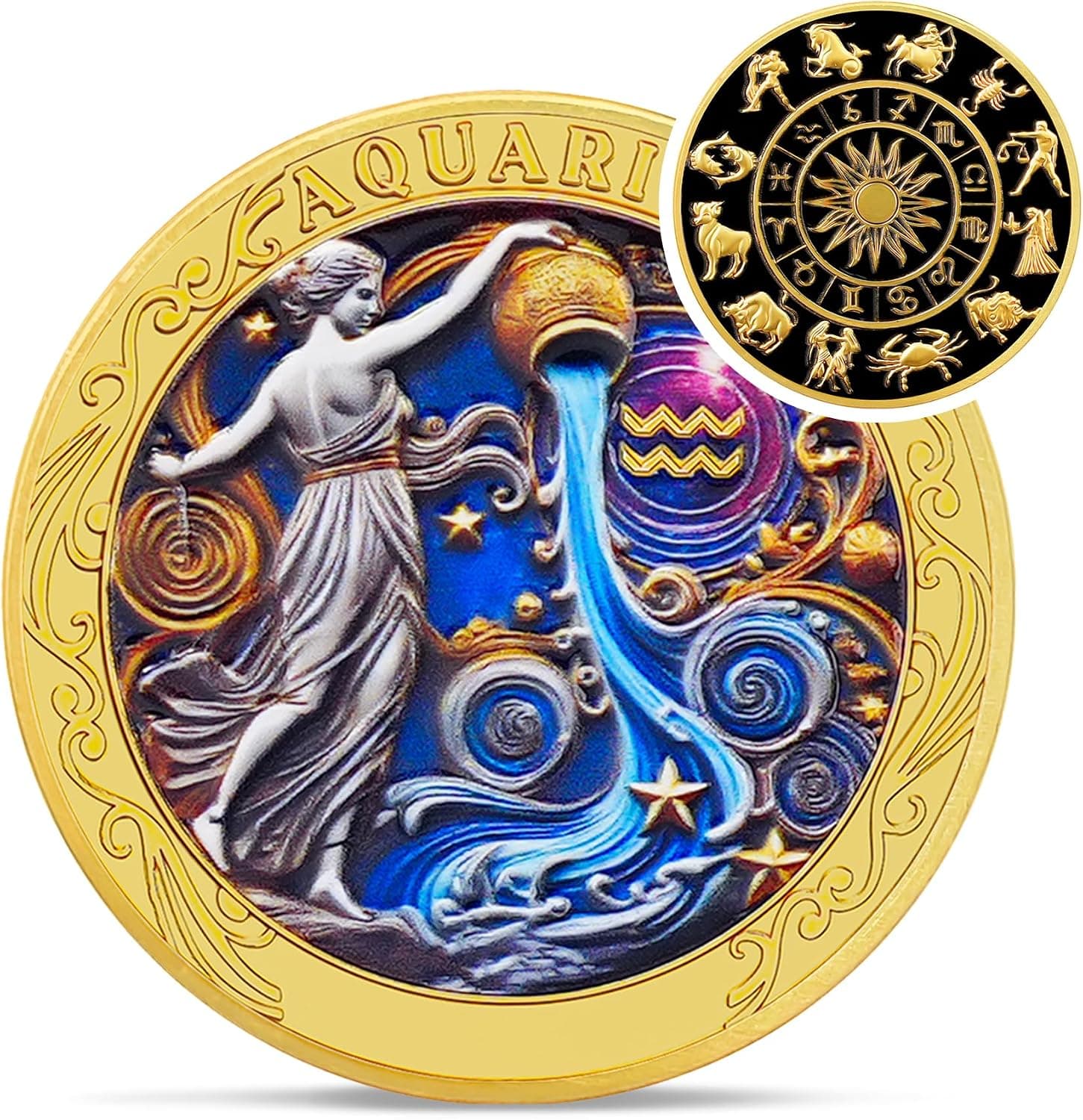 -20%
-20%Aquarius 12 Zodiac Challenge Coin - Twelve Constellations Aquarius Protective...
 -29%
-29%Karma and Luck March Birthstone Crystal Tree of Life, Aquamarine Gemstone Fen...
 -29%
-29%Karma and Luck July Birthstone Crystal Tree of Life, Ruby Gemstone Feng Shui ...
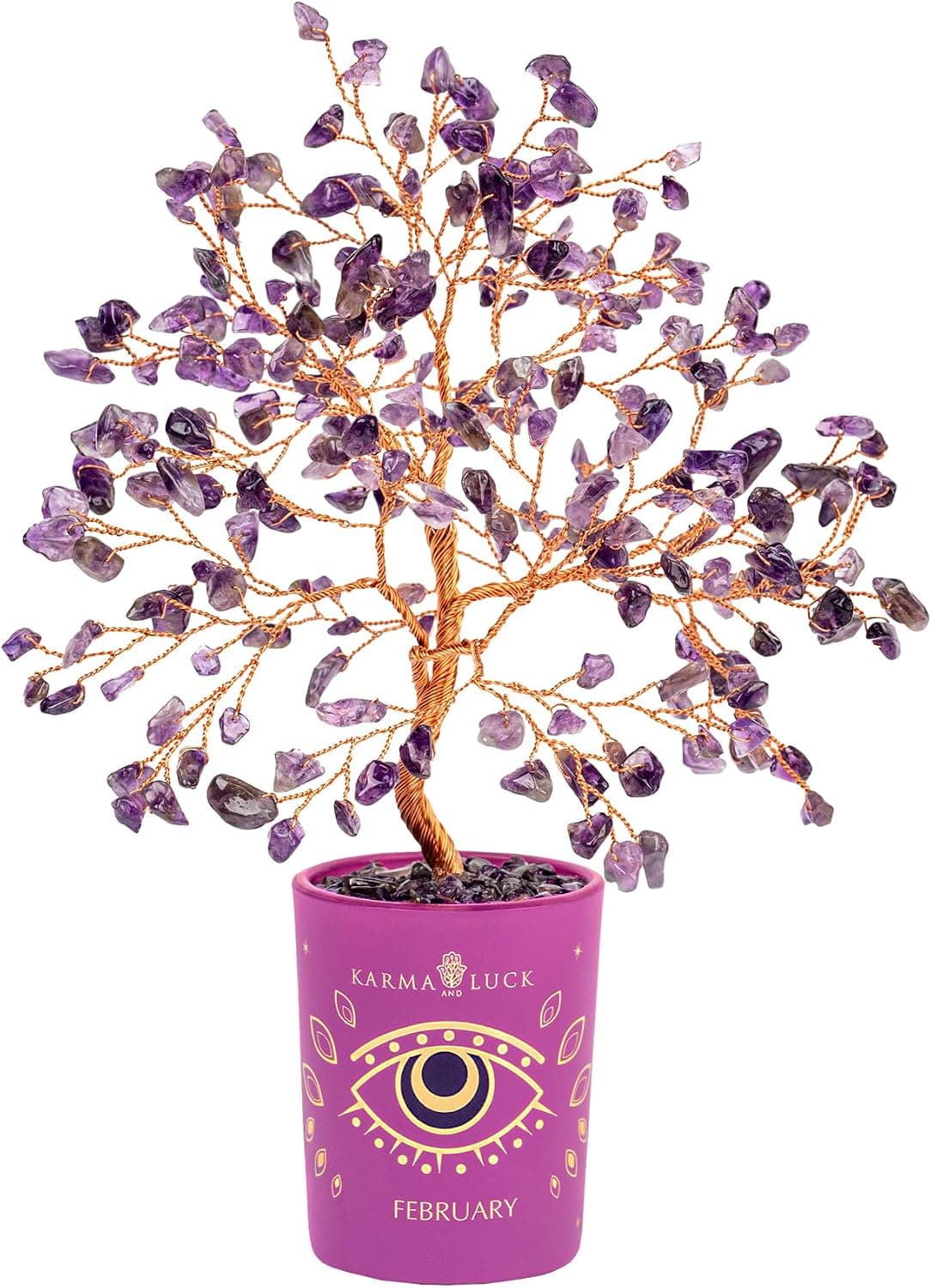 -29%
-29%Karma and Luck February Birthstone Crystal Tree of Life, Amethyst Gemstone Fe...
As an Amazon Associate, we earn from qualifying purchases. We only recommend items our practitioners have personally tested.
Continue Your Journey
Explore these related guides to deepen your understanding:

The I Ching Doesn't Answer Lazy Questions — Here's What to Ask Instead
8 min readConfucian Commentary Turns the I Ching Into a Moral Floor Plan
9 min readBroken Lines, Solid Lines, and the Real Yin-Yang Logic of the I Ching
11 min readThe Wilhelm I Ching Feels Deep Because It Slows Your Reading
11 min readReady for Deeper Guidance?
Try our free I Ching reading for personalized wisdom, or explore our curated Feng Shui essentials.