If the answer feels uncomfortable, that may be the point.
You’re not stuck because you lack answers.
You’re stuck because you keep asking for certainty from a tool built to show movement. That sounds unsatisfying at first, especially if you want a clean yes, a clean no, and a neat little plan for Friday morning. The first reading many people ever receive feels messy for exactly that reason: it points to the pressure point, not the easy answer.
I’ve seen this over and over. A teacher in Portland once sat at a kitchen table with a blue ceramic mug, a stack of unpaid bills, and a stubborn belief that she needed a career answer before she could breathe again. Her reading didn’t hand her permission. It showed a pattern of hesitation, then overcorrection, then burnout. Three weeks later she changed the way she handled her mornings, and the panic in her chest dropped before the job situation even moved.
The surprise is that this tradition does not reward passivity. It asks for honest timing, honest language, and a willingness to see what is already changing under your feet. That is why the wrong question ruins good results. If you treat the oracle like a vending machine, you get confusion. If you treat it like a mirror, things become sharper fast.
What the method is really doing
People get distracted by coins, lines, and symbols. Those matter, but they are not the center of the work. The center is pattern recognition under pressure. You bring a situation, state it clearly, cast the hexagram, and then read the shape of the response as a movement pattern rather than a verdict. That is the part Western readers often miss because they expect a psychological quiz or a fortune cookie.
The most useful frame is simple: ask about the process, not just the outcome. A question like “Will I get the apartment?” is narrower than “What is the best way to approach this apartment situation right now?” The second question gives the oracle room to show where your leverage is. That matters. It is the difference between staring at a locked door and noticing the key already in your hand.
If you want to understand the system more deeply, study the eight trigrams and their basic movement. Heaven, Earth, Water, Fire, Thunder, Wind, Mountain, and Lake are not decorations. They describe forces: pressure, receptivity, danger, clarity, shock, penetration, stillness, and joy. Once you can feel those qualities in ordinary life, the readings stop sounding vague.
There is also a reason so many people compare it with psychology and not with prediction. The old text does not just say what may happen; it shows how your own stance affects the field. That is why synchronicity matters in reading the response. Sometimes the timing is the message. Sometimes the coincidence is the nudge. Sometimes the answer arrives before you even finish your sentence.
How to use it without muddying the result
Start with one question and one question only. People ruin clean readings by stacking three concerns into one breath. They want work, love, money, and family dynamics in the same toss. No wonder the answer feels fuzzy. Pick the issue with the most charge, the one that keeps waking you up at 3 a.m., and write it in plain language before you begin.
Then cast slowly enough to notice your state. I do not mean mystical perfection. I mean practical attention. If your hands are shaking, if the room is noisy, if you are already arguing in your head, pause. I once worked with a chef in a narrow apartment kitchen on Mission Street who kept throwing while the espresso machine hissed and the refrigerator rattled. We moved the kettle off the stove, silenced the phone, and the difference in his focus was obvious before the coins even hit the bowl.
After the cast, read the primary image first. Don’t rush straight to line-by-line interpretation because you are hungry for specifics. Ask: what is the season of this answer? Is it rising, retreating, blocked, exposed, gathering, or dissipating? That first impression is usually more honest than the clever interpretation you build ten minutes later. The lines refine the picture; they do not replace it.
Then match the answer to action. If the text shows restraint, don’t force a launch. If it shows gathering, don’t scatter your energy across five projects. If it shows danger, reduce risk before you negotiate. This is where a simple yes-or-no approach can help for narrow decisions, but it becomes weak the moment life gets layered. Real situations usually ask for posture, not verdict.
And keep a record. Not because the gods need paperwork. Because your memory is unreliable when you are emotionally invested. A short note with the date, question, hexagram, and what happened over the next week will teach you more than a month of random casting. That habit also stops you from cherry-picking the readings that flatter your hopes.
What people get wrong, and how to avoid it
The first mistake is asking the same question repeatedly until you hear what you want. That is not persistence; that is noise. If you keep stirring the water, you will not see the bottom. I’ve watched people do this with money concerns, then act shocked when the answers sound fragmented. The oracle is not confused. The reader is.
The second mistake is treating symbolism as if it were a code that can be cracked once and stored forever. It changes with context. A thunder image in a job question is not the same thing as thunder in a family question. One can mean a wake-up call; another can mean a sudden emotional release. Context is not optional, and that is why the Taoist way of reading balance and timing matters so much.
One more common trap: people want the reading to do their agency for them. It won’t. A good reading clarifies leverage. It does not replace choice. That can feel blunt, but blunt is useful. If you are asking for certainty because you are afraid to act, the text will usually reflect that hesitation back at you.
How to make the reading practical the same day
Translate the answer into one behavior. Not five. One. If the reading suggests a blocked path, the action may be to stop pushing and gather information. If it suggests opening, the action may be to send the message, make the call, or clear the clutter that is holding the situation in place. Do not wait for a dramatic sign after the reading. The reading is already the sign.
Use the language of the answer in your ordinary life. If the image is about wind, think movement and flexibility. If it is about mountain, think stillness and boundaries. This sounds subtle, but it becomes concrete fast. A retiree I worked with in Santa Fe kept a pale green notebook on her dining table and wrote one line after each cast. She noticed that whenever her answers pointed toward “rest,” her best outcomes came after a long walk, not after another round of frantic problem-solving.
If you want to deepen the practice, connect it with reflection. A quiet five minutes after the reading often reveals what your first emotional reaction tried to hide. The text can point, but you still have to face what it points at. That is where the work becomes honest.
And if you are choosing between methods, compare the feel of the result, not the novelty of the tool. Some readers prefer this system because it is relational rather than purely symbolic. Others like the precision of tarot or the directness of a simple binary question. If you are deciding between systems, this comparison will help you choose the right one for your temperament.
Read the response, then watch what shifts
The best readings change your attention before they change your circumstances. That is the part people underestimate. You stop repeating the same move. You notice the stale argument before it escalates. You send the message one day earlier, or you wait one week longer, and the whole field changes shape.
That is why the method stays useful after the novelty wears off. It trains timing. It trains honesty. It trains the habit of looking for the underlying pattern rather than the loudest symptom. Once you have that, the text becomes less mysterious and more exact.
And no, you do not need to be “good at intuition” to use it well. You need patience, clean questions, and enough humility to hear an answer that does not flatter you.
FAQ
How specific should my question be? Specific enough to name the actual situation, but broad enough to allow guidance. “Will this happen?” is thin. “How should I approach this decision over the next month?” gives you something real to work with.
Can I ask the same question again later? After a meaningful change in circumstances, yes. Repeating it in the same emotional state usually blurs the field. Wait until the situation has genuinely moved, then ask from that new place.
What if the answer feels confusing? Confusion can be the correct first reaction. It often means the reading is challenging a habit, not confirming one. Sit with the image, note your reaction, and look again after a day or two.
Do I need a perfect ritual for it to work? No. A quiet, respectful setup helps, but perfection is a distraction. Clear intention matters more than an ideal table, ideal candles, or ideal timing.
David Liu
Traditionally informed guidance • Cross-referenced with classical Chinese source texts
Interpretations cross-referenced with the Zhouyi (周易) and Wilhelm/Baynes translation.
Practitioner-Selected Tools for This Topic
Items our team has tested and found effective for the principles discussed above. Individual results may vary.
 -20%
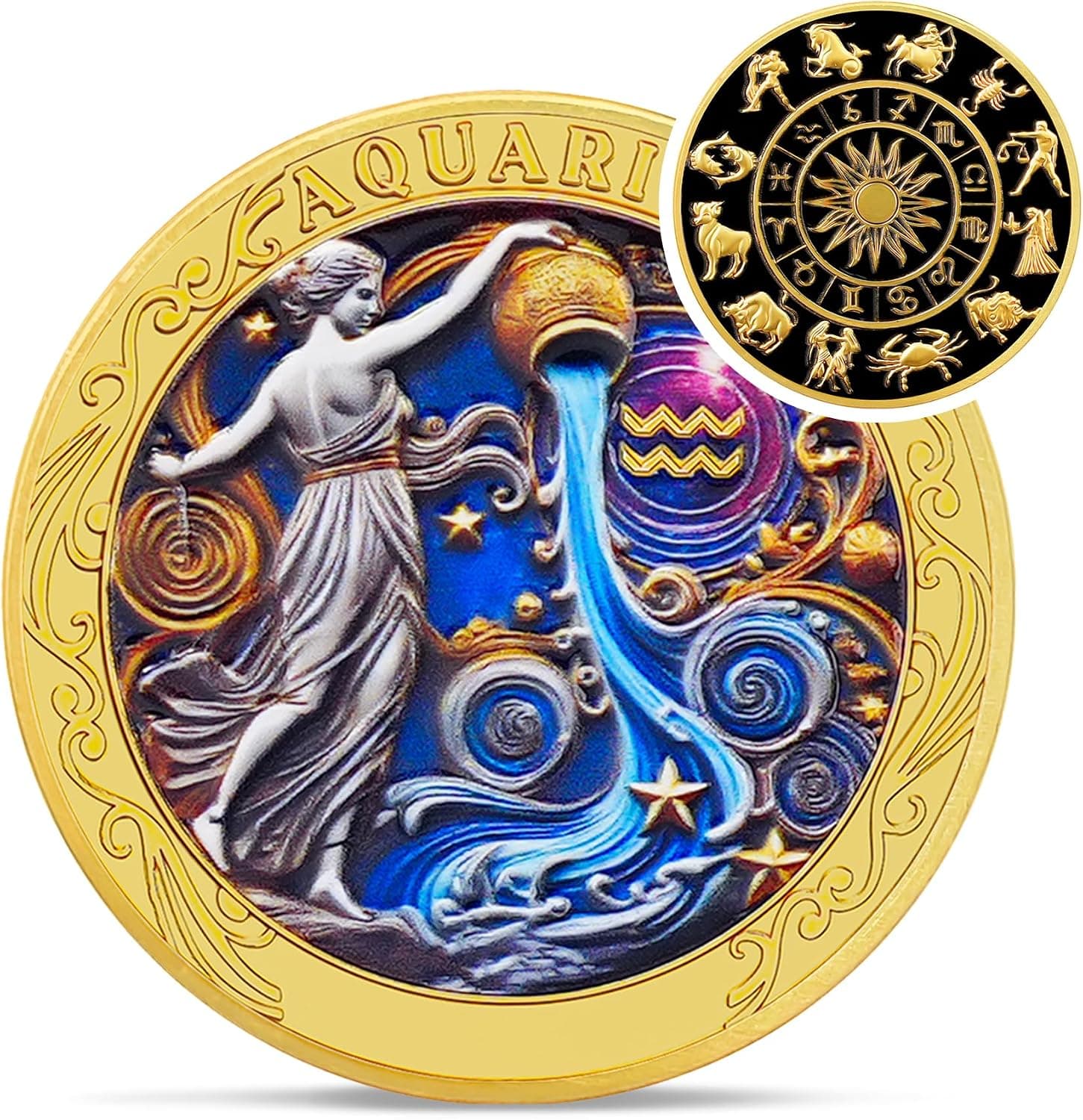
-20%Aquarius 12 Zodiac Challenge Coin - Twelve Constellations Aquarius Protective...
 -29%
-29%Karma and Luck March Birthstone Crystal Tree of Life, Aquamarine Gemstone Fen...
 -29%
-29%Karma and Luck July Birthstone Crystal Tree of Life, Ruby Gemstone Feng Shui ...
 -29%
-29%Karma and Luck February Birthstone Crystal Tree of Life, Amethyst Gemstone Fe...
As an Amazon Associate, we earn from qualifying purchases. We only recommend items our practitioners have personally tested.
Continue Your Journey
Explore these related guides to deepen your understanding:

The I Ching Doesn't Answer Lazy Questions — Here's What to Ask Instead
8 min readConfucian Commentary Turns the I Ching Into a Moral Floor Plan
9 min readBroken Lines, Solid Lines, and the Real Yin-Yang Logic of the I Ching
11 min readThe Wilhelm I Ching Feels Deep Because It Slows Your Reading
11 min readReady for Deeper Guidance?
Try our free I Ching reading for personalized wisdom, or explore our curated Feng Shui essentials.