
The coins work best when you stop treating them like a shortcut and start reading the old logic behind the toss.
The Hidden Truth About how-to-consult-with coins I Ching
The standard advice tells you to gather three coins, shake them, toss them six times, and write down lines as if the whole matter were mechanical. That part looks neat on a blog page. In a real room, under a real lamp, it often feels thin.
I first saw the problem at a narrow dining table with a chipped blue bowl on the left and a torn receipt under the salt shaker. A student had followed every instruction exactly, then stared at the result as if the hexagram had insulted him. The answer looked harsh, so he cast again. Then again. By the fourth attempt, the room felt tight, his shoulders were up around his ears, and the coins had become little judges instead of tools.
That is where the popular version slips. It treats the toss as a trick for producing a message, while the older Chinese context treats it as a disciplined way to meet a changing pattern. The coins do not flatter you. They reflect timing, bias, and the condition of the questioner, which is why a sloppy question gives a muddy answer. reading the pattern instead of forcing a verdict matters more than memorizing a chant.
And yes, the common internet ritual often omits the part that makes it work: intention with restraint. Not wishful thinking. Not dramatic suspense. A clean question, a settled body, and a willingness to accept an answer that may not match the script in your head. changing lines are where the text starts breathing, and you miss that when you are too busy hunting for a yes or no.
I have seen people blame the coins when the real issue was posture, noise, and impatience. One woman sat beside a bright red kettle in a kitchen that faced west; the burner kept clicking, a phone buzzed on the counter, and she asked about a relationship in the same breath she used to complain about her landlord. Of course the reading felt noisy. A scattered question makes scattered lines. Quiet room. Clear question.
Chinese divination never belonged to the vibe-only world some modern posts imply. It lived beside calendars, seasons, ritual order, and the old habit of noticing what changes and what persists. That is why a toss made at 11:40 p.m. after an argument can land differently from one made at a calm desk with the window cracked open and the room cool enough that you can hear the refrigerator stop humming.
For a wider frame, it helps to look at what a feng shui calculator misses when it ignores timing and at how classical Taoist language resists simplistic fixes. The same mistake shows up in both places: people want a formula without the living conditions that make the formula meaningful. The old texts were never impressed by shortcuts.
What the coins are actually doing
The coin method is not there to impress the universe. It is there to slow you down enough to notice what you already know but have been avoiding. Tossing three coins six times creates a small ritual boundary, and that boundary matters because your mind hates ambiguity. Give it a few crisp rules and it stops running in circles long enough to hear itself.
That is the first surprise. The casting does not remove subjectivity; it organizes it. The old Chinese frame understands that a person asking the oracle is part of the situation, not a detached observer hovering over it. Once you accept that, the lines stop feeling like random numbers and start feeling like a map of pressure, resistance, and movement.
In practice, the question should be narrow enough to hold. Not “What will my entire life become?” Better: “What is the best way to handle the job offer I receive this week?” A broad question invites fog. A pointed question lets the answer land with edge and shape.
That principle shows up in other parts of the cluster too. the front door teaches the same lesson about entry and timing, while bedroom work shows how a room can either settle the nervous system or keep it alert. Different tools, same refusal to handwave. Placement, timing, and attention do the heavy lifting.
Coins also reflect sequence, which is why line order matters. The first line is not just “the bottom one.” It often speaks to the base condition, the ground under the matter, the part that supports or undermines everything above it. Skip that, and you read the answer like a headline without the paragraph underneath.
Here is where modern advice often overreaches. It tells people to ask anything, toss without thinking, and trust whatever falls out. That sounds liberating. It usually produces mush. Real consultation requires enough structure to prevent self-deception and enough openness to let the message surprise you.
One room can make this obvious. Picture a study with a black desk pushed three feet from an east-facing window, a white notebook near the keyboard, and the coins resting in a small ceramic dish. In that setup, the air feels collected before the first toss. Move the same practice to a cluttered sofa with laundry on the armrest and a phone lighting up every minute, and the answer arrives in a mind already split in half.
How to use the coins without flattening the tradition
Start with a clean surface. Not because the universe cares about polished wood, but because your attention does. Clear the desk, silence the phone, and sit long enough to feel your feet on the floor. Ask once, and ask plainly. The question should fit on one breath.
Then toss with consistency. Use the same coins each time if you can, hold them in the same hand, and let the process become boring in the best way. Boring is good here. Boring keeps your ego from performing. If you are shaking the coins to force drama into the result, you have already left the method behind.
What matters next is interpretation with discipline. Do not cherry-pick the line that flatters your plan. Read the full figure, then look at what changes. If the moving lines point to tension, do not dress it up as hidden permission. That habit destroys more readings than bad coin tosses ever will.
The mistake I see most often is emotional bargaining. Someone gets a result they dislike, then asks the same question again in a different costume, hoping the answer will soften. It rarely does. More often, the second casting exposes impatience, and the message becomes even less useful because the questioner has already started arguing with it.
One practitioner I watched in a quiet back room of a tea shop kept a shallow brass tray for the coins and a folded cloth underneath it. No incense clouds. No theatrical gestures. He asked, read, then wrote the result down in a plain notebook with the time beside it. That notebook had more truth in it than a dozen flashy online sessions. The room smelled faintly of oolong and old paper, and nobody was trying to impress anybody.
That kind of restraint pairs well with a broader study of patterns. mapping a home without overthinking it teaches the same patience, because a pattern only becomes legible when you stop forcing it into a preset story. The same goes for five elements theory when good advice still feels off. Balance is often a matter of context, not slogans.
And yes, some people ask whether the coins “work” if they are not antique Chinese cash. They do. The issue is not magical costume jewelry. The issue is coherence: a repeatable tool, a respectful attitude, and a question worth asking. Old bronze may carry symbolic weight, but a modern coin can still serve if the consultation is honest.
Do not confuse honesty with optimism. A hard answer can be useful. A comforting lie cannot. That contrast is why the method survived in Chinese intellectual life: it does not pretend certainty where none exists. It reveals the shape of a situation while the situation is still moving.
There is also a deeper psychological reason the old method holds up. The act of casting externalizes hesitation. Instead of rehearsing your fear in a loop, you give it form and read it from a slight distance. The answer may sting, but it gives the mind something better than static anxiety: direction.
The mistake people keep making
People love ritual details and ignore the question. They buy coins, polish them, watch a video about hexagrams, and never pause long enough to ask what they actually need to know. Then they wonder why the reading feels vague.
Another common misstep is treating the oracle like a traffic light. Green means go, red means stop. Cleanly binary. Life is rarely that obedient. The tradition speaks in sequences, tendencies, reversals, and timing. A reading can warn you to proceed slowly, or to wait, or to change your posture before you move at all.
Then there is the habit of over-casting. Someone gets a result they do not like, so they toss again from a different chair, then again after making tea, then once more after opening a window. The pattern becomes muddy because the questioner has turned the session into a negotiation. At that point the coins are no longer consulted; they are cross-examined.
One afternoon, in a narrow room with a pale green wall and a cracked ceramic ashtray that nobody used anymore, I watched a reading collapse because the clock radio was left on. The numbers on the display flashed every minute, and the person asking kept glancing toward it. The final message felt fragmented, and the reason was obvious. Attention had been split before the first line even landed.
That is why traditional practice values composure. Not perfection. Not mysticism. Composure. The mind becomes a better instrument when the room stops pulling it in six directions. Even a small shift—closing a laptop, moving a mug, turning off a harsh light—can change the quality of the consultation.
The same issue appears in space-based work. wealth corner mistakes often begin at the threshold, not in the corner itself, because the flow entering the room is already compromised. A reading can fail for the same reason: the entrance to your attention is cluttered.
One more thing. People often assume the oracle exists to tell them what to do. Sometimes it does. More often, it clarifies the situation so you can stop lying to yourself about what you already sense. That is less theatrical, and far more useful.
When the old method feels strange in a modern room
A laptop, a phone charger, and a pile of mail can make a consultation feel embarrassingly modern. Good. That tension is honest. The old method is not asking for candles and costumes; it is asking for attention in a world designed to scatter it. That is a harder demand.
Try this in a small apartment with one south-facing window and a kettle on the stove: set the coins in a ceramic saucer, turn the phone face down, and ask the question after standing still for a full minute. You will notice something subtle. The body starts to settle before the mind does, and the answer tends to arrive with less noise.
There is a reason teachers emphasized preparation. Not because the gods need ceremony, but because humans need boundary. A brief pause marks the difference between impulse and consultation. Cross that line carelessly and the coins become just another way to confirm what you already wanted.
I have seen dozens of readings become cleaner after one simple change: the person stopped asking during peak agitation. They waited until the argument ended, the commute was over, or the email draft was saved for later. The result was not only a more readable hexagram. It was a more truthful question.
That truth matters in Chinese metaphysics broadly. The method is never isolated from the person using it, and the person is never isolated from the room they occupy. even bracelet rules point to the same principle: context changes meaning, and meaning changes practice.
So the old coins are not there to replace judgment. They sharpen it. They make your uncertainty visible, then ask you to respect the shape of it. That can feel unsettling, especially if you came looking for certainty dressed up as wisdom.
FAQ
Is conventional how-to-consult-with coins I Ching advice reliable?
Sometimes, but not when it strips away context. A bare-bones ritual can still produce a valid reading, yet it often fails when the question is vague or the room is chaotic. The method works best when the process is quiet, steady, and taken seriously.
Do I need Chinese coins for the reading to be authentic?
No. Authenticity comes from coherence, not costume. Three consistent coins, a clear question, and disciplined interpretation matter more than buying the most symbolic object you can find.
Why do my readings feel contradictory?
Because the question may be contradictory, or your attention may be split. A surprising amount of confusion comes from asking for a yes/no answer to a situation that is still unfolding. Read the changing lines carefully, and the contradiction often turns into a sequence.
Can I ask the same question again if I dislike the result?
You can, but you will usually weaken the process. The second cast tends to measure your resistance rather than the situation itself. Write the answer down, step away, and return only when the emotional charge has dropped.
The coins on the saucer do not look dramatic after all that. They sit there, small and quiet, beside the notebook and the cold tea, while the room waits to see whether you will ask the next question honestly.
David Liu
Traditionally informed guidance • Cross-referenced with classical Chinese source texts
Interpretations cross-referenced with the Zhouyi (周易) and Wilhelm/Baynes translation.
Practitioner-Selected Tools for This Topic
Items our team has tested and found effective for the principles discussed above. Individual results may vary.
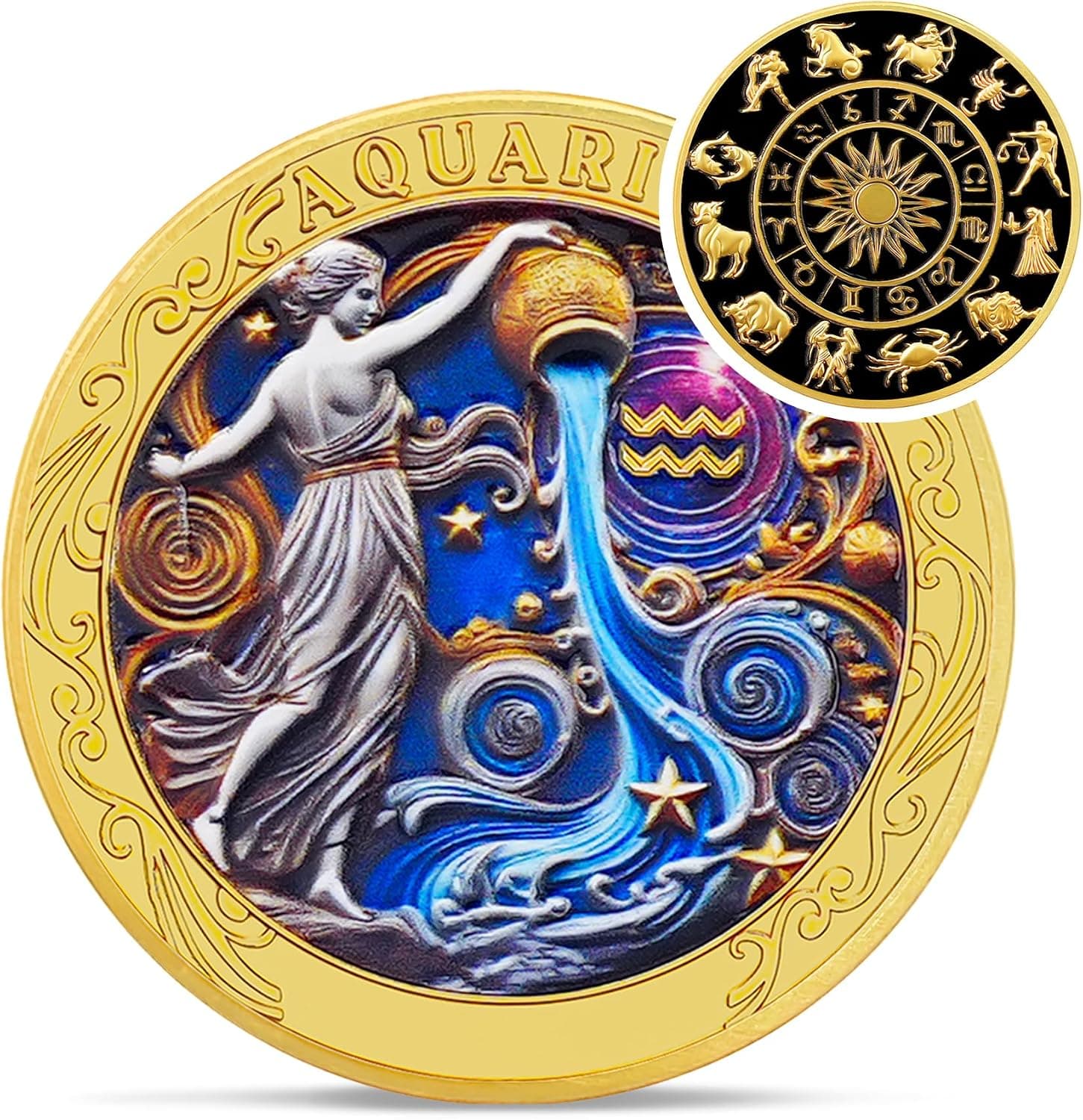 -20%
-20%Aquarius 12 Zodiac Challenge Coin - Twelve Constellations Aquarius Protective...
 -29%
-29%Karma and Luck March Birthstone Crystal Tree of Life, Aquamarine Gemstone Fen...
 -29%
-29%Karma and Luck July Birthstone Crystal Tree of Life, Ruby Gemstone Feng Shui ...
 -29%
-29%Karma and Luck February Birthstone Crystal Tree of Life, Amethyst Gemstone Fe...
As an Amazon Associate, we earn from qualifying purchases. We only recommend items our practitioners have personally tested.
Continue Your Journey
Explore these related guides to deepen your understanding:

The I Ching Doesn't Answer Lazy Questions — Here's What to Ask Instead
8 min readConfucian Commentary Turns the I Ching Into a Moral Floor Plan
9 min readBroken Lines, Solid Lines, and the Real Yin-Yang Logic of the I Ching
11 min readThe Wilhelm I Ching Feels Deep Because It Slows Your Reading
11 min readReady for Deeper Guidance?
Try our free I Ching reading for personalized wisdom, or explore our curated Feng Shui essentials.