One small change in ring placement can shift how steady, visible, or restless your energy feels.
The problem starts before the ring
You put on a beautiful ring, glance in the mirror, and still feel oddly unconvincing. The hand looks fine. The ring is expensive. Yet something about it feels off, like it belongs to a different version of you. That mismatch is exactly where feng shui begins to matter.
I’ve seen this most clearly with clients who treat rings like decoration only. One architect I worked with wore a thick silver band on his index finger every day because he liked the look. He kept saying he felt “amped up” in meetings, talking too fast and interrupting people. When he switched the ring to another finger for two weeks, the change was subtle but real: less edge, more patience, fewer awkward conversations. Not magic. Placement.
That is the real question behind inner truth. A ring can support the energy you already have, or it can exaggerate the part of you that is already loud. People often want a cure when what they need is better alignment.
Which finger carries which signal
In feng shui, the fingers are not interchangeable. Each one tends to emphasize a different kind of expression, and that is why the answer to feng shui ring which finger to wear is never one-size-fits-all. The thumb points to willpower and self-direction. The index finger pushes authority, ambition, and the need to lead. The middle finger tends to intensify responsibility, structure, and self-reflection. The ring finger is tied to relationship, beauty, and connection. The little finger leans toward communication, social ease, and cleverness.
If that sounds too neat, good. Real life is less tidy. A ring on the index finger may help someone who needs confidence, but on an already dominant personality it can turn into bluntness. A ring on the ring finger may soften a guarded person, yet on someone who already over-gives, it can make boundaries weaker. The material matters too. Gold feels warmer and more expansive. Silver is cooler and more receptive. A heavy stone ring reads differently than a thin band. The object is not just jewelry; it is a message you keep sending to your own system.
That is why I often pair this topic with the gentle wind hexagram. Wind does not force its way through a room. It moves, adjusts, and reaches the places brute strength misses. The best ring placement works the same way.
There is one surprise that catches people off guard: the “best” finger is sometimes the finger that does the least. A ring should not always shout. Sometimes it should steady.
How to choose the right finger
Start with the feeling you want more of, not the style you like most. If you need more confidence at work, the index finger can be useful for short periods, especially for presentations, negotiations, or situations where you need to stand your ground. If you are trying to calm scatter and return to yourself, the middle finger can support discipline and a quieter center. If your heart has been closed for too long, the ring finger often feels more humane than dramatic; it encourages openness without requiring performance. If you want to improve social flow, the little finger is the one I look at first.
Then watch what the ring does over time. I mean really watch it. Not for an hour. For several days. A nurse I knew wore a small jade ring in the bedroom area of her apartment and kept it on her ring finger because she thought it looked “soft.” After three nights of poor sleep and a strange feeling of heaviness in the room, she moved it to her little finger during the day and took it off at night. The bedroom had a dark green velvet chair, a glass lamp, and a mirror facing the bed; once she removed the visual clutter and changed the ring habit, she slept better within a week. The finger mattered, but so did the room.
That is also why I like to think in terms of keeping still. If a ring makes you feel busy, reactive, or overexposed, it is probably not helping. You do not need more stimulation. You need a cleaner signal.
Hand side matters, too. For many people, the left hand is more receptive and inward, while the right hand is more active and outward. If you are trying to draw something in, such as ease, support, or emotional stability, the left side may feel better. If you are trying to project a quality outward, such as authority, leadership, or visibility, the right side may suit the moment. I say “may” on purpose. Bodies have preferences. Traditions have patterns. Your experience decides.
Practical ways to wear it without overthinking
Keep the experiment simple. Wear one ring in one place for a few days and notice your habits. Do you speak more sharply? Do you feel calmer? Do people interrupt you less, or more? These are the real feng shui clues. Not abstract symbolism. Repeated behavior.
If the ring is for love or partnership, the ring finger is the obvious place to start, but only if the feeling is healthy and grounded. If the relationship is already unstable, a decorative ring will not repair trust. That is where revolutionary change has to happen first: honest decisions, not sentimental accessories.
If the ring is for money or work visibility, the index finger can be powerful in small doses. I would not keep a very bold, pointed ring there all the time unless you specifically want a stronger, more assertive presence. For everyday balance, a smoother design often works better than a spiky one. Rounded shapes tend to settle energy. Sharp shapes tend to direct it.
If you want more speaking confidence, test the little finger during calls, meetings, or networking events. That finger is less about force and more about exchange. I’ve seen shy students become easier to hear, not because the ring gave them a new personality, but because it reminded them to occupy their place. Small things change posture. Posture changes timing. Timing changes how others receive you.
And yes, you can remove the ring at night. In fact, I recommend it for most people. Sleep is not the time to keep broadcasting. The bedroom should be quieter than your public life. If your ring is a relationship piece, a family heirloom, or a symbol you do not want off your body, place it in a clean dish on a bedside table instead of leaving it scattered on a dresser.
Two mistakes worth avoiding
The first mistake is choosing the finger by trend. That glittering index-finger stack may look current, but if it leaves you overbearing, it is not a win. The second is treating one placement like a permanent cure. A ring can support an intention, but it cannot override an unhealthy environment. If your desk is chaotic, your bed is facing a mirror, or your hallway is filled with junk, the ring is fighting uphill. For the common traps people make with jewelry placement and room energy, see after completion energy and notice how easy it is to think a problem is finished when it is only dressed up.
Another mistake is wearing a ring that feels emotionally loaded simply because it is valuable. Value and suitability are not the same thing. A diamond that makes you anxious is not a good cure. A plain band that helps you breathe more easily can be far better.
What to notice in the first week
Pay attention to your conversations, not just your mood. Do you feel more impatient at the grocery store? More magnetic in a meeting? More sentimental than usual? Rings can nudge behavior in ways people miss because the change is gradual. I tell readers to keep a few notes in their phone, just three or four lines a day. The pattern shows up fast when you stop guessing.
If you want a deeper layer, match the ring’s intention to the rest of your day. A confidence ring on the index finger pairs well with a structured schedule. A calming ring on the middle finger works better when the room around you is orderly. If you are trying to open communication, the little finger responds better when your notes, emails, and words are already clean. A symbol is strongest when the surrounding life agrees with it.
That is the quiet wisdom behind the well: the source is there, but you still have to draw from it properly. A ring does not create the water. It helps you reach the bucket.
FAQ
Can I wear a ring on any finger if I just like the look?
Of course, and many people do. But if you notice mood swings, overconfidence, or a strange sense of emotional drag, the placement may be part of the story. Style and energy are not enemies; they just need to cooperate.
Which hand is better for a feng shui ring?
The left hand often feels more receptive, while the right hand tends to express outward action. That makes the left useful for drawing in support and the right useful for projecting confidence. Your own response matters more than a rigid rule.
Should I sleep with the ring on?
Usually no. Night is when the body wants less stimulation, not more. If the ring has deep personal meaning, place it nearby rather than wearing it through sleep.
What if I want both love and confidence?
Then choose the intention that matters most right now. Split intentions usually weaken the result. You can always shift the ring later as your situation changes, especially when a new phase begins after a period of completion.
David Liu
Traditionally informed guidance • Cross-referenced with classical Chinese source texts
Interpretations cross-referenced with the Zhouyi (周易) and Wilhelm/Baynes translation.
Practitioner-Selected Tools for This Topic
Items our team has tested and found effective for the principles discussed above. Individual results may vary.
 -20%
-20%Aquarius 12 Zodiac Challenge Coin - Twelve Constellations Aquarius Protective...
 -29%
-29%Karma and Luck March Birthstone Crystal Tree of Life, Aquamarine Gemstone Fen...
 -29%
-29%Karma and Luck July Birthstone Crystal Tree of Life, Ruby Gemstone Feng Shui ...
 -29%
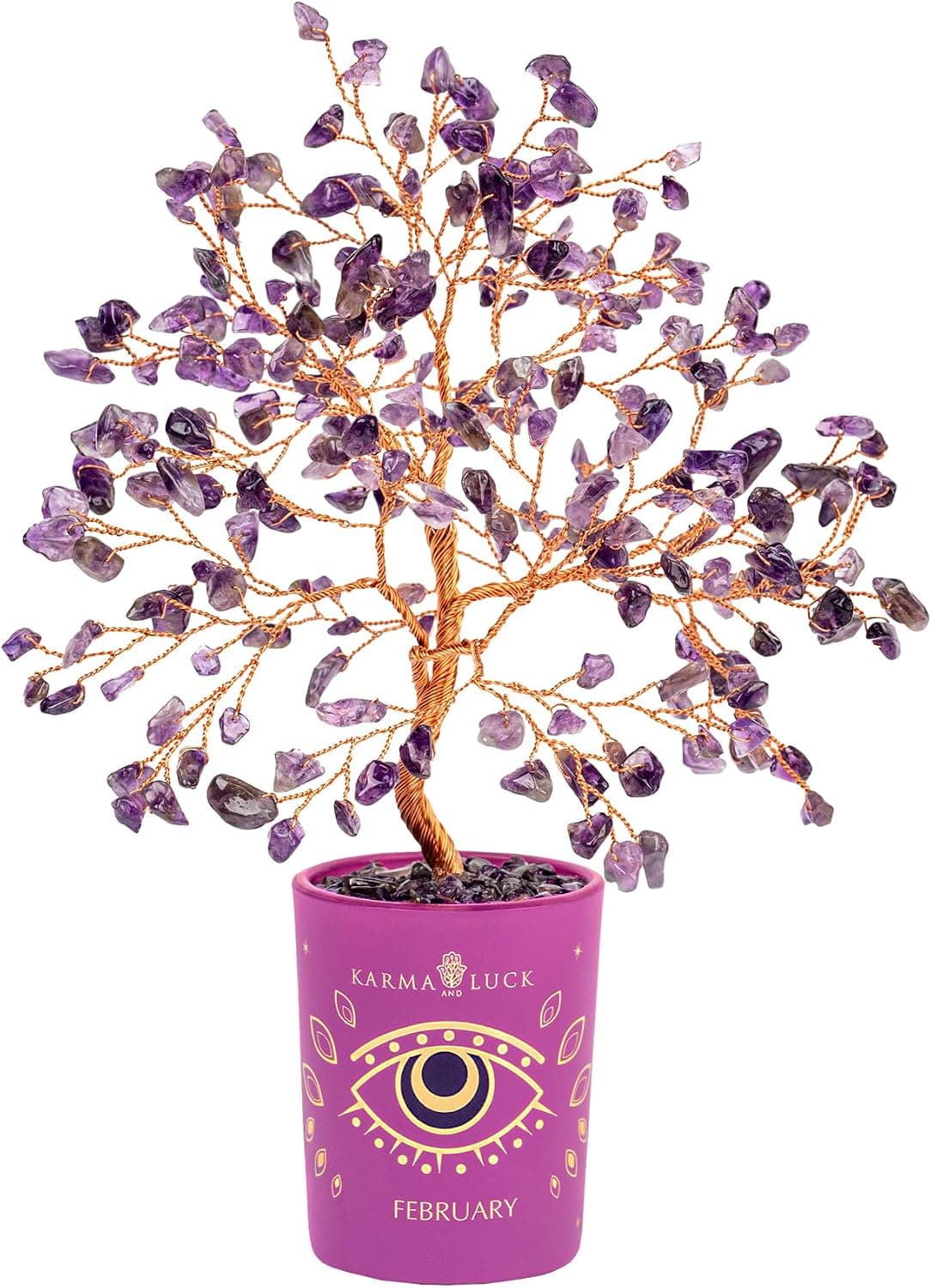
-29%Karma and Luck February Birthstone Crystal Tree of Life, Amethyst Gemstone Fe...
As an Amazon Associate, we earn from qualifying purchases. We only recommend items our practitioners have personally tested.
Continue Your Journey
Explore these related guides to deepen your understanding:

The I Ching Doesn't Answer Lazy Questions — Here's What to Ask Instead
8 min readConfucian Commentary Turns the I Ching Into a Moral Floor Plan
9 min readBroken Lines, Solid Lines, and the Real Yin-Yang Logic of the I Ching
11 min readThe Wilhelm I Ching Feels Deep Because It Slows Your Reading
11 min readReady for Deeper Guidance?
Try our free I Ching reading for personalized wisdom, or explore our curated Feng Shui essentials.