A straight line from door to chair can undo a chart faster than a bad lucky charm.
The Hidden Truth About bazi-career-element-guide
when the room forces you to cross the same path ten times a day. I watched a north-facing study with a black metal desk, a red mug, and a bright hallway stripe on the floor; the person sitting there had all the "right" career elements on paper, yet every afternoon they felt scattered, snapped at email, and missed small deadlines because their chair sat in the middle of a traffic lane. The chart did not fail. The room kept interrupting the chart.
That is the part people miss. They obsess over the element that supports work luck, then ignore the route their body takes through the space, even though movement is what wakes qi, bends attention, and decides whether the right element can actually settle anywhere. A fast lane from door to window can turn Wood into restlessness, Fire into overreaction, Metal into friction, and Water into drifting thought. Same birth data. Different outcome.
I've seen this in a compact office with one white door, a grey rug, and a filing cabinet shoved half a meter into the passage. The owner had been told to add more Water for career support, so she bought a glass bowl and blue objects, then placed them near the walkway. The effect was not elegance. It was a constant draft of attention: visitors paused, the chair scraped, papers slid to the edge, and she started avoiding the room at 3 p.m. because the route itself felt agitating.
That's the hidden mechanism. Your career element does not work in a vacuum; it works inside a circulation pattern. First the eye reads the room, then the feet choose the easiest line, then the body repeats that line until the nervous system learns it. Once that loop is set, the element you want either anchors the habit or gets carried away by it. If your path is messy, the chart has to fight the room every single day.
How Traffic Rewrites the Element's Job
Start with input conditions. A door opens, a corridor points, a desk waits, and the body looks for the shortest route. That route matters because qi follows use, not intention. A chair placed directly in line with a doorway makes the occupant sit as if on a crossing point, which means every person entering, every delivery, and every glance from the hall hits the same spot. Career energy stops behaving like steady accumulation and starts behaving like interruption.
The next step is mechanical. Movement through the room creates repeated micro-decisions. Do you step around the plant? Do you squeeze between the shelf and the wall? Do you swivel the chair to face the screen or the doorway? Each little correction pulls attention out of deep work. In office layout terms, the issue is not decoration; it is the traffic pattern that keeps resetting the mind before it reaches a useful rhythm.
Then the element itself gets distorted. Wood, which should help growth and planning, turns into overextension when the path is too open and too busy. Fire, meant to support visibility and recognition, becomes impatience if it sits beside a hot corridor of activity. Earth can stabilize, but a blocked route makes Earth feel like stuck mud. Metal wants precision; too much foot traffic turns precision into criticism. Water, often chosen for career flow, can become aimless if the room already has a wandering line from entrance to exit. Five elements theory explains why good settings still feel wrong when the circulation keeps pulling energy off course.
There is a reason common advice backfires. People add a symbol and expect the room to obey, as if a crystal or color could override the daily choreography of walking, stopping, turning, and sitting. It cannot. Symbols matter, but only after the path stops sabotaging them. Otherwise you end up polishing the dashboard while the steering is loose.
Read the Path Before You Read the Chart
Do this first: stand at the doorway and trace the route your body takes without thinking. Notice where you sidestep, where your shoulder brushes a cabinet, and where your pace changes. If the path bends around the desk every time, the desk is not central; it is being treated like an obstacle. That is a clue, not a style choice.
Now look for the point where work concentration breaks. In a bedroom office, it may be the edge of the bed pulling the eye sideways. In a living room setup, it may be the coffee table forcing a dogleg route between sofa and window. In a studio apartment, one low shelf positioned 60 centimeters from the chair can make the sitter twist twice an hour, and that twist is enough to interrupt the kind of focused thinking career luck depends on.
Place the desk where traffic passes behind you only when necessary, not where it slices across your torso. Leave enough space so a person can walk around the work zone without grazing the chair back. If the room is narrow, use a screen, a tall plant, or a cabinet edge to signal the boundary. That boundary does not "block energy" in some vague sense; it tells the body where not to wander, and the mind relaxes because it no longer has to track every movement in the room.
One more thing. People often try to cure this with more objects. They buy a lucky charm, then add another, then wonder why the shelf looks crowded and the room feels fussy. The cure starts with subtraction. Remove the one object that forces a detour. Lift the power strip off the floor. Rotate the printer so paper does not spill into the path. Move the wastebasket away from the chair leg. Small, specific corrections beat grand gestures.
When Common Career Advice Misfires
One client once placed a glossy blue glass sphere on the left side of her desk because she had read that Water supports career flow. The desk sat only two steps from the hallway, the chair faced a white door, and her laptop cord crossed the floor where she walked to a printer. Within a week she was not more productive; she was more distracted, because she kept stepping around the cord, glancing at the sphere, and feeling as if the room expected motion when what she needed was containment. The object was not wrong. The traffic was wrong.
That mistake shows up in several forms. Some people push the desk into the center of the room for a "command" feel, then discover they hate being visible from every angle. Others place career symbols near the entrance because the front of the room seems auspicious, yet the constant traffic makes the space noisy before work even starts. A third group follows element advice so closely that they create a beautiful arrangement with terrible circulation. The result is usually the same: broken concentration, slower decisions, and a vague sense that work keeps slipping away.
Don't confuse activity with progress. A room can look active and still be poor at supporting a career. In fact, the busiest arrangement often produces the weakest momentum because the mind spends its energy negotiating obstacles instead of building output. That is why I pay attention to the path before I touch the cures.
For rooms where money and career are tied together, I often send people to coin placements that make money feel managed, not chaotic after the route has been cleaned up. Coins can help when they sit in a stable zone. Scatter them along a walkway, and they just join the clutter.
Practical Adjustments That Change the Output
Start with the door line. If the chair faces a direct shot from the entry, angle it a little so the body sees the room without sitting in the blast zone. That small shift changes the stress pattern immediately because the nervous system no longer has to brace for every arrival. In a narrow room, even a 15-degree turn can break the collision feeling.
Next, protect the route to the work seat. Keep that line clear of shoes, bags, and stacked paper. A blue folder on the floor by the chair may seem harmless, but it creates a tiny decision point every time you pass it. Tiny decisions accumulate. They are the sneakiest thieves of career focus.
Then match the support element to the actual movement pattern, not to an abstract wish. A Wood person who needs growth may do well with a living plant placed just outside the path, where it frames the route instead of entering it. Someone who needs Fire for recognition may benefit from a lamp that lights the desk corner, not a red object sitting where elbows knock into it. Earth wants stillness; put it under the work surface, not on the route itself. Metal wants clean edges; keep the filing system adjacent to the seat, not crossing the aisle. Water should feel like flow through the room, not a puddle in the traffic lane.
The room name matters less than the pattern. A home office, a spare bedroom, and a corner in the dining room can all fail for the same reason: the body has to weave around something before it can begin. Once that weave disappears, people often report a strange quiet. Not dramatic. Just fewer interruptions, fewer forgotten tasks, and a better chance that the day finishes where it started.
There is one correction that surprises people. Sometimes the fix is not adding support at all; it's making the work zone slightly less central. A desk pulled six inches away from the main crossing can calm the entire room, because the path no longer cuts through the place where thought needs to harden into action. That is why I do not trust advice that ignores circulation. It asks the element to do a job the room has already undermined.
For readers trying to connect the work area to the larger map of the home, mapping the room without overthinking it helps you see which sector is being used as a highway. Once you see the highway, you stop decorating it like a shrine.
FAQ
Is conventional bazi-career-element-guide advice reliable?
Often not, at least not by itself. A chart can point to the right element, but if the room forces constant detours, the advice lands in the wrong place and gets diluted by movement.
How do I know my walking path is the real problem?
Look for repetition. If you keep stepping around the same chair leg, turning your shoulders near the same cabinet, or pausing at the same bottle-neck every day, the room is teaching your body a habit that weakens focus.
Should I move my desk before adding cures?
Yes, and the order matters. Repositioning the work seat, clearing the route, and reducing cross-traffic usually do more than any symbol placed on top of bad circulation.
Can a small apartment still support career luck?
Absolutely. Small spaces can work well because the pattern is easier to read, but they also punish clutter faster. A single box in the wrong spot can create the same drag as a bigger structural mistake, and sometimes the room tells on you within one morning.
Watch the chair after lunch. If it starts feeling like a checkpoint instead of a seat, the path is still in control.
Mei Chen
Traditionally informed guidance • Cross-referenced with classical Chinese source texts
Rooted in classical Chinese metaphysics and cross-referenced with original texts. Product recommendations are based on traditional symbolism, not guaranteed outcomes.
Practitioner-Selected Tools for This Topic
Items our team has tested and found effective for the principles discussed above. Individual results may vary.
 -29%
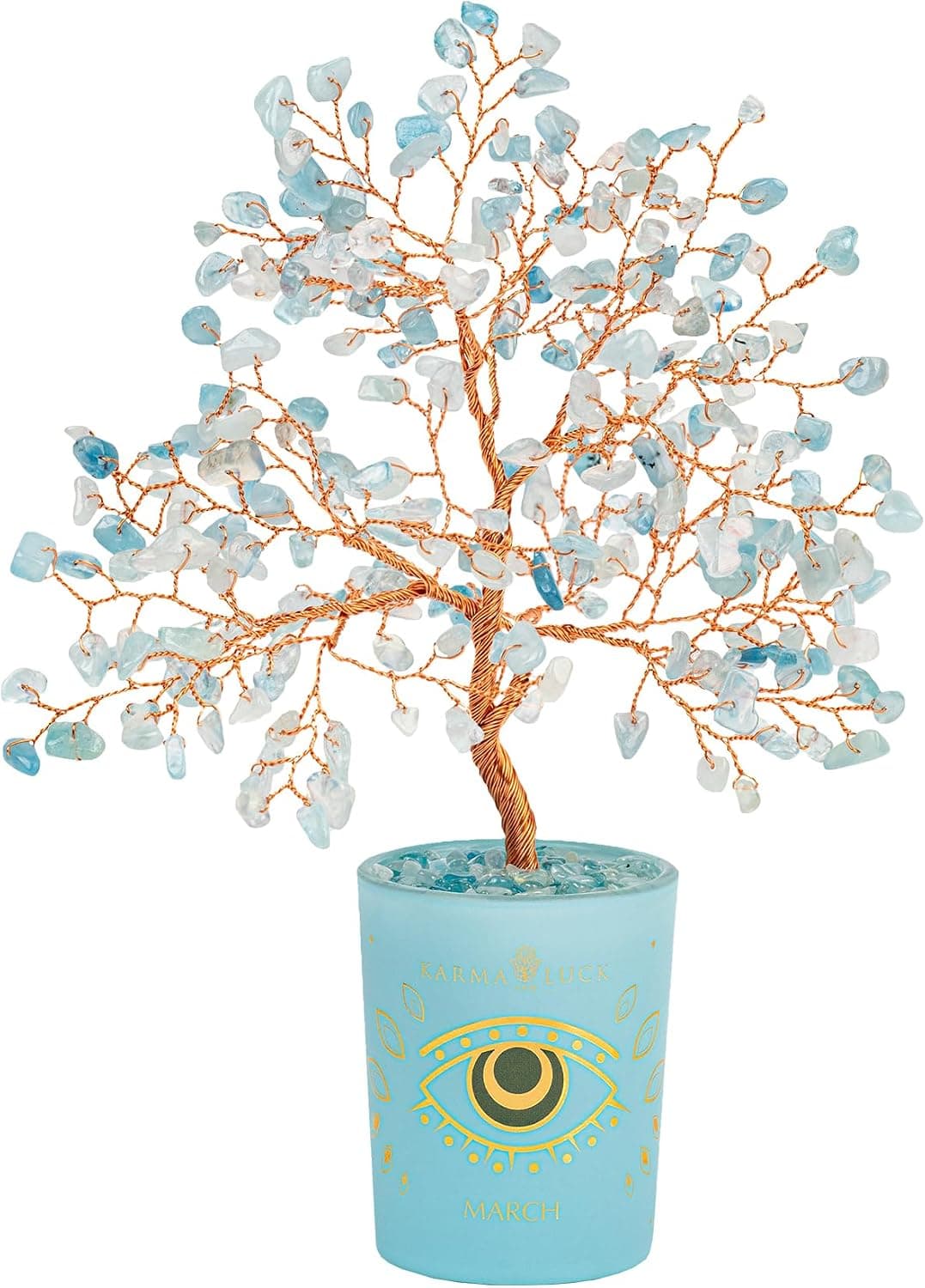
-29%Karma and Luck March Birthstone Crystal Tree of Life, Aquamarine Gemstone Fen...
 -29%
-29%Karma and Luck July Birthstone Crystal Tree of Life, Ruby Gemstone Feng Shui ...
 -29%
-29%Karma and Luck February Birthstone Crystal Tree of Life, Amethyst Gemstone Fe...
 -50%
-50%biuufish Feng Shui Black Obsidian Bracelet for Men Women, 24K Gold Plated Pix...
As an Amazon Associate, we earn from qualifying purchases. We only recommend items our practitioners have personally tested.
Continue Your Journey
Explore these related guides to deepen your understanding:
Ready for Deeper Guidance?
Try our free I Ching reading for personalized wisdom, or explore our curated Feng Shui essentials.