The standard approach to bazi and feng shui connection has serious gaps. What works in practice tells a different story.
The Room Looked Right Until the Clock Changed
At 11:40 p.m., the bedroom was doing everything it was supposed to do. Sheer curtains over the east-facing window. Bed positioned 18 inches from the north wall, 5 feet of clear space between the foot of the mattress and the south door. A low lamp on the nightstand casting amber light across the floor. Rain tapping the glass in that particular rhythm that should, by every reasonable account, pull a person into sleep.
It didn't.
The person lying there had just been promoted. Nothing in the room had changed. The same curtains, the same lamp, the same distance from the same wall. But something in the space had started talking too loudly — a faint hiss of traffic through the glass that had never registered before, a brightness behind the eyelids even after the lamp went off, a mind that kept rehearsing tomorrow's meeting as if the room itself were feeding it material.
The room hadn't changed. The person had. Specifically, their BaZi luck cycle had shifted — quietly, without announcement — and the space that once held them was now amplifying exactly what they needed least.
This is the connection between BaZi and feng shui that almost no one talks about. Not the matching of elements. Not the placement of water features or the orientation of a desk. The real bridge is timing — and how the same room can support one version of a person while steadily draining another.
Why a Ten-Year Luck Shift Can Make Old Layouts Start Talking Too Loudly
BaZi operates in ten-year luck pillars. Each pillar introduces a new elemental combination into a person's energetic environment — not by changing the birth chart, but by layering new pressure, new appetite, new threshold onto it. What a person could absorb at 32 may genuinely overwhelm them at 42. Not because they've become weaker. Because the frequency they're running on has shifted, and the room hasn't been told.
I've seen this pattern in spaces that look, by every feng shui standard, completely correct. The bed faces a favorable direction. The desk sits in the command position. The entry is clear. And yet the resident reports waking at 3:10 a.m. with a dry mouth and a low, nameless pressure behind the eyes — not every few nights, but consistently, like a timer.
That kind of consistency is not random. It's the room doing what it was always doing, but the person's nervous system now reads it differently because the decade pillar has changed what they can tolerate.
A north wall bedroom layout — headboard centered 8 feet from the east corner, 3-foot circulation path on the west side, foot of the bed 5 feet from the south door — can feel spacious and settled during one luck period. In another, the same geometry can feel exposed. The south-facing foot of the bed, the gap on the west side, the distance from the wall: none of these change. But the person's threshold for spatial openness does. And when the layout stops matching that threshold, the body registers it before the mind does.
The house is not the constant. The person's timing is.
When a Soft Room Starts Feeding a Metal Phase
There is a specific kind of exhaustion that comes from a room that is trying to soothe you when what you actually need is structure. It doesn't feel like overstimulation at first. It feels like vagueness — an inability to settle, a sense that the space is slightly too yielding, too diffuse, too willing to accommodate everything without anchoring anything.
Soft rooms — curtains that pool on the floor, rounded furniture, indirect lighting, surfaces that absorb rather than reflect — are often prescribed as remedies for stress. And they can be. For the right person in the right cycle.
But enter a Metal-heavy luck phase and that same softness begins to work against you. Metal needs edges. It needs contrast, definition, the slight resistance of a surface that pushes back. A room full of fabric and ambient light gives a Metal-phase person nothing to orient against. The mind, finding no structure in the environment, generates its own — which means it keeps running, keeps organizing, keeps problem-solving, at 11:40 p.m. with rain on the glass and a lamp that's already off.
The opposite failure is just as real. A room with white walls, hard furniture, bright overhead lighting, and minimal softness can sharpen focus for someone whose cycle genuinely needs Metal's clarity. For someone whose chart already carries excess Metal — whose self-critical voice is already loud, whose attention to error is already acute — the same setup doesn't sharpen focus. It sharpens fault-finding. Every small imperfection becomes urgent. The room doesn't feel productive. It feels relentless.
This is why element balance — the idea that every space should contain a measured proportion of all five elements — misses the point. Balance is not the goal. Resonance with the current phase is. A room that resonates with where a person actually is in their decade cycle will feel effortless in a way that a technically balanced room often doesn't.
The Desk by the Window, the Lamp by the Bed, and the Mind That Won't Power Down
Return to that bedroom at 11:40 p.m. The desk faces the window. The monitor sits 2 feet from the glass. During the day, this position felt open — the outward view gave the eye somewhere to travel, reducing the cognitive compression that comes from staring at a screen in a sealed room. In a Wood-supportive decade, that release path is genuinely useful. The eye escapes, the nervous system resets, the person returns to work with slightly less friction.
But the luck pillar has shifted. The decade now carries Metal. And a Metal-phase mind doesn't use the window view as a release — it uses it as a scanning field. Every movement outside registers. Every car, every pedestrian, every shift in light becomes data the mind feels obligated to process. The same desk position that once reduced fatigue now extends it, because the brain keeps monitoring the environment instead of holding one line of thought.
By evening, that pattern has accumulated. The person sits on the bed to plan tomorrow. The lamp on the southwest nightstand casts amber light — warm, indirect, the kind of light that signals rest. But the nervous system has spent the day in scanning mode, and ambient warmth doesn't interrupt that. It just makes the scanning feel cozier. The mind continues. The body stays alert. At 3:10 a.m., they wake with a dry mouth.
Nothing in the room is wrong. The desk is a good desk. The lamp is a good lamp. The window is correctly positioned. But the sequence of spatial experiences — the open view, the monitoring habit it reinforces, the warm evening light that fails to interrupt it — creates a loop that the new luck cycle cannot exit the way the previous one could.
This is the detail that gets lost when feng shui is treated as a fixed prescription rather than a living relationship between space and timing.
The Smallest Clues Are Usually the Most Honest
Rooms don't announce their misalignment loudly. They do it in small, repeatable ways that are easy to attribute to stress, age, or work pressure.
A space that once felt comforting now feels slightly off — not threatening, just wrong in a way that resists description. The person sits in the reading chair in the northwest corner, 3 feet from the window, 6 inches from the floor lamp, and finds they can't stay for more than twenty minutes before restlessness moves them elsewhere. The chair hasn't changed. The light hasn't changed. But the tolerance for stillness has, because the decade cycle has shifted what the nervous system considers adequate stimulation.
Sleep fragmentation is another honest signal. Waking between 2:00 and 3:30 a.m. consistently — not from noise, not from temperature, but from a vague mental pressure — often corresponds to a room that is amplifying the wrong element at the wrong time. The bed aligned head-to-north, foot toward the south door, lamp on the southwest nightstand: this configuration can feel grounding in one cycle and directionally aggressive in another, because the body's relationship to spatial orientation changes as the decade pillar changes.
A once-comfortable sofa that now produces headaches after 40 minutes. A kitchen where nothing feels finished — where the cook tastes the food repeatedly, adjusts seasoning that doesn't need adjusting, stands at the stove on the south wall with the exhaust fan rattling and a faint sense that the room is pushing back. A study corner that smells pleasantly green and damp, with a tall plant 2.5 feet from the desk, but where the person cannot stop checking messages and leaves more overstimulated than when they arrived.
These are not complaints about bad rooms. They are the room's honest report on a mismatch that has developed over time.
Reading a Home as a Moving Target Instead of a Fixed Label
The instinct is to label a room once and trust that label. The southwest bedroom is grounding. The southeast corner supports growth. The north-facing office is good for career. These labels feel stable because the compass doesn't change, the walls don't move, and the furniture stays where it was placed.
But the person inside the room is not stable in the same way. Every ten years, the BaZi luck pillar shifts, and with it the elemental pressure the person is living under. A southwest bedroom that genuinely grounds someone in one decade can feel heavy and static in another — not because the room has changed, but because the person's chart already carries more Earth than it can comfortably hold, and the room is adding to that load rather than balancing it.
I find it more useful to think of a home as a moving target — something that requires reassessment when the luck pillar changes, not just when the furniture looks tired or the paint chips. When a new decade begins, the first questions worth asking are not about what to add or remove, but about what the current cycle is already amplifying. If the new pillar brings strong Metal, the room's existing Metal features — hard surfaces, bright overhead light, white walls, open shelving — may now be excessive rather than supportive. The remedy is not more Metal. It isn't necessarily less. It's an honest look at whether the room is reinforcing what the decade is already overdoing.
Old remedies stop working for this reason. A water feature placed during a Wood-favorable period may have calmed the space effectively. In a Water-heavy decade, the same fountain can increase rumination, slow decision-making, and make the room feel emotionally dense. The feature didn't change. The person's relationship to Water did.
This is also why reassessing a home after a major life transition — a promotion, a move, a health shift, a significant relationship change — is not superstition. These transitions often coincide with or accelerate a luck pillar change. The room that supported the previous version of a life may be quietly working against the new one.
What to Adjust First When the Space and the Cycle Stop Cooperating
Before moving furniture, before adding or removing elements, before consulting any directional chart: reduce overstimulation. This is consistently the adjustment that produces the most immediate relief, and it is consistently the one that gets skipped in favor of more dramatic interventions.
A Metal-phase person lying awake in a room that feels 'too bright' even with the lamp off is not experiencing a compass problem. They are experiencing a sensory load problem. The east-facing window with sheer curtains is allowing enough ambient light — streetlamps, passing cars, the particular grey luminescence of a rainy night — to keep the visual cortex partially active. Heavier curtains, or curtains with a lining that blocks peripheral light rather than diffusing it, address this before any element adjustment does.
The desk by the window is the second adjustment. Not eliminating it — but changing the relationship between the eye and the view. A desk angled 15 degrees away from direct window alignment, or a low partition that provides peripheral containment without blocking light entirely, can interrupt the scanning habit without removing the spatial openness that the position was originally chosen for. This matters most during active, outward-facing luck cycles where the mind is already running fast and the environment needs to provide friction rather than invitation.
For sleep specifically: the shared wall between the bedroom and the bathroom deserves attention. A headboard against a wall that also carries plumbing — especially a toilet located 4 feet from the bed wall — creates a low-grade vigilance state through subtle sound and odor cues. This is not a mystical mechanism. It is a sensory one. The body in sleep is still monitoring. What it hears through the wall keeps it from descending into the deeper phases where rest actually occurs. Moving the headboard to a different wall, or adding acoustic mass between the bed and the shared wall, can reduce this without any elemental adjustment at all.
After overstimulation is reduced, then consider what the current luck cycle needs more of — and look for where the room is already providing it, rather than importing new objects. A decade that needs Wood doesn't require a forest of plants. One healthy plant placed 3 feet from the window, in a room where the light is already softened and the scanning habit is already interrupted, can do more than six plants arranged according to a directional formula.
Prioritize rest before productivity. A person who sleeps poorly in a space that overstimulates their current cycle will not benefit from any other adjustment, because the decision-making, the attention, and the tolerance for spatial nuance all degrade with sleep fragmentation. Fix the sleep environment first. Everything else becomes clearer once that is working.
When the Same Bedroom Feels Lucky to One Person and Draining to Another
There is a southwest bedroom — bed placed 7 feet from the east window, 4 feet from the north wall, bedside table only on the right side — that two different people have described to me in almost opposite terms. The first said it felt grounding, stable, like sleeping inside something solid. The second said it felt heavy, like the room was sitting on her chest.
Same room. Same dimensions. Same furniture arrangement. Different decade cycles.
The first person was moving through a period that genuinely needed Earth's steadiness — their chart was running fast, their work was unpredictable, and the room's density gave the nervous system something to lean against. The second person's chart already carried significant Earth. The room wasn't grounding her. It was compressing her. The same quality that felt like support to the first person felt like stagnation to the second, because her threshold for Earth had already been exceeded by her own timing.
Universal feng shui rules — the ones that prescribe the same bedroom layout for everyone born in the same year, or the same directional remedies for the same surname — cannot account for this. They treat the house as the variable and the person as the constant. The truth runs in the other direction.
A room is not lucky or unlucky. It is resonant or dissonant with the person currently living inside it, at the specific moment in their decade cycle that they happen to be occupying. That resonance shifts. It will shift again. The bedroom that feels like a sanctuary at 38 may feel like a holding pattern at 48, not because anything went wrong, but because the person has moved and the room hasn't been told yet.
The most useful thing to carry out of any feng shui assessment is not a list of corrections. It's the habit of asking, at each new decade: does this space still fit who I am now — not who I was when I arranged it, not who I hope to become, but the specific elemental pressure I am living under this year, in this body, in this phase of a chart that was always going to keep moving.
The room at 11:40 p.m. with rain on the glass is still there. The question is only whether the person inside it has changed more than the room has.
Mei Chen
Traditionally informed guidance • Cross-referenced with classical Chinese source texts
Rooted in classical Chinese metaphysics and cross-referenced with original texts. Product recommendations are based on traditional symbolism, not guaranteed outcomes.
Practitioner-Selected Tools for This Topic
Items our team has tested and found effective for the principles discussed above. Individual results may vary.
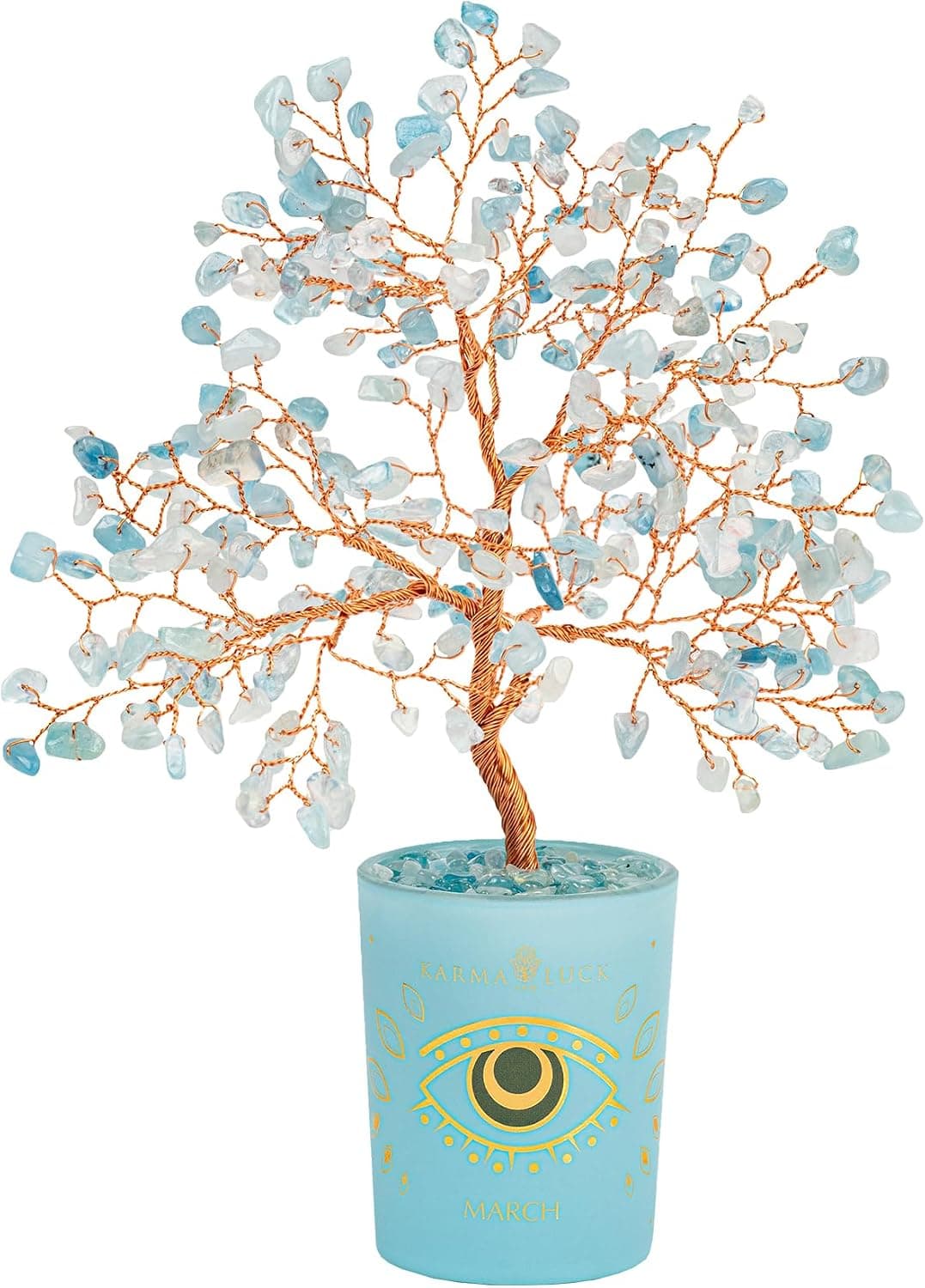 -29%
-29%Karma and Luck March Birthstone Crystal Tree of Life, Aquamarine Gemstone Fen...
 -29%
-29%Karma and Luck July Birthstone Crystal Tree of Life, Ruby Gemstone Feng Shui ...
 -29%
-29%Karma and Luck February Birthstone Crystal Tree of Life, Amethyst Gemstone Fe...
 -50%
-50%biuufish Feng Shui Black Obsidian Bracelet for Men Women, 24K Gold Plated Pix...
As an Amazon Associate, we earn from qualifying purchases. We only recommend items our practitioners have personally tested.
Continue Your Journey
Explore these related guides to deepen your understanding:
Ready for Deeper Guidance?
Try our free I Ching reading for personalized wisdom, or explore our curated Feng Shui essentials.