A clear method for turning any cast into practical guidance instead of wishful prediction.
The cast is not there to predict your fate. It is there to show the shape of the decision.
That is the simplest way to read the oracle well. A cast does not hand you a fixed future; it places your question inside a clear frame so you can see what is solid, what is unstable, and what is already turning.
When the coins land and the lines stack up, you are not gathering random symbols. You are looking at a situation with edges. The point is not to hunt for a magic sentence. The point is to understand the conditions around your choice.
That is why a first reading done with care often feels like stepping from a crowded hallway into a quiet room. The noise is still there, but now it has boundaries. That is the heart of a true first reading done well: better judgment, not fortune-telling theater.
Use this rule from the start: treat the cast as a framed situation, not a verdict.
Why the method feels simple at first, then turns slippery
On paper, the process looks almost plain. Toss the coins, mark the lines, build the hexagram, read the text. The steps are easy to follow, which is exactly why beginners expect the meaning to be easy too. But the method becomes slippery when the reading asks for context instead of a single label.
That shift is where many people stumble. The oracle rarely answers at the same level as the question. If you ask for a yes or no about something that is still forming, the cast may describe pressure, timing, or conditions instead of a clean verdict. The reading is not becoming vague; it is becoming more exact about the situation.
Picture a north-facing study with a white desk, one brass lamp, and a question about whether to change jobs. The reading may come back with two moving lines, and the first impulse is often to ask, “Is this a yes or no?” But the cast may be showing a threshold instead. One direction has momentum, but only if the timing is right and the approach stays restrained.
The room matters here because the symbols are not floating abstractions. A narrow desk, a single chair, and weak winter light can mirror a situation that is not fully open yet: there may be potential, but not enough room to move recklessly. That is why the oracle often speaks through tension. It highlights where action is possible and where forcing it would create friction.
That is also why the habit of demanding instant certainty falls apart. Life does not always arrive as a clean fork in the road. Often you are not choosing between two finished paths; you are choosing whether to enter a process, wait for conditions to ripen, or accept that the decision itself has to be re-framed.
For the structural side of the system, it helps to study how the trigrams shape the reading before trying to force quick meanings.
How a hexagram holds together
A hexagram is not a slogan. It is a structure, and its meaning comes from the way the parts support or strain against one another. The lower lines act like the ground under a house, the upper lines like the roofline, and the middle lines show where pressure, adjustment, and movement happen. If you read only the top, you miss the foundation. If you read only the bottom, you miss where the matter is going.
Read in layers. Begin with the main hexagram and ask what kind of situation this is: settling, advancing, retreating, gathering, dispersing, or something else entirely. Then look at the changing lines, because those are the places where the structure is in motion. Then study the relating hexagram, which often feels like the next chamber in the same building. It is not a separate message. It is the direction the situation is taking.
This layering works because each part answers a different question. The main hexagram gives the current condition, the changing lines identify the strain points, and the relating hexagram shows what form the situation tends toward if the movement continues. Read them together and the cast becomes a map of process instead of a pile of symbols.
That flow matters. A room is not understood by its furniture alone, and a reading is not understood by isolated phrases alone. The primary hexagram gives the present conditions. The relating hexagram suggests where those conditions are headed. Keep that movement in view and the cast becomes much less random.
When a reading seems hard to place, compare it with the broader pattern in hexagram relationships and positions so you can see the structure instead of guessing at fragments.
Changing lines: where readers most often overreach
Changing lines are the part people most often overread. They see movement and immediately invent a story. But a moving line is not a scene from a drama. It marks stress, emphasis, or transition. Read it in context.
A low line usually speaks to beginnings, roots, and what has not yet formed. A high line often points to culmination, pressure, or the risk of overreaching. That difference matters more than memorizing poetic language alone.
One line does not override the rest of the figure.
A common trap is confirmation bias. If you want the answer to say “go,” you will seize the encouraging line and ignore the warning built into the structure. If you want “stop,” you can do the same in reverse. That is not interpretation. It is preference wearing ritual clothing.
A cleaner method is to ask three questions: what changes, what stays in place, and what may be put at risk. A moving line is like a hinge on a door. The house has not changed, but access, airflow, and direction have.
For a grounded example of how this works in close personal matters, the patterns in relationship readings show how timing and readiness can appear without reducing everything to a yes-or-no answer.
Turning symbols into a decision you can actually make
The oracle helps most when it is tied to an actual decision. Not a vague feeling. A decision. Should you send the proposal or revise it? Should you act now or wait one more week? Should you stay in the conversation or step back? These are threshold questions, and the I Ching is unusually good at threshold questions.
Use the cast as a test of conditions. Is the path open, blocked, rushed, immature, or ready? Then compare that with your real limits. Time. Money. Energy. Relationships. If the reading points to caution, that does not mean endless delay. It may mean narrowing the scope, refining the plan, or letting conditions mature. If it points to movement, discipline may still be required.
This is practical wisdom under uncertainty. You are not surrendering your judgment to a symbol. You are sharpening judgment with a symbol.
That is why yin and yang matter here as relationship, not superstition. Things change because conditions interact. One side does not magically defeat the other; the pattern shifts when the balance of forces shifts.
For a useful study in timing and balance, see how harmony appears when the situation is settling.
What to do when the reading feels mixed or murky
Mixed readings are normal. Very often, the situation itself is mixed. The oracle is not failing when the answer feels complicated. It is mirroring complexity back to you.
Repeated casts on the same relationship question are another sign that the framing may be off. If the question is, “Will they choose me?” the reading may keep circling because the deeper issue is not their choice. It is the shape of your question. A stronger frame might ask what needs to change, what is being avoided, or what action belongs to you.
If the same shape keeps returning, stop demanding a fresh answer and inspect the question. Is it too broad? Too emotional? Too dependent on a preferred outcome? The I Ching tends to reward precision and resist fishing expeditions.
When the issue keeps looping, money questions in the I Ching offer a useful example of how to narrow the frame so the cast can speak plainly.
Plain meanings beginners often miss
Many beginners think interpretation means memorizing poetic lines. That helps, but only after the structure is understood. A yielding line in a strong place may signal adaptation. A firm line in a weak place may signal strain or overstatement. A top-heavy hexagram can describe a situation that looks complete but is already losing support.
Ask about form, not just fate. Is the situation balanced or distorted? Is energy moving cleanly, or is it stuck at a threshold? Is there too much force, too much passivity, or a missing transition? Those are architectural questions as much as spiritual ones.
And yes, intuition matters. But intuition becomes sharper when you can name the pattern underneath it. That is why I teach readers to think in terms of foundation, movement, and roofline rather than memorizing fragments in isolation.
When you want a model of receptivity without collapse, the meaning of the receptive pattern is a strong counterbalance to overactive reading.
The oracle does not flatter the mood you arrived with.
When to trust, when to pause, and when to reframe
Trust the reading when the structure is clear, the question is precise, and the cast speaks directly to the decision in front of you. Pause when you notice yourself reaching for the one line that confirms what you already wanted. Reframe when the same issue returns with almost no variation.
Often, what you need is not a cosmic pronouncement but a threshold check. You may already know enough to act, but you want to know whether the timing supports action. Or you may need a clear signal that restraint is wiser than forcing movement. The I Ching can help with both, if you stop asking it to act like a referee.
That may sound blunt, but it prevents a great deal of confusion. The oracle is not there to replace your mind. It is there to train it.
FAQ
How do I read an I Ching cast if I am brand new to it?
Start with the main hexagram and describe the situation in plain language before looking at any changing lines. If you cannot say what the reading is about in one sentence, the answer will feel slippery no matter how many lines you study.
What do changing lines mean in everyday terms?
They show where the situation is under pressure or beginning to move. I read them as turning points, not as little predictions. If there are several changing lines, the reading is usually describing a process, not a single moment.
Should I cast again if I do not like what I got?
Not right away. If you cast again too soon, you usually get noise rather than clarity. Change the question first if it is vague, emotional, or built to force a yes/no answer.
My reading seems to say two opposite things. What does that mean?
That usually means the situation itself contains mixed conditions. One part may be ready while another part is not. Instead of trying to erase the contradiction, identify where the tension actually sits.
Is the I Ching predicting the future or giving advice?
Mostly, it works as advice under uncertainty. A reading can suggest likely movement, but its real value is in timing, framing, and better judgment. Treated that way, it becomes far more practical.
How do I know whether to focus on the main hexagram or the relating hexagram?
Use both. The main hexagram shows the present structure, and the relating hexagram shows the direction that structure is taking. One without the other is incomplete, like describing a doorway without the room it leads to.
If you want the full system laid out after the basics make sense, study the logic of near-finished states.
Once you stop asking the oracle to promise certainty, it becomes much easier to hear what it is actually saying.
David Liu
Traditionally informed guidance • Cross-referenced with classical Chinese source texts
Interpretations cross-referenced with the Zhouyi (周易) and Wilhelm/Baynes translation.
Practitioner-Selected Tools for This Topic
Items our team has tested and found effective for the principles discussed above. Individual results may vary.
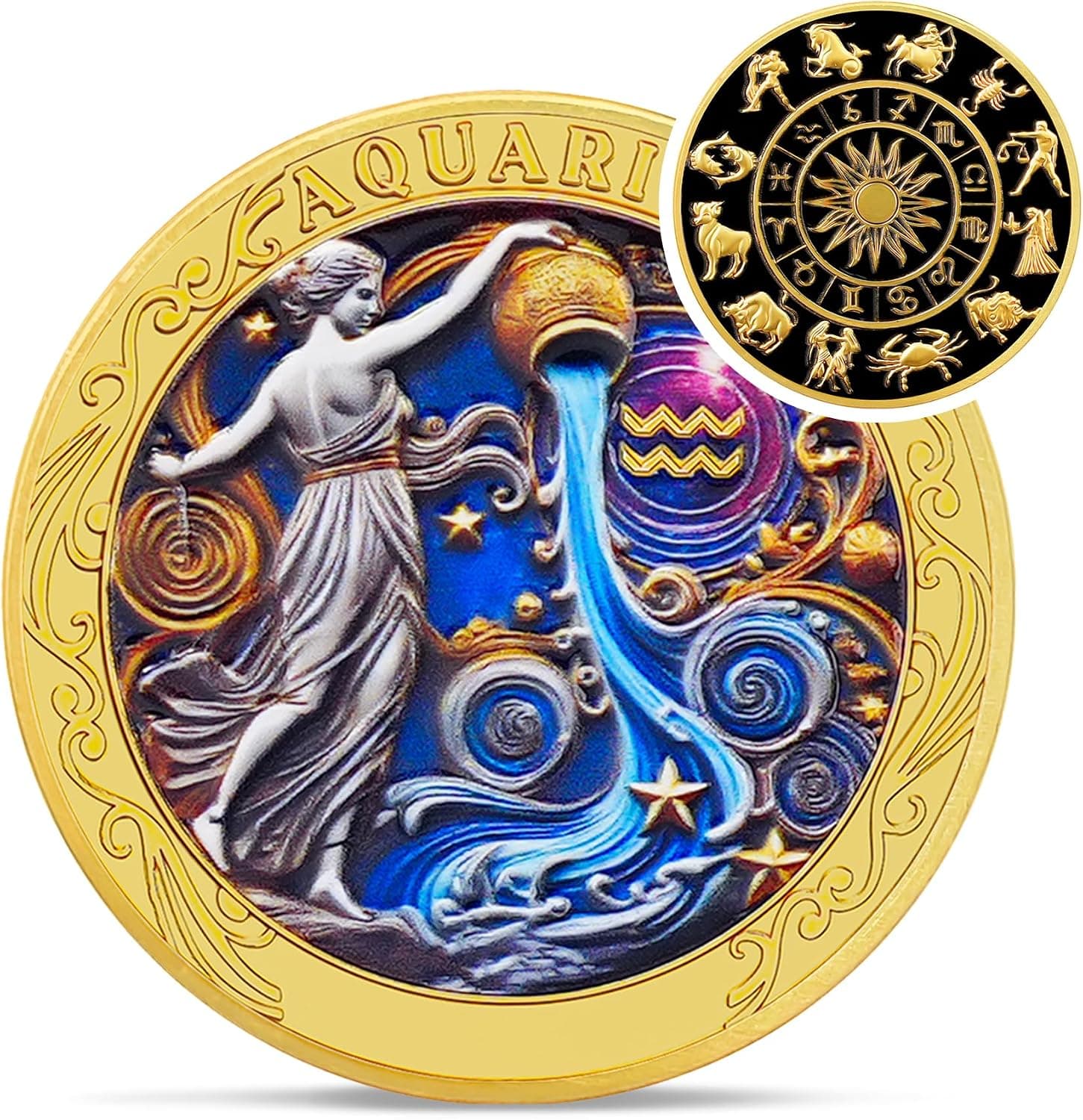 -20%
-20%Aquarius 12 Zodiac Challenge Coin - Twelve Constellations Aquarius Protective...
 -29%
-29%Karma and Luck March Birthstone Crystal Tree of Life, Aquamarine Gemstone Fen...
 -29%
-29%Karma and Luck July Birthstone Crystal Tree of Life, Ruby Gemstone Feng Shui ...
 -29%
-29%Karma and Luck February Birthstone Crystal Tree of Life, Amethyst Gemstone Fe...
As an Amazon Associate, we earn from qualifying purchases. We only recommend items our practitioners have personally tested.
Continue Your Journey
Explore these related guides to deepen your understanding:

The I Ching Doesn't Answer Lazy Questions — Here's What to Ask Instead
8 min readConfucian Commentary Turns the I Ching Into a Moral Floor Plan
9 min readBroken Lines, Solid Lines, and the Real Yin-Yang Logic of the I Ching
11 min readThe Wilhelm I Ching Feels Deep Because It Slows Your Reading
11 min readReady for Deeper Guidance?
Try our free I Ching reading for personalized wisdom, or explore our curated Feng Shui essentials.