Hexagram 11 is not about freezing conflict; it is about keeping order alive before the room slips back into strain.
A Quiet Apartment, a Shared Bill, and the Moment Peace Starts to Slip
The sign that peace is real is not silence. It is whether people can still move through a narrow hallway, open the shared fridge, and trust that the next small irritation will not become a war. I have seen this in a one-bedroom apartment where the kitchen counter held three labeled bins, a blue dish rack, and a rent notice taped beside the coffee maker. For four days, the place felt calm. On the fifth, a single unwashed pan sat in the sink, and the whole mood changed.
That is the kind of situation the right question to the I Ching can illuminate. If you draw the i ching hexagram 11 peace in a setting like this, the reading is usually not asking you to celebrate comfort. It is asking whether the current harmony is being maintained by clear exchange, or merely by everyone pretending not to notice the strain.
The hush after an argument can feel beautiful. The kettle clicks off, somebody lowers their voice, and the room seems to exhale. But in a crowded home, the next step matters more than the quiet itself. Peace in Hexagram 11 is active, not decorative.
That distinction matters because many readers assume a fortunate hexagram means, “Relax, everything will stay fine.” I would push back hard on that. The better reading is: conditions are favorable, but only if you keep the balance honest.
In practice, that means looking at the room, not just the mood. Who is using the counter? Who is carrying the noise? Who gets the drawer by the stove? A stable household often survives on these small agreements more than on warmth alone.
How Hexagram 11 Took Shape in the I Ching Tradition
Hexagram 11 is built from Heaven below and Earth above, a structure that reads like upward movement meeting downward receptivity. In yin-yang terms, this is not the erasure of difference. It is the proper proportion of difference, where each force supports the other instead of competing for dominance.
That image matters because the ancient tradition treats peace as a relationship between energies, not a blank state. Heaven rises, Earth yields, and the two do not cancel each other out. Instead, they create circulation. The lower force is not “winning,” and the upper force is not “losing”; each occupies the role that lets the whole system breathe.
That is old wisdom, but it is also a practical model for any shared space. A family with limited room does not need everyone to feel identical; it needs roles that do not collide every ten minutes. Sociologically, ordinary peace is often maintained by informal rules: who cooks, who takes out the trash, who keeps the hallway clear, who speaks first when tension rises. The tradition behind Hexagram 11 recognizes that order is made from habits, not slogans.
There is another reason this hexagram matters in the I Ching sequence: it describes a temporary alignment, not a permanent condition. In a changing system, peace appears when forces are well distributed, but that distribution must be renewed. What looks stable at first can shift as fatigue, money stress, or unmet expectations build up. The hexagram therefore carries a built-in warning: harmony is a process of maintenance, not a one-time achievement.
That is why I hesitate when people call 11 “the peace hexagram” as if peace were a finished product. In the classical sense, it is closer to a living arrangement that works for now. It can be renewed. It can also decay quietly. The tradition implies that good order is fragile precisely because it depends on continued responsiveness.
For readers who want to understand the mechanics of a cast, it helps to compare this with the strain of standstill. If you are still getting comfortable with reading changes and relating them to real situations, a solid starting point is learning how the hexagrams are meant to be read in context. Hexagram 11 rarely speaks in abstractions; it speaks in conditions.
Why Peace Is Movement, Not Freeze-Frame
Peace in the I Ching is easy to misunderstand because it can look like stillness from the outside. In truth, the best version of it is dynamic. A hallway stays passable because people keep making space for one another. A shared kitchen stays usable because the dishes do not accumulate long enough to trigger resentment.
The deeper point is that peace depends on circulation. If attention, labor, and consideration keep moving, pressure is released before it hardens. When that circulation slows, the arrangement starts to clog. That is why a calm home can suddenly become tense over something small: the small thing is often only the visible sign of a larger blockage that has been building for days.
That is the first lesson I associate with Hexagram 11: if harmony has stopped moving, it may already be turning into habit. And habit, left alone, becomes either laziness or resentment. The difference shows up in tiny details. A chair stays pulled out in the same place. Someone stops replacing the trash bag. Another person becomes “fine” in a way that sounds more like withdrawal than agreement.
One family I observed worked this out in a small apartment where the living room doubled as a dining area and a study. They had one long shelf, one narrow hallway, and no spare closet. The peace in that home did not come from everyone wanting the same things. It came from predictable behavior: dishes stacked left after dinner, shoes lined under the bench, and a rule that the quiet hour began at nine. Nothing glamorous. Everything effective.
That is the philosophical heart of the hexagram. Harmony is not sameness. It is relation. The forces remain distinct, but they are arranged so they do not smash into each other. That is why peace can exist in a cramped, imperfect, rented space. It is not dependent on ideal conditions.
In a reading, this is also where timing enters the picture. If the opening is favorable, use it. Do not waste a calm week by pretending the future will organize itself. If you are dealing with career questions, relationship repair, or a family negotiation, Hexagram 11 often says the same thing: the current order is good enough to build on, but not strong enough to ignore.
For a reader who wants to compare methods and timing styles, the yarrow stalk approach often deepens attention to balance and proportion. That emphasis fits Hexagram 11 unusually well, because the message is rarely dramatic. It is measured.
What Hexagram 11 Means When Life Has Limited Room
Constraint changes the meaning of peace. In a large house with private bathrooms and separate offices, people can avoid one another and still claim harmony. In a studio or one-bedroom apartment, that trick stops working fast. You hear every chair scrape. You smell every meal. Privacy becomes a negotiated resource.
That is where the hexagram becomes especially useful. It tells you to stop measuring peace by emotional smoothness alone. In a limited space, harmony depends on fair exchange, visible effort, and role clarity. Who clears the sink? Who answers the delivery person? Who leaves the bedroom door closed during calls? These are not small questions. They are the architecture of domestic peace.
I once stood in a cramped shared kitchen with white cabinets, a chipped green mug on the windowsill, and three containers taking up most of the counter. The room was calm, but only because the tenants had made the rules explicit. One shelf was always for dry goods, one drawer for shared utensils, and one evening each week was reserved for groceries and repairs. The moment those rules became fuzzy, the atmosphere changed within days. Not because anyone became evil. Because the system stopped being legible.
That is a point many spiritual readers miss. Peace does not always require softer feelings. Sometimes it requires firmer structure. In small homes, structure can be kinder than constant negotiation. People relax when they know the pattern will hold.
So if you draw 11 about a home matter, ask yourself a blunt question: is this a real agreement, or just a temporary ceasefire? If you need help framing the question before you cast, this explanation of how the I Ching responds to real situations will give useful context.
The same logic applies at work. A team can have a calm week after a hard project, but that calm is not neutral. It is usually a window. A leader who notices it can reset expectations, redistribute tasks, and name what has changed. A leader who enjoys the quiet without adjusting anything often loses the opening.
When 11 Becomes a Question of Timing, Leadership, or Withdrawal
Hexagram 11 asks for judgment, not passivity. If the cast appears during a relationship discussion, the issue may be whether to speak now or let a softer pattern settle first. If it appears in a business context, it may point to a brief alignment that can support a decision, hiring move, or repair conversation. If it appears in a family setting, it may say the household can handle a new rule, but only if someone takes responsibility for it.
That responsibility usually falls on the person who can see the pattern earliest. In a crowded home, that person is often the one who notices the hallway bottleneck, the overflowing counter, or the way everybody starts tiptoeing around the same drawer. In a team, it may be the person who sees that recent cooperation is real, but fragile. The hexagram rewards this kind of practical leadership.
Not every response is “push harder.” Sometimes peace is preserved by stepping back. A room can hold only so much demand before the balance tilts. In those moments, withdrawal is not defeat. It is a way of protecting the conditions that made peace possible in the first place.
That is where the I Ching becomes more subtle than ordinary advice. It does not just ask whether something is good. It asks whether it can endure its own success. A good week can be ruined by overconfidence. A calm phase can be spoiled by adding one more burden, one more request, one more unsaid grievance.
The mistake is to treat a favorable period as proof that no care is needed. I have seen exactly that happen in a rental home with a crowded hallway and a shared fridge: the residents felt relieved, stopped checking in, and within two weeks the old friction returned through the back door. Peace had not failed. It had been neglected.
For readers who want a sharper sense of how the oracle handles yes/no pressure, it can help to study why a simple answer still depends on the question behind it. Hexagram 11 often says “yes, but maintain the conditions.” That second part is the part people miss.
When Peace Turns Toward Standstill
The pair that matters most here is Hexagram 12, Standstill. Peace becomes standstill when connection stops circulating and difference hardens into separation. The room may look quiet, but no real exchange is happening anymore. People are no longer cooperating; they are just occupying the same address.
There is a subtle warning in that shift. When a home feels too calm, ask what is being avoided. When a team becomes unusually smooth, ask what is being postponed. When a family stops arguing, ask whether that is because the issue is resolved or because everyone has learned how to disappear emotionally. Standstill often arrives wearing peace’s clothes.
That is why the final reading of Hexagram 11 is never “everything is fine.” It is more exact than that. The conditions support peace now, but the order must be renewed. If the context is generous, use the margin wisely. If the context is tight, use clear roles, clean exchanges, and honest timing to keep the system humane.
If you want to read this hexagram well, do not chase a feeling. Watch the structure. Watch the way people move through space, how they share storage, who absorbs inconvenience, and whether the arrangement still feels fair on an ordinary Tuesday. That is where peace lives.
And if the question behind your casting is whether to act, remember this: favorable ground is not an invitation to sleepwalk. It is an invitation to shape the next interval before the room changes on its own.
FAQ
Does Hexagram 11 always mean a positive outcome? Not automatically. It usually points to a favorable phase, but the outcome depends on whether you maintain the balance that created it. If you ignore the practical structure, the same situation can drift toward friction.
How do I know if this is real peace or just avoidance? Look for evidence in behavior, not tone. Real peace leaves the kitchen workable, the hallway passable, and the expectations clear. Avoidance feels calm until the first small demand shows up.
What should I do if 11 appears during conflict? Use the opening to clarify roles, timing, and next steps before emotions harden. A short calm period can be the best time to set a fair rule or repair a broken pattern. Waiting too long often lets the underlying tension return in a stronger form.
Is it a bad sign if 11 changes into 12? Not bad, but serious. It suggests the balance is weakening and the current harmony may be freezing into separation. That is the moment to simplify demands, reduce pressure, and restore communication before distance becomes the new normal.
David Liu
Traditionally informed guidance • Cross-referenced with classical Chinese source texts
Interpretations cross-referenced with the Zhouyi (周易) and Wilhelm/Baynes translation.
Practitioner-Selected Tools for This Topic
Items our team has tested and found effective for the principles discussed above. Individual results may vary.
 -20%
-20%Aquarius 12 Zodiac Challenge Coin - Twelve Constellations Aquarius Protective...
 -29%
-29%Karma and Luck March Birthstone Crystal Tree of Life, Aquamarine Gemstone Fen...
 -29%
-29%Karma and Luck July Birthstone Crystal Tree of Life, Ruby Gemstone Feng Shui ...
 -29%
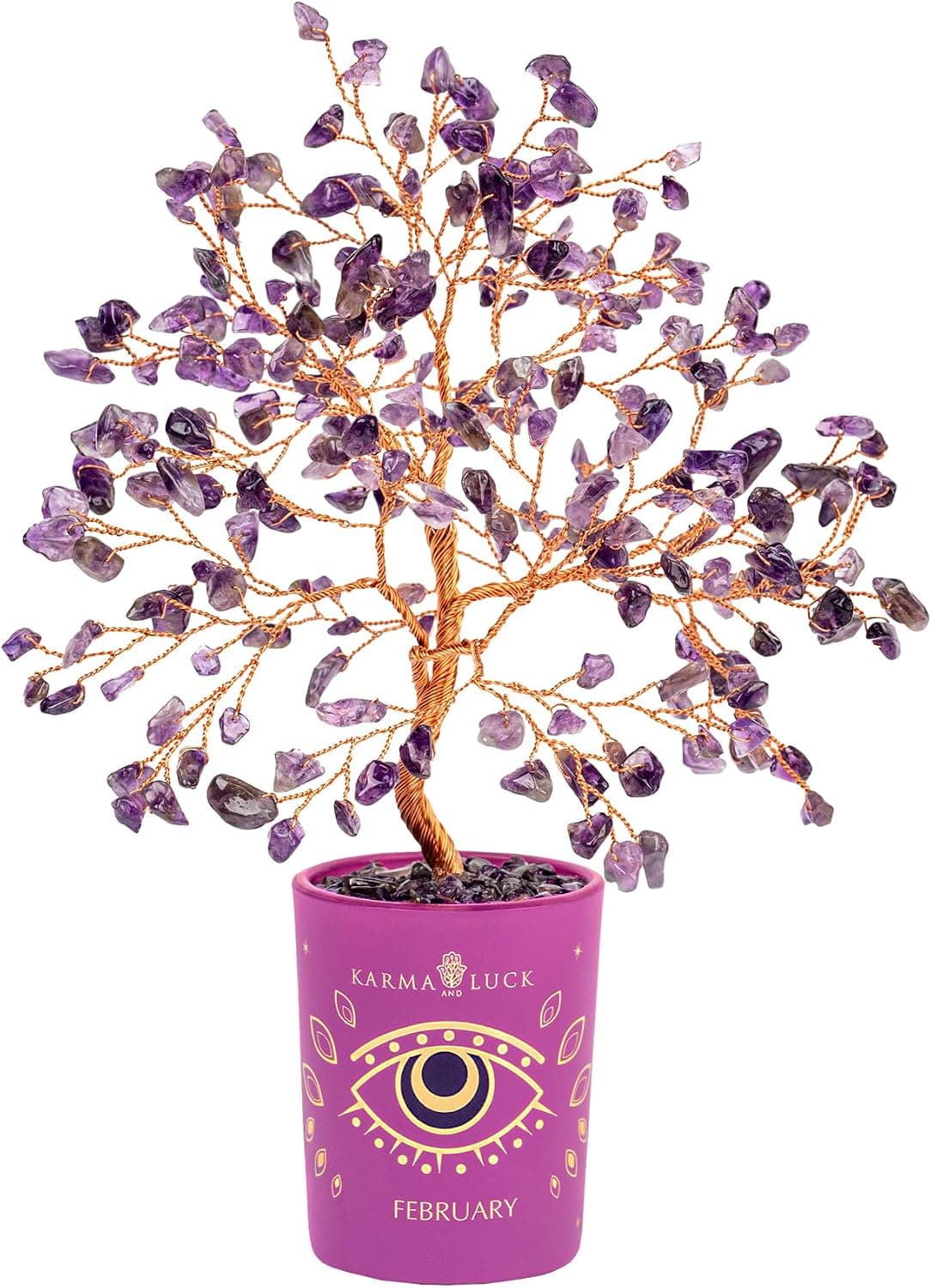
-29%Karma and Luck February Birthstone Crystal Tree of Life, Amethyst Gemstone Fe...
As an Amazon Associate, we earn from qualifying purchases. We only recommend items our practitioners have personally tested.
Continue Your Journey
Explore these related guides to deepen your understanding:

The I Ching Doesn't Answer Lazy Questions — Here's What to Ask Instead
8 min readConfucian Commentary Turns the I Ching Into a Moral Floor Plan
9 min readBroken Lines, Solid Lines, and the Real Yin-Yang Logic of the I Ching
11 min readThe Wilhelm I Ching Feels Deep Because It Slows Your Reading
11 min readReady for Deeper Guidance?
Try our free I Ching reading for personalized wisdom, or explore our curated Feng Shui essentials.