The I Ching and Taoism meet in change, timing, and restraint—but they do not mean the same thing.
Where the Two Traditions Meet at the Threshold
Yes, there is a real connection between the I Ching and Taoism, but it is not a simple case of one text belonging to the other. The overlap lives in how both traditions treat change, timing, restraint, and the danger of forcing an outcome. That is the heart of the i ching and taoism connection, and it is more practical than doctrinal.
The distinction matters as soon as you begin reading closely. The I Ching gives shape to uncertainty; Taoism teaches a way of living that does not fight the current of events. They often point in the same direction, yet they come from different jobs and different settings.
Think of the I Ching as a system for reading conditions and Taoism as a larger philosophical and religious current that includes cosmology, cultivation, and ritual. If you keep those roles separate, the text becomes easier to understand, not less mysterious.
A north-facing bedroom with a narrow doorway tells you something immediately: the room is not asking for more effort, it is asking for better placement. The same kind of attention is at work when a reader opens the I Ching. The question is not how to dominate the moment, but how to read what the moment permits.
One label is tempting. The mind sees flow language and calls it Taoist; it sees hexagrams and calls it oracle. That shortcut is convenient, but it blurs two traditions that developed through different uses.
The phrase can be helpful only if it does not become a blur. The overlap is real, but identity is not the same thing as influence.
How Change Became a Practical Language in Early China
Long before modern readers treated the I Ching as a spiritual companion, it helped people think through decisions under pressure. In a court, in a learned household, or before a major family choice, divination gave structure to uncertainty. It was not ornamental. It slowed the hand before action.
That pause is the first thing to notice. A question is posed. Lines are formed. Ambiguity is given a pattern. Then interpretation begins, and only after that does action become clearer. The text does not promise certainty; it trains better judgment.
That is why the I Ching often feels social as much as personal. It belongs to a culture that cared about order, rank, and responsiveness to circumstance. It does not tell the reader to follow impulse. It asks what the situation can bear and what it cannot.
A building works the same way. Rooms are not useful because they are identical; they work because circulation, proportion, and threshold are managed well. The I Ching does a similar thing with change. It makes movement readable.
If you are approaching it for the first time, it helps to see the I Ching’s long cultural life before attaching later assumptions to it. The text did not begin as a slogan for effortless flow.
Yin-Yang, Timing, and the Meaning of Non-Force
The strongest shared idea between the two traditions is not a slogan, but a way of seeing. Reality is relational. It changes by degree. Timing matters. Yin and yang are not moral badges, but movements within a larger process.
Wu wei is often translated as non-action, which misleads a lot of readers. It is better understood as action without coercion, movement that fits the grain of the moment. A changing line in the I Ching often says the same thing in another form: do not push where force will backfire.
That is not passivity. It is precision.
Picture a studio apartment where the bed blocks the path to the desk and the chair catches on the rug every time someone passes. Nothing is broken, but everything snags. Both Taoism and the I Ching are sensitive to that kind of snag, because they notice when form stops serving life.
For readers who like symbolic structure, the eight trigrams show how natural forces become pattern. Water, fire, thunder, mountain, lake, wind, earth, and heaven are not decorative images. They are a language for change.
Line structure matters for the same reason. A six-line figure is not random; it is a shaped relationship, much like repeated architectural elements create an intelligible facade. Order does not fight movement. It makes movement legible.
In a room with one bright window and a tight hallway, circulation changes immediately. That is the sort of relational attention the I Ching teaches, and it is also why Taoist language feels so natural beside it.
Where the Paths Separate
People often assume the I Ching is “basically Taoist” because both respect uncertainty and avoid crude force. But that shared temperament does not erase the difference between a divination system and a broader religious-philosophical tradition.
The I Ching is first a text for interpretation. Taoism includes philosophy, ritual lineages, religious communities, and cultivation practices. If you flatten them into one category, you lose the historical setting that gave each one its authority.
The I Ching sits at a threshold between oracle and reflection, between private insight and public choice. Taoism also cares about thresholds, but it moves through them with a different set of concerns, including cosmology, conduct, and spiritual practice.
That difference shows up even in the feel of the page. One might imagine worn corners, bamboo texture, and compact lines of interpretation. Taoist writings can share that atmosphere, but they do not depend on hexagrams in the same way. A text can be used by Taoists without being reduced to Taoism.
If you want a map of how the structure works, the hexagram chart as a map of relations is a good place to start. A chart is not a creed. It is a grammar.
Readers get stuck when they ask only, “Is it Taoist or not?” A better question is, “What is this text doing here, and what kind of judgment is it training?”
How Later Readers Tightened the Link
The connection between the two traditions did not arrive fully formed. It deepened through commentary, education, and selective use across generations. Later readers noticed that the language of change fit naturally with ideas of balance, restraint, and responsiveness, so the association strengthened over time.
That is cultural movement, not secret doctrine. Ideas travel. They pass through courts, then scholars, then households, and each setting emphasizes different passages for different reasons.
A person standing in front of a shelf of translations can see this plainly. One edition leans toward classical divination, another leans toward Taoist philosophy, and another borrows both for modern self-help. The same hexagram language is there, but its weight changes with the reader.
That is how living traditions behave. They are not frozen artifacts. They are systems of emphasis.
A court official may use the text to maintain order. A monk may use it to examine restraint. A modern reader may use it to avoid forcing a decision that is not ready.
For a clear example of receptivity as principle, see the receptive principle in its own context. It explains why Taoist readers so often feel at home with the text. Receptivity can look like wisdom once force has stopped working.
Still, the bond grew through interpretation, not because the I Ching was originally branded as a Taoist manual. That distinction matters more than most summaries admit.
What the Connection Means for Modern Readers
Most modern readers arrive through one of two doors. Some come from Taoism and expect the I Ching to echo a philosophy of flow. Others come from divination and only later notice the Taoist tone in commentaries and translations. In both cases, the same discipline helps: keep the categories distinct long enough to understand what each is doing.
The benefit is practical. Taoist awareness can stop you from turning a reading into a rigid moral story. The I Ching can stop Taoist language from drifting into vagueness, because the hexagram and its lines insist on a specific reading of conditions.
A cramped rental makes that lesson obvious. When the bed, desk, and storage all compete for the same small path, you cannot think in generalities. You have to notice where movement is blocked, where light lands, and what a room is asking you to change.
One can feel this in a bedroom where a mirrored wardrobe faces the bed, a bright lamp glows too sharply, and clothes pile on the only chair. The occupant may ask for more energy, but the room already has too much stimulation. After the lamp is softened, the mirror is shifted, and the chair is cleared, the space begins to settle. The point is structural, not theatrical.
That is how the I Ching and Taoism meet in real life. Both teach adjustment instead of domination. Both ask for attention before action.
If you want the connection in one line, it is this: read the pattern, then move only where the pattern supports movement.
Reading the I Ching with Taoist Awareness Without Flattening It
Begin with the hexagram itself. Ask what the situation looks like before asking what a philosophy would say about it. Then notice whether the lines point toward restraint, timing, retreat, firmness, or a small advance. That order keeps the reading grounded.
If a changing line suggests less effort, Taoist language can help name the quality of that advice. But do not force every reading into the same mood. Some situations need discipline. Some need waiting. Some need silence more than wisdom talk.
For love questions, that caution matters even more. Read the pattern first, then notice whether attachment is creating pressure where responsiveness would work better. See how relationship questions change the meaning of a cast if you want to narrow the lens.
For career and money, the same principle applies. Taoist restraint can keep you from overreaching, while the I Ching can show when a small correction is more effective than a grand gesture. If the lines show that the road is blocked, pushing harder usually adds friction.
Hexagram 11 and the meaning of peace is useful here because it shows that balance is active, not sleepy. Many readers mistake harmony for stillness. It is often better understood as circulation without strain.
So yes, the i ching and taoism connection is real. But it is not a neat merger. The I Ching gives the pattern; Taoism offers a way to live without fighting it. Keep both, and each becomes sharper.
FAQ
Is the I Ching a Taoist text? Not strictly. It became closely associated with Taoist thought through commentary and use, but it also served court, scholarly, and household purposes that were broader than Taoism.
Why do people keep pairing the I Ching with Taoism? Because both pay attention to change, balance, and non-force. That similarity is real, but it can tempt readers to treat them as identical when they are not.
Can I use Taoist ideas when I read the I Ching? Yes. They can help you notice timing, restraint, and natural movement. Just let the hexagram lead the reading instead of replacing it with a general philosophy of flow.
What if my reading feels practical instead of mystical? That may be exactly right. The I Ching was often used to guide action, not to produce a dramatic spiritual experience.
Does this matter for feng shui or small-space living? It does. Tight rooms make circulation, thresholds, and object placement impossible to ignore, which is the same kind of relational awareness both traditions value.
What is the risk of overconnecting the two traditions? You can turn the I Ching into vague “good vibes” language and lose its precision. Keeping them distinct usually makes the overlap more useful, not less.
David Liu
Traditionally informed guidance • Cross-referenced with classical Chinese source texts
Interpretations cross-referenced with the Zhouyi (周易) and Wilhelm/Baynes translation.
Practitioner-Selected Tools for This Topic
Items our team has tested and found effective for the principles discussed above. Individual results may vary.
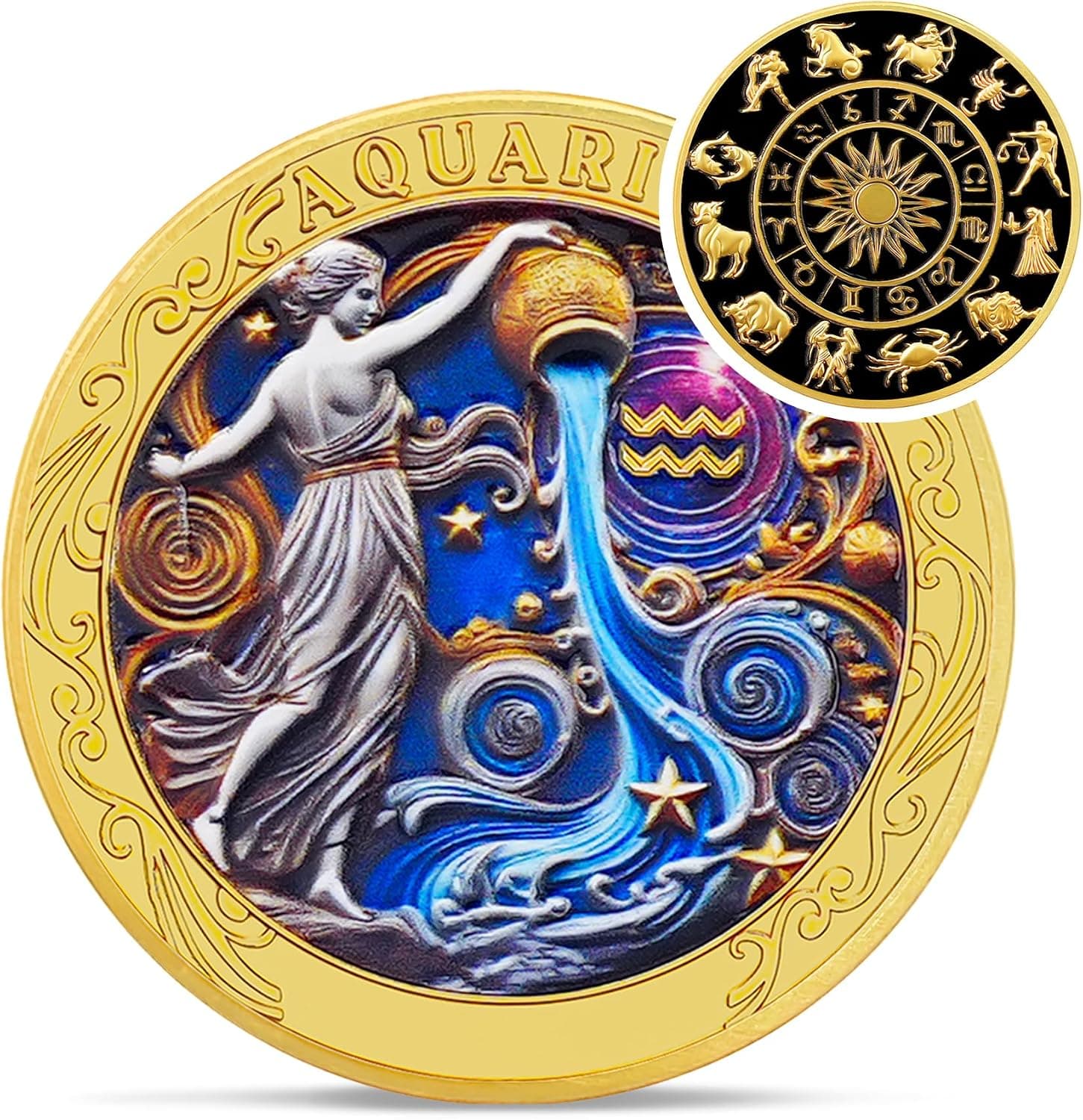 -20%
-20%Aquarius 12 Zodiac Challenge Coin - Twelve Constellations Aquarius Protective...
 -29%
-29%Karma and Luck March Birthstone Crystal Tree of Life, Aquamarine Gemstone Fen...
 -29%
-29%Karma and Luck July Birthstone Crystal Tree of Life, Ruby Gemstone Feng Shui ...
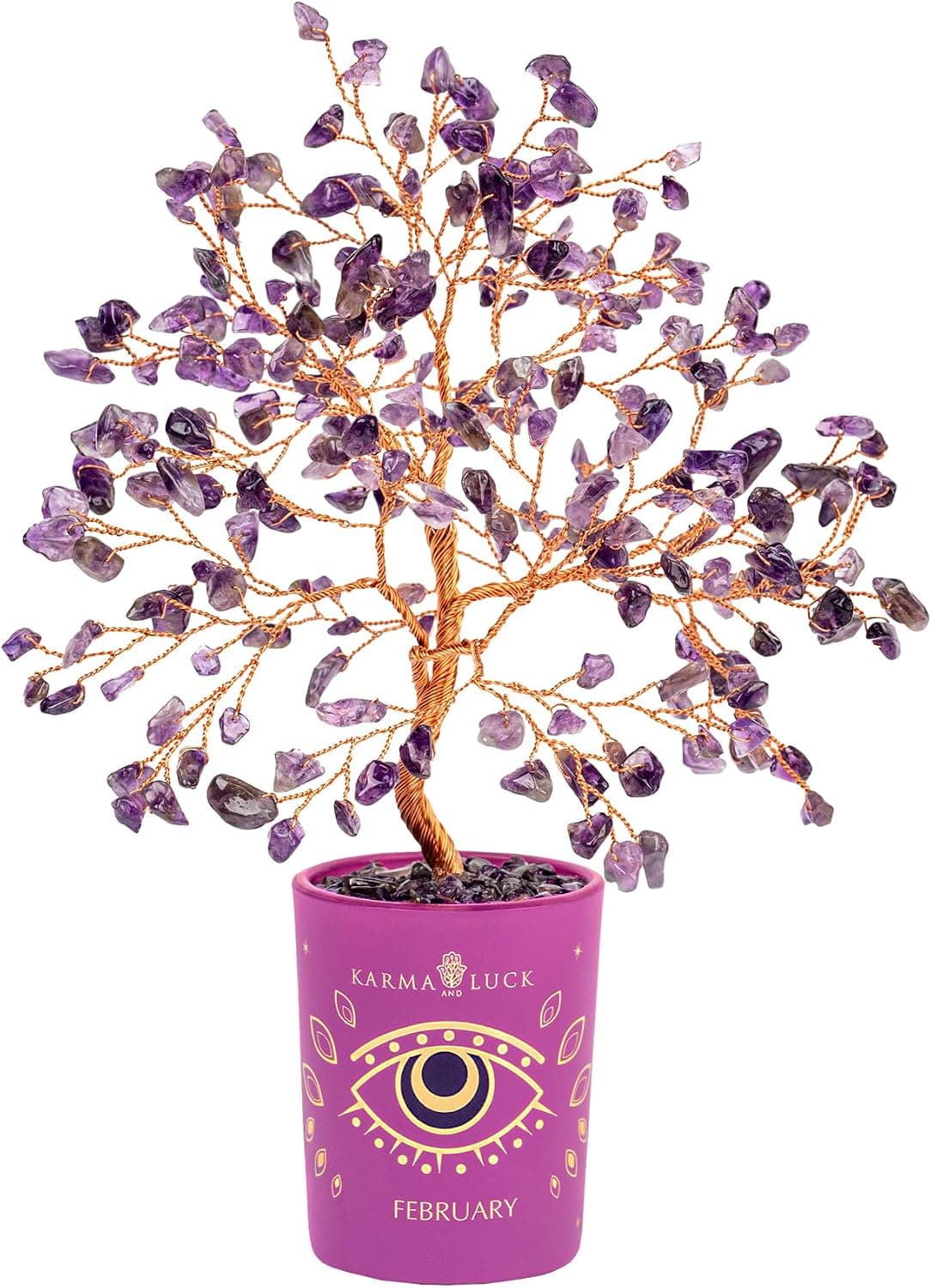 -29%
-29%Karma and Luck February Birthstone Crystal Tree of Life, Amethyst Gemstone Fe...
As an Amazon Associate, we earn from qualifying purchases. We only recommend items our practitioners have personally tested.
Continue Your Journey
Explore these related guides to deepen your understanding:

The I Ching Doesn't Answer Lazy Questions — Here's What to Ask Instead
8 min readConfucian Commentary Turns the I Ching Into a Moral Floor Plan
9 min readBroken Lines, Solid Lines, and the Real Yin-Yang Logic of the I Ching
11 min readThe Wilhelm I Ching Feels Deep Because It Slows Your Reading
11 min readReady for Deeper Guidance?
Try our free I Ching reading for personalized wisdom, or explore our curated Feng Shui essentials.